

Software Engineer | Mathematician | Catholic | "There are 3 certainties in life: death, taxes and software updates"
Pacific Timezone 🇺🇸
Joined April 2012
- Tweets11K
- Following643
- Followers1.7K
- Likes122K







Learning Abstract Algebra makes you realize there are only like a handful of algorithms.

If you remove different representations, you find out that many algorithms are either the same, or almost the same.
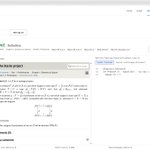
Shortest path is semiring based computation.
More here: sciencedirect.com/science/ar…
I realized this when I was writing my book on OR algorighms. There are hundreds of algos I went through. Sometimes, you could find 40-50 algorithms, that are different only in one parameter, or one function in the function composition.
---
I am 100% sure, there are abstract algorithms in space search + reduction, that could simplify what already exist and provide dozens of real world useful algos for thousands of various usecases.


It goes deeper, check out Physics, Topology, Logic and Computation: A Rosetta Stone arxiv.org/abs/0903.0340


We are reaching levels of "why not?" previously thought impossible!

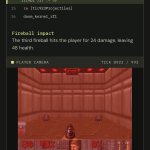
I think I took my theorem proving classes too seriously. Thanks to @145k4 I was able to run (Lean)DOOM, tick by tick. We exit Hangar without firing a shot. A fireball is still in flight.
We proved complete runs of Hangar and Nuclear Plant in our version of (Lean)DOOM.
Each run is completely verified in Lean and the runs of the players can be certified too. So can you prove to me that you can finish each level? The game is fully playable and we can build live the proofs from the game too. So much fun!
6
285


Tobi Lehman retweeted

@axiommathai should address these comments ASAP.
Many are quick-fixes:
1. Mathlib duplication
2. Incomplete formalizations
3. Outdated dependencies
4. Library build warnings
5. Quality audit, with unnecessary hypotheses and verbose proofs
kim-em.github.io/blog/2026-1…
In my view, autoformalization won't be Mathlib-level quality for another few months, but should ultimately be the goal.

Haven't seen this discussed elsewhere on X: Kim Morrison wrote a fantastic review of Axiom's Stacks
She identifies places where Stacks is not fully formalized; and lots of duplication of Mathlib
"I want to talk about ways in which we can do even better"
kim-em.github.io/blog/2026-1…

Very good breakdown of the Brouwer fixed point theorem

yesterday, we managed to get opus 5.5 verify formally a proof of the Brouwer's fixed-point theorem. while this is a simple task, it begs the question of what this looks at scale. of course we can point it towards much more complicated questions, but what happens when we formally verify entire fields of mathematics and completely solve all the open conjectures in certain fields in thousands and millions of pages of proofs, incomprehensible by humans?
the biggest bottleneck is not going to be getting the verification right. the real issue will be how do we get to interface with what super-intelligence is doing.
the future of the production of and the interaction with knowledge is going to be amazing. grothendieck will be your interface to higher intelligence.


Lasers and AI keeping the fishies safe from parasites

Norway now has more than 2,000 underwater AI laser robots shooting lice off its salmon
they're made by a company called Stingray, and they already guard more than 50 million salmon and trout 24/7
the reason is sea lice, tiny parasites that latch onto salmon and feed on them
as few as 11 can kill a small fish, and one pen can hold 150,000 salmon
the usual fix is pumping the fish out and blasting them with warm water or water jets to knock the lice off
but the handling is so rough that Norway's fish health report ranks it the top cause of death in full-grown farmed salmon
so instead, Stingray puts a robot inside the pen that hunts lice one at a time, all day:
> two cameras watch every salmon that swims past
> AI checks two frames to make sure it's really a louse
> then a green laser fires from up to 2 meters away
> the salmon's scales reflect the beam, so the fish swims off fine and the louse is dead
we now live in a world where AI lasers do pest control on your dinner lmao
1
165
Tobi Lehman retweeted

Norway now has more than 2,000 underwater AI laser robots shooting lice off its salmon
they're made by a company called Stingray, and they already guard more than 50 million salmon and trout 24/7
the reason is sea lice, tiny parasites that latch onto salmon and feed on them
as few as 11 can kill a small fish, and one pen can hold 150,000 salmon
the usual fix is pumping the fish out and blasting them with warm water or water jets to knock the lice off
but the handling is so rough that Norway's fish health report ranks it the top cause of death in full-grown farmed salmon
so instead, Stingray puts a robot inside the pen that hunts lice one at a time, all day:
> two cameras watch every salmon that swims past
> AI checks two frames to make sure it's really a louse
> then a green laser fires from up to 2 meters away
> the salmon's scales reflect the beam, so the fish swims off fine and the louse is dead
we now live in a world where AI lasers do pest control on your dinner lmao
Who would win? 1000 Fable 5.2 agents, or 1 Andrew Wiles?

A team of 1,000 Fable 5.2 agents fully formalized Fermat’s Last Theorem in 30 hours, translating the proof into a language a computer can check step by step.
With the same setup, Opus 5.5 completed only 26% in 18 hours, and barely made any more progress after 30 hours.

104
Tobi Lehman retweeted

I would also like to address fathers and grandfathers. Young people need to see that you pray, receive the sacraments, treat your wives with respect, ask for forgiveness and live with integrity, even when doing so requires sacrifice. Children learn a great deal by seeing that their father can kneel before God without feeling that he is any less of a man for doing it.
You need to be writing your own specs, let the LLMs generate the proofs after you've written the spec

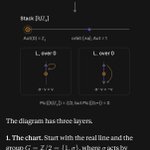
I converted her Stacks for Everybody to a mobile dark PDF and put it on my site if anyone is interested tobilehman.com/archive/fante…


Going to have to learn Stacks now

THE STACKY APPROACH TO DE RHAM–WITT COHOMOLOGY
arxiv.org/abs/2610.28149

