
Buyer at point of maximum pessimism. Not investment advice. Personal positions discussed are from my highest risk PA.
London, England
Joined March 2021
- Tweets6.6K
- Following549
- Followers2.6K
- Likes8.5K




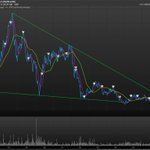


Imperial Brands $IMB.L they are trying to get this too cheap here….. channelnewsasia.com/business…

ValueHurts retweeted

1960s – Oil will run out in 10 years.
1970s – A new Ice Age is imminent.
1980s – Acid rain will wipe out our crops.
1990s – The ozone layer will disappear.
2000s – The Arctic will be ice-free.
2010s – We have 10 years to save the planet.
2020s – Net zero is our last chance to survive.
The apocalypse never came, but the demands remained the same: MORE TAXES, LESS FREEDOM, MORE CONTROL.
ValueHurts retweeted

$NVDA makes sense now. Enron.
Just have to search the last time a CEO stepped down and was quickly brought back.
Kenneth Lay returned as CEO of Enron on August 14, 2001. Just 110 days later, Enron filed for bankruptcy.
His return is one of the most consequential CEO comebacks in American corporate history. However, Lay had not been fired. He had voluntarily handed the CEO position to Jeffrey Skilling six months earlier while remaining chairman.
1. Why Lay returned
Lay had led Enron since its creation in 1985, transforming a natural-gas pipeline business into a massive energy-trading company.
In February 2001, he transferred the CEO position to Jeffrey Skilling.
But on August 14, Skilling unexpectedly resigned, citing personal reasons.
Enron’s board immediately asked Lay to resume his CEO responsibilities.
In the company’s official announcement, Lay expressed confidence in Enron’s business and growth prospects.


Starting to look at the gold and silver miners again. May even buy a few of the small names this time round.
10
604

Princes Group $prn.l good news regarding the acquisition of the brands and manufacturing facilities from Mondelez France. Paid 4.5X adjusted Ebitda to the EV.
Mostly those crunchy bread rusk things that you get in Europe. Your mum would have spread cream cheese and sliced cucumber on them in the 80s.

5
777


Good trading update last week from Princes Group $PRN.L tools.eurolandir.com/tools/P…
Also good to see increased marketing of its brands.

2
7
951
How I see the UK’s politics playing out over the next decade.
Labour call a snap election and win due to the fractured right wing.
Nigel Farage loses leadership of Reform to Robert Jenrick. Nigel is seen as too old school and dodgy. He changed politics in the U.K. but is part of the past.
Restore combines with Reform with both sides conceding on some matters including forced migration being shelved.
Rupert Lowe and Zia Yusuf grit their teeth and make up.
Things get so bad economically that the Conservatives and Reform combine to further secure the next election. A Thatcherite “New Conservative” party is formed.
1
4
753

I still can’t believe nearly everyone I spoke to 5 years ago was adamant that wind power was cheaper than fossil fuels…..

Energiekonzerne wollen bereits ersteigerte Offshore-Flächen zurückgeben, weil sich die geplanten Windparks wirtschaftlich nicht mehr rechnen. Steigende Baukosten, verzögerte Netzanschlüsse und unsichere Erlöse bringen Projekte mit bis zu 9,5 Gigawatt ins Wanken. Der Staat plant deshalb eine Neuvergabe – während der Industrie Aufträge und Tausende Arbeitsplätze fehlen.
#OffshoreWind #Windenergie #Energiewende #Industrie
blackout-news.de/aktuelles/o…

1
13
969

ValueHurts retweeted

Sir John Cowperthwaite ran Hong Kong's finances from 1961 to 1971 and treated regulation like a tax on discovery. Nobody in government can know which business will work, so he refused to pick, plan, or protect.
Whitehall sent officials to Hong Kong to push for economic statistics, and he sent them home. When Milton Friedman asked in 1963 why he collected so little data, Cowperthwaite answered: "If I let them compute those statistics, they'll want to use them for planning." Numbers give planners a reason to act, and every plan arrives as a rule that tells entrepreneurs what they may not try. Asked what poor countries should do to grow, he said they should abolish the office of national statistics.
He rebuffed tariffs, opposed corporate subsidies, and refused London's push to raise taxes. When a legislator proposed that the government back promising industries, he asked how the government could possibly know which ones those were.
The results arrived without a plan. During his decade as Financial Secretary, real wages rose 50% and the share of residents in acute poverty fell from 50% to 15%. When he took the job, the average Hong Kong resident earned about a quarter of what a Briton earned. By the early 1990s, Hong Kongers out-earned Britons. Britain, the birthplace of the Industrial Revolution, planned its economy with ministries full of statisticians and fell behind a rock with no resources except a harbor.
Every regulation assumes a regulator who knows which experiments to allow. That regulator does not exist, so each gate he builds blocks the ideas nobody in the room could have predicted. Hong Kong's most valuable policy was the absence of a gatekeeper.
As far as civil servants go, this guy is the GOAT.
