

Public Finance & Economic Policy | Fiscal Federalism | Evidence-based policy analysis for Pakistan
Islamabad
Joined May 2013
- Tweets469
- Following180
- Followers131
- Likes335




Pakistan's economic potential is far greater than its current performance.
Look at the opportunities:
• Agriculture: $2.6bn export potential
• Industry : $46–146bn exports gap
• IT : $10–18bn .
• Minerals: $7.7bn only from Reko Diq
• Tourism: $1.15bn
• Blue economy: $568m seafood
• Skilled manpower: $41.6bn
We have resources, What we need is consistent policy, competitive conditions, investment and capable institutions.

Waqas Paracha retweeted

IMF condition met to identify top 10 entities vulnerable to corruption risk!
Power distribution companies (Discos) are at a high risk of corruption, and three other entities including the Federal Board of Revenue (FBR) are facing substantial risks, revealed a National Corruption Assessment report released last week under the International Monetary Fund (IMF) condition.
tribune.com.pk/story/2642146…

Waqas Paracha retweeted

OICCI's latest survey reveals a dramatic decline:
• Overall business confidence: +13% to −23%.
• Foreign investor confidence: +28% to −27%.

Government claims Economy Is Stabilising. So Why Is Business Confidence Collapsing?
OICCI's latest survey reveals a dramatic decline:
• Overall business confidence: +13% to −23%.
• Foreign investor confidence: +28% to −27%.
Stabilisation without investment and growth is not economic success.
Yet our political priorities remain misplaced. Instead of fixing governance, taxation, regulation, energy costs and the investment climate, we debate creating more provinces and expanding government.
Pakistan needs better governance, not more governments.
The real test of economic success is not the confidence of foreign lenders, but of those who invest, produce and create jobs.
Fix governance and policies. Not provincial boundaries.
Business confidence plunges: OICCI - Newspaper - DAWN.COM share.google/dINhpGwr0UWW174…
Pakistan’s Mobile Device Manufacturing Policy 2020 aimed for 49% local value addition by June 2023. But by 2026, actual is 10–15%.
The contrast: India exported $30.1bn and Vietnam $56.7bn in phones.
Why can’t we build local supply chains, develop technology and compete in global markets?

Wheat flour (Atta آٹا ), a basic necessity, costs nearly 40% more in Pakistan than in neighbouring countries.
Official average (24 Nov 2026): Pakistan PKR 155/kg, India PKR 114/kg and Bangladesh PKR 111/kg
In some Pakistani cities, it costs as much as PKR 180–200/kg.

Waqas Paracha retweeted

1/ Years needed to DOUBLE average income at #WorldBank estimates:
🇮🇳 India (~6.0%/yr): ~12 YRS (2038)
🇱🇰 Sri Lanka (~4.0%/yr POST-DEFAULT!): ~18 YRS (2044)
🇧🇩 Bangladesh (~3.9%/yr): ~18 YRS (2044)
🇳🇵 Nepal (~2.9%/yr): ~24 YRS (2050)
🇵🇰 Pakistan (1.6%/yr): 44 YRS (2070)


We are stabilising the numbers, but not strengthening the economy
- Poverty - 29%,
- Trade deficit $10.8bn in 3 months.
- interest 36.6%
- Total Debts and Liabilities 100 Trillion
The problem is bigger than fiscal number


Article 172(3) guarantees equal share of oil and gas profit, yet provinces get nothing from Rs3.6 trillion in company profits.
Article 38(g) calls for fair provincial representation in federal services and corporations, yet Punjab has 2/3 of senior federal positions.


KP is facing extraordinary challenges, from security to mounting fiscal pressures. These cannot be managed through ad hoc decisions and administrative reshuffling.
Where is the government’s think tank to develop a coherent, long-term response?
dawn.com/news/2046398?utm_so…

25 multinationals have left Pakistan, Net FDI fell 34% to just $1.64bn in FY26.
Sudden import curbs, changing taxes and high energy costs send the wrong signals. Investors need predictable policies, not another incentivepackage.

Investors do not need Pakistan to be cheap, they need it to be predictable. Capital will only come when investors see a policy framework that is clear, written into law and not subject to change with the latest whim, crisis or budget cycle.
dawn.com/news/2046411/why-fo…

Pakistan is falling behind its neighbours, even Bangladesh is ahead on key indicators.
Bangladesh exports $48bn against our $32bn. Its per capita income is $2,597 versus our $1,596. Nearly 49% of our revenue goes to interest payments.
What went wrong? We need productivity, exports and economic reform, not another cycle of crisis management.
@PIDEpk @SDPIPakistan @FinanceGovPk @WBG_Pakistan

With existing GDP growth, continued PKR depreciation, unchanged export growth, unchanged NFC structure, fiscal pressures will intensify.
By 2046 Pakistan’s
- Population 350 million
- Public debt Rs870–1,515 trillion
• Poverty 50% (190 million people)
@Financegovpk @PIDEpk @SDPIPakistan @81ShahbazRana

Pakistani female graduates outnumbered men: 272k vs 250k.
The next challenge is converting this educational achievement into economic participation, leadership and productivity.

Globally, women are now more likely to enroll in higher education than men.
In the 1970s, outside of rich countries, very few people went on to higher education. Globally, it was more likely for men, but still uncommon.
The chart shows how this changed in the decades that followed: enrollment increased for both genders, but faster for women. The gap reversed at the turn of the century, and has widened since.
Today, two generations later, the global rates are 47% for women and 41% for men.
Both the expansion of higher education and the reversal of the gender gap have happened across most of the world. With the exception of Sub-Saharan Africa, the rate for women is now at least as high as the rate for men in all regions.
(written by @EOrtizOspina)

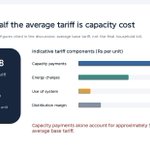
Huge fixed capacity payments, more consumers shift to solar, fewer units are sold, resulting higher unit cost.
Simple maths: If grid sales fall by 20%, the capacity cost per unit rise from Rs17.56 to Rs21.95
The solution is not to discourage solar. It is to fix the power sector


A weaker currency cannot compensate for an uncompetitive economy.
Two decades of exchange-rate adjustments, yet little export transformation.
Op-Ed:
"Adjustments to the exchange rate always come when their hand is forced by market reality, which means devaluations come when the State Bank’s liquid reserves fall below the level required to keep rampant dollarisation in check."
dawn.com/news/2045585

71
A 15,000-tonne shipment is welcome, but Pakistan imports over half its LPG needs. The real test is whether pricing reforms bring private importers back.

Pakistan finalises a plan to procure 16 LNG cargoes to ensure uninterrupted gas supplies from November 2026 to February 2027.
Read more: brecorder.com/news/40449661/…
#LNG #Pakistan

74