

Biotechnology professional tweets are strictly my own. #ADC, #bispecifics, #multivalent design in oncology
Frederick, Maryland
Joined April 2020
- Tweets1.8K
- Following527
- Followers360
- Likes1.4K



Breaking news in oncology.
One antibody backbone, positive on 95–100% of tumors across six different adenocarcinomas, colorectal, pancreatic, gastric, breast, lung, and prostate, and it was not designed in a lab. Cancer patients' own immune systems raised it.
Following ASCO, Vaccinogen has opened CTA-1 for evaluation.
In solid tumors, the chemistry rarely fails; the target does, and the lost cost shows up in Phase 3. TROP2, CEACAM5, mesothelin, and across 2025 and 2026 the collapse of the TIGIT class are the same lesson: a target chosen before anyone knew how it would behave inside a patient, and present on too few of the cells that matter.
CTA-1 is a fully human IgG1 that patients generated in vivo, under their own immune tolerance, against their own intact tumor, and it converged on a conserved malignant-epithelial signature that ordinary genomic discovery cannot see.
The read on CTA-1 is broad and homogeneous across adenocarcinoma. Due to the demand, we are putting CTA-1 in your hands on a non-exclusive basis to run the staining on your own tissue and try to break it. Because it is fully human, the same backbone can, in principle, travel into an ADC, a bispecific, or a radioligand without resolving the target! So, a positive evaluation represents a significant platform across your development portfolio.
If you build solid-tumor ADCs, bispecifics, or radioligands and your bottleneck is the target, read the piece linked below, email [email protected]. Our confidence means we will validate CTA-1 on your own tissue, at our cost, in 90 days. Try before you buy is the model.
#Oncology #Immunotherapy #ADC #DrugDevelopment. OncoDaily, OncoDaily Breast. OncoDaily GI, Lilly Oncology International, Lilly Oncology
linkedin.com/feed/update/urn…

92

Cancer is a heterogeneous disease. A solid tumor is not one clump of identical cells. It is a population of thousands of genetically distinct clones and subclones, each presenting a distinct antigenic profile, each evolving in real time to evade the immune system.
As Trump 47 Administration leader, Dr. Ben Carson said during his tenure as Chairman at the Maryland-based small business, Vaccinogen, A heterogeneous disease must be treated with commonsense heterogeneous therapy, which is why I chose to join Vaccinogen.
The Big Pharma homogeneous drug development strategy is why more than 50 cancer vaccines have failed over the past three decades. Every one of them aimed at a single curated target — one antigen, one peptide panel, one engineered epitope. Nature builds tumors that defeat any one weapon. And nature has been winning that fight for 30 years.
There is one cancer vaccine in America today built on a different principle. It is called OncoVAX®. It is made from the patient's own resected tumor and presents the complete antigenic landscape — the full malignant population — to the patient's own immune system. A heterogeneous, personalized therapy for a heterogeneous, personalized disease.
This is not a foreign idea. The scientific lineage traces directly to the National Cancer Institute. Dr. Michael G. Hanna, Jr., the first appointed Director of the NCI Frederick Cancer Research Center under President Nixon's War on Cancer, has advanced this NCI-originated program for more than 40 years. It is American science, built in America, for American patients.
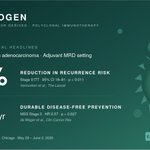
The randomized Phase III evidence, published in The Lancet (Vermorken et al.):
• 254 Stage II/III colon cancer patients, randomized to surgery alone vs. surgery + OncoVAX®
• 61% reduction in recurrence risk in the Stage II subgroup (95% CI 18–81; p = 0.011)
• Validated at 15-year follow-up by de Weger et al., Clinical Cancer Research — hazard ratio 0.57 in the microsatellite-stable Stage II subgroup (p = 0.027)
• A simple and low-cost personalized cancer recurrence prevention medicine delivered in the outpatient setting. No serious treatment-related adverse events.
This is the most durable solid-tumor recurrence-prevention outcome ever recorded in a Phase III dataset.
Now look at who needs it. More than 80% of Stage II colon cancers in this country are microsatellite-stable. For these patients:
• costly and toxic PD-1 / CTLA-4 checkpoint blockade does NOT work — the tumor microenvironment is immunologically "cold"
• Adjuvant FOLFOX / CAPOX chemotherapy delivers <5% absolute disease-free survival benefit and ZERO overall survival benefit
• Engineered neoantigen mRNA vaccines lack the antigenic breadth to address tumor heterogeneity and have no longer term safety reported. This is especially important following the COVID mRNA vaccines developed by Big Pharma
• There is ZERO FDA-approved adjuvant immunotherapy
>80% of newly diagnosed Stage II patients are sent home to wait and watch. 25–35% will recur within five years as Stage IV metastatic disease. Most will not survive.
Colon cancer is now the leading cause of cancer death in Americans under 50. Three out of four cases in younger adults are caught at an advanced stage. These are not your grandparents' patients — these are working professionals in their 30s and 40s, with families, with futures.
The path forward is already built. OncoVAX® holds an FDA Special Protocol Assessment and Fast Track designation for a 550-patient pivotal trial (NCT02448173). The trial is operationally ready for first-patient enrollment in 2026. Manufacturing is U.S.-based and FDA-authorized. A Data Safety Monitoring Board interim is pre-specified for accelerated BLA potential by 2029.
American-developed. American-manufactured. NCI-originated. FDA-authorized. Ready to enroll patients in 2026.
This is what common-sense medicine looks like: a heterogeneous, personalized weapon for a heterogeneous, personalized disease. Built in Frederick, Maryland. Grounded in the NCI's own four-decade scientific record. Aligned with every priority of the NCI Cancer Vaccine Roadmap, the MAHA agenda, and the MFN America-First framework.
The patients deserve this choice. The data support it. The American manufacturing and clinical infrastructure already exists. The only thing missing is the decision.
@realDonaldTrump @POTUS @SecKennedy @FDA_KyleD @NCIDirector @theNCI @NIHDirector_Jay @DrOzCMS @HHSGov @SusieWiles47 @WhiteHouse @VP @JDVance @RapidResponse47 @elonmusk
#MAHA #MFN #ColonCancer #CommonSenseMedicine #CancerVaccine #AmericaFirst

55
Big Pharma will not develop medicines to prevent the spread of cancer for one reason: they make far more money chasing it after it spreads. FACT.
My small business generated Phase II and Phase III clinical trial outcomes showing OncoVAX cuts the recurrence of colon cancer by 61%, with a durable benefit extending beyond 15 years from a single course of four outpatient shots. Highly effective, low-cost world-class medicine that does the job.
OncoVAX is common-sense medicine:
✅ Great for the patient.
✅ Good for the healthcare system.
✅ Great for the American taxpayer.
❌ Bad for Big Pharma cash flow and shareholder dividend schedules.
And that is why America has not stopped the spread of cancer. Not because we don't know how. Because Big Pharma balance sheets cannot survive a one-and-done cure. CEOs who run the world’s largest drug development companies would have to change the way that they think about drug development, and their multi-million dollar pay packages would suffer from the change.
The science of solid tumor cancer is not complicated. Train the patient's own immune system to see the entire cancer landscape and it will destroy the residual disease the surgeon left behind. Solid tumors are heterogeneous, meaning the cancer is far more than the visible mass on the scan. As Dr. Ben Carson once famously said, "You can’t treat a heterogeneous disease with homogeneous medicine." Single-target drugs will never cure cancer, no matter how sophisticated.
That is the entire story of late-stage cancer in America. And it is exactly the asymmetry that President @realDonaldTrump's MFN order and @SecKennedy's MAHA agenda were built to end.
But no one with a science degree or an MD inside this @WhiteHouse, or on the @WHFraudTF, gives the question two seconds of attention. FACT @SusieWiles47.
If the President knew this, heads would roll. The indifferent senior healthcare policy staffers, too busy attending pharma cocktail parties around the swamp, too worried about offending the same Big Pharma lobbyists the President himself just put on notice, would finally have to make something happen. And for the first time in the history of America's war on cancer, patients would actually receive common-sense medicines at prices every American could afford.
FACTS. But sadly, cowards don’t like them. And shortimers in the 47 Administration couldn't care less. @hubermanlab, @LauraLoomer, @elonmusk, @america
48
America-First Cancer Policy: Why Are We Still Paying to Chase Cancer Instead of Stop It?
The @FDA_KyleD just approved a Roche drug called Tecentriq for bladder cancer patients whose disease has come back at a molecular level after surgery.
The trial that earned FDA approval enrolled 250 patients. The benefit was modest: patients on the drug went 9.9 months before their cancer was detectable again, versus 4.8 months on placebo. To get that benefit, patients receive a year of hospital-based intravenous infusions that carry serious side effects, including the immune system attacking their own organs. The list price exceeds $200,000 per patient per year.
Roche is a Swiss company. American patients and American taxpayers will pay the highest price in the world for that drug, while patients in Switzerland, Germany, and the United Kingdom pay a fraction of what we do for the very same molecule. That is exactly the rip-off President Trump and Secretary Kennedy have said is over.
The One-Way Partnership Secretary Kennedy Called Out
For forty years, the deal between Washington and Big Pharma worked like this: the American taxpayer funded basic science through the National Institutes of Health. The American patient paid the highest drug prices on earth. The American taxpayer subsidized cheap drugs for Europe, Canada, Japan, and Australia. The profits went to a handful of multinational corporations, many of them headquartered outside the United States. This is the low-IQ deal-making that U.S. government bureaucrats of old made quietly with Big Pharma — exactly what we elected President @realDonaldTrump to put a stop to. And he is.
@SecKennedy and his common-sense leadership team have built on that order with seventeen voluntary MFN pricing agreements, the launch of TrumpRx for direct-to-consumer purchasing, and a December 1, 2025 trade agreement with the United Kingdom that raises what the UK pays for new American medicines by 25%. This is what happens when you apply common sense to public policy.
That is the new deal. This is a good deal. This is what winning can look like when you elect high-IQ, no-BS leaders and let them loose to MAGA. Americans stop overpaying. Foreign nations stop free-riding. And the savings get put back into the American patient.
But there is a second half of this fight that has not yet been joined, and it is the more important half.
The MAHA Question Nobody Is Asking Yet, But President Trump!
MAHA is not just about ingredients in food, dyes in cereal, or fluoride in water. Secretary Kennedy has framed the mission as ending the chronic disease epidemic in America. Cancer is the second-leading cause of death in this country, and colon cancer is now the leading cause of cancer death in Americans under 50 years old.
Why Not Target Cancer Prevention Over Chasing Costly and Toxic Metastatic Disease
So the MAHA question for cancer is the same question MAHA asks about every other chronic disease: why is the entire legacy system built to treat cancer after it spreads instead of preventing it early when we can? That's as illogical and low-IQ as noticing your bedroom on fire and deciding to wait until the entire second floor is engulfed before calling the fire department.
How Solid Tumor Cancer Care Actually Works Today
If you are diagnosed with an early-stage solid tumor — colon, breast, lung, kidney — here is the playbook your oncologist follows. It has not changed in forty years.
Wait-and-Watch.
A surgeon removes the tumor that they can see. A pathologist looks at the tissue. If your lymph nodes are clean and there is no obvious spread, you are sent home. You get a scan once a year. You become part of the wait-and-watch patient cohort.
As a result of this failed wait-and-hope strategy, roughly 1 in 3 of you with early-stage cancer will have your cancer come back within 2–5 years. By the time it does, it has usually spread to the liver or the lungs. At that point, treatment from Big Pharma costs a fortune, the side effects are brutal, and most patients do not survive.
That's the failed watch-and-wait strategy of Big Pharma and low-IQ science: chasing the fire once the entire second floor is ablaze, when it could have been avoided.
What Wait-and-Watch Actually Costs American Families
A study published in October 2025 in a peer-reviewed American Association for Cancer Research journal looked at real U.S. insurance claims data from 2017 through 2023. In the first year alone after diagnosis, medical charges for patients whose colon cancer had already spread were $353,255. For patients whose cancer had not yet spread, the figure was $182,000. Nearly double. That was just year one.
A peer-reviewed review published in November 2025 confirmed that the drugs we use after cancer spreads, most of them branded products from the same multinationals President Trump just brought to the MFN negotiating table, are now the single biggest cost driver in late-stage colorectal cancer, and the bill climbs every year as more patients are diagnosed too late, after the kitchen fire has burned out the entire second floor and the water trucks are just being paid to prevent the neighbor's place from being torched.
In January 2026, the Colorectal Cancer Alliance, the largest U.S. nonprofit in this disease, announced that colon cancer is now the leading cause of cancer death in Americans under 50 years old. Three out of four cases in younger adults are caught at an advanced stage. Most will not survive. This isn't your grandparents’ disease; these are young working professionals in their prime earning years, dating, getting married, starting families, who suddenly must confront the potential loss of a 35+ year future and instead, focus on a t-minus 5 year time horizon.
Said bluntly: Wait-and-watch is the most expensive cancer strategy America has, and the American patient pays for it twice. Once at the pharmacy counter for late-stage drugs priced at international markups. Once at the funeral.
Imagine seeing a small kitchen fire on your stovetop and deciding to walk past it, go upstairs, and wait to see if it is out in the morning. The fire is small. The smoke alarm has not gone off yet. By the time it does, the house is in flames, the response costs a hundred times what the extinguisher would have cost, and the outcome is no longer in your control. No homeowner accepts that. No insurance company underwrites it.
But the failed 40-year-long wait-and-watch strategy is the standard of care for one out of three American colon cancer patients today. This doesn't make sense and lacks common sense. But this failed cancer policy makes billions for multinational pharma whose drugs spray water on an out-of-control house fire that will destroy the entire home. That is because it is not in their economic interest to prevent the fire in the first instance.
A Different Way, Designed by Common Sense and Made in America
Treat-to-prevent. A company called Vaccinogen spent several decades building a different kind of cancer medicine, not a foreign-priced drug to chase cancer after it spreads, but an American medicine designed to stop the spread before it happens.
Here is how it works. When the surgeon removes the tumor, a piece of that tissue is shipped to a U.S. manufacturing facility. The patient's own tumor cells are processed and combined with a low-cost immune priming agent that the FDA approved for bladder cancer more than thirty years ago. The result is delivered back to the patient as four outpatient shots over six months. The shots train the patient's own immune system to recognize and destroy the microscopic cancer cells, the invisible marbles, that the surgeon could not see.
It is, in plain terms, a personalized cancer medicine made from the patient, for the patient, manufactured in America. That's called common-sense medicine. And the completed randomized Phase III clinical data confirm this.
The medicine is called OncoVAX. OncoVAX takes aim at something called the minimal residual disease (MRD) setting in Stage II colon cancer, where roughly eight out of ten newly diagnosed Stage II patients for whom there is currently no FDA-approved medicine. That’s stupid, bad for patients, but good for Big Pharma.
What the Clinical Trials Actually Showed
A randomized Phase III trial enrolled 254 MRD Stage II colon cancer patients. Half got surgery alone. Half got surgery plus OncoVAX. The results were published in The Lancet, one of the most widely recognized medical journals on the planet and arguably the hardest to pass peer review.
The OncoVAX patients had a 61% lower risk of their cancer coming back. Roughly 80% of OncoVAX patients were cancer-free at five years. The durable effects of a single course of treatment persisted 15 years later. No cancer drug on the market, foreign or domestic, has ever demonstrated American-made OncoVAX durability. There were no serious treatment-related side effects. The full course of treatment was four outpatient shots and not a year of in-hospital toxic infusions with companion serious adverse events, and not a $200,000-per-patient-per-year cost burden on taxpayers.
Where Things Stand With The FDA
Unlike Roche’s drug, which the FDA just approved from a single, 250-patient trial, OncoVAX must now prosecute a second 550-patient study with a built-in early-stopping rule. If the new data look like the old data, patients could see approval as early as 2029.
Here is why this is a low-IQ, dumb approach: the second trial is projected to cost roughly $100 million and take four to five years from start to finish. During that wait, American colon cancer patients keep being sent home to wait and watch. And why would FDA approve a cancer medicine from a single non-randomized trial for a Big Pharma that will chase metastatic disease, but require a second trial from an American small business that delivered exceptional clinical outcomes from a randomized Phase III trial with more patients — a trial that clearly demonstrates we can prevent recurrence with common-sense medicine that lasts more than 15 years and costs the taxpayer a fraction, and I mean a fraction, of the cost of the drug approved to chase metastatic disease?
Why The Math Should Bother Every American
The FDA just granted Priority Review and approval to a $200,000-per-year Swiss drug that delays bladder cancer recurrence by five months in a 250 patient single trial. That is appropriate when it is the best available science. No quarrel with that decision.
But the same agency requires a $100 million, four-to-five-year confirmatory trial for an American-made medicine that, in a randomized 254-patient Phase III study published in The Lancet, cut colon cancer recurrence by 61%, delivered durable benefit measured in decades, costs a fraction of late-stage care, and produced no serious side effects?
One drug (Roche) chases the disease after it spreads, at a price set in Basel. The other (Vaccinogen, Inc.’s OncoVAX) was designed to stop it from spreading, at a price that can be set in America.
Guess which one moved faster through the system. As a businessman, when there is an equal playing field in drug development, I am confident that American innovators in science will end the flawed Big Pharma rip-off of the past and usher in real innovation that means cancer is no longer a death sentence. I would know, OncoVAX is my small business's common-sense approach, whose team believes in putting out a small kitchen fire with common sense rather than walking past it to head to bed and hoping that it is out in the morning.
My story is the asymmetry MAHA was built to fix. This is the one-way partnership President Trump's MFN order was built to end.
Two Simple Things This Administration Could Do Right Now, Consistent With MFN and MAHA
One. Approve OncoVAX following the same rules that were applied to the Big Pharma Roche drug.
Two. Include OncoVAX in the @NCIDirector's new cancer initiative. NCI and the Foundation for the NIH launched a national cancer roadmap in March 2026. Its stated priorities are "shovel-ready" projects, prevention of cancer recurrence, and stopping the spread.
OncoVAX checks every one of those boxes, well beyond any of the Big Pharma mRNA drugs being championed by the multinational sponsors behind them. Putting OncoVAX in the first stage of demonstration projects would deploy federal capital alongside the American manufacturing and clinical infrastructure already in place, the kind of America-First investment that MFN and MAHA were designed to enable.
Bottom Line
Prevention is cheaper than chasing cancer. Putting out a small kitchen fire is cheaper than waiting for the entire home to be engulfed before you take action. The peer-reviewed math says so. The patient outcomes say so. Common sense says so. And it is exactly the kind of medicine the MAHA and MFN agenda were built to deliver: made in America, priced for Americans, designed to stop cancer before it bankrupts families and ends lives.
For forty years, the American cancer ecosystem has moved with priority and speed for late-stage drugs that cost six figures a year, that are often manufactured abroad, and that extend life by months. It has moved slowly on early-stage prevention medicines, even ones with fifteen-year durability, four outpatient shots, no serious side effects, and a scientific lineage that traces back to the National Cancer Institute itself. This is common-sense medicine when applied to common-sense science.
That asymmetry is the policy question. Not whether the FDA is biased. Not whether any one company is the villain. The question is whether the agencies, under the leadership of President Trump, Secretary Kennedy, and Administrator Oz, use the tools they already have — MFN pricing, real-world evidence pathways, the NCI cancer roadmap — to give American patients a real choice before the disease comes back, instead of after.
The days of Americans paying the world's highest prices for late-stage chase-the-cancer medicine, while the cure-it-early medicine sits in a regulatory holding pattern, should be over.
The patients deserve that choice. The data support it. The American infrastructure exists. The only thing missing is the decision.
@realDonaldTrump @POTUS @SecKennedy @DrMakaryFDA @NCIDirector @SusieWiles47 cc: @WhiteHouse @VP @JDVance @NIHDirector_Jay @DrOzCMS @theNCI @HHSGov @RapidResponse47 @elonmusk
#MAHA #ColonCancer #CommonSenseMedicine

253
America First Cancer Policy: Why Are We Still Paying Foreign Prices to Chase Cancer Instead of American Prices to Stop It?
The @FDA_KyleD just approved a Roche drug called Tecentriq for bladder cancer patients whose disease has come back at a molecular level after surgery.
The trial that earned FDA approval enrolled 250 patients. The benefit was modest. Patients on the drug went 9.9 months before their cancer was detectable again, versus 4.8 months on placebo. To get that benefit, patients receive a year of hospital-based intravenous infusions that carry serious side effects, including the immune system attacking their own organs. The list price exceeds $200,000 per patient per year.
Roche is a Swiss company. American patients and American taxpayers will pay the highest price in the world for that drug, while patients in Switzerland, Germany, and the United Kingdom pay a fraction of what we do for the very same molecule. That is exactly the rip-off President Trump and Secretary Kennedy have said is over.
The One-Way Partnership Secretary Kennedy Called Out
For forty years, the deal between Washington and Big Pharma worked like this. The American taxpayer funded basic science through the National Institutes of Health. The American patient paid the highest drug prices on earth. The American taxpayer subsidized cheap drugs for Europe, Canada, Japan, and Australia. The profits went to a handful of multinational corporations, many of them headquartered outside the United States. This was the low-IQ deal-making that US government bureaucrats of old made quietly with Big Pharma that we elected President @realDonaldTrump to put a stop to. And he is.
@SecKennedy and his common-sense leadership team have built on that order with seventeen voluntary MFN pricing agreements, the launch of TrumpRx for direct-to-consumer purchasing, and a December 1, 2025 trade agreement with the United Kingdom that raises what the UK pays for new American medicines by 25%. This is what happens when you apply commonsense to public policy.
That is the new deal. This is a good deal. This is what winning can look like when you elect high-IQ, no-BS leaders and let them loose to MAGA. Americans stop overpaying. Foreign nations stop free-riding. And the savings get put back into the American patient.
But there is a second half of this fight that has not yet been joined, and it is the more important half.
The MAHA Question Nobody Is Asking Yet
MAHA is not just about ingredients in food, dyes in cereal, or fluoride in water. Secretary Kennedy has framed the mission as ending the chronic disease epidemic in America. Cancer is the second-leading cause of death in this country, and colon cancer is now the leading cause of cancer death in Americans under 50 years old.
Cancer Prevention Over Chasing Costly and Toxic Metastatic Disease.
So the MAHA question for cancer is the same question MAHA asks about every other chronic disease: why is the entire legacy system built to treat cancer after it spreads instead of preventing it early when we can? That’s as illogical and low-IQ as noticing your bedroom on fire and deciding to wait until the entire second floor is engulfed before calling the fire department.
How Cancer Care Actually Works Today
If you are diagnosed with an early-stage solid tumor, colon, breast, lung, kidney, here is the playbook your oncologist follows. It has not changed in forty years.
Wait-and-Watch. A surgeon removes the tumor that they can see. A pathologist looks at the tissue. If your lymph nodes are clean and there is no obvious spread, you are sent home. You get a scan once a year. You become part of the wait-and-watch patient cohort.
The problem with wait-and-watch is the biology it ignores. A solid tumor is not a single clump of cells. It is a population of thousands of genetically distinct cell copies, all dividing, all evolving in real time to evade your immune system. Think of it as a bag of marbles in a thousand different sizes. Surgery removes the marbles big enough to see. The microscopic ones, the ones the scan cannot pick up, get left behind. Your oncologist and the surgeon who removed the tumor mass go home to their families and sleep well at night because it is not their tumor they removed.
As a result of this failed wait and hope strategy, roughly 1 in 3 of your with early-stage cancer will have your cancer come back within 2-5 years. By the time it does, it has usually spread to the liver or the lungs. At that point, treatment from big pharma costs a fortune, the side effects are brutal, and most patients do not survive. That’s the failed watch and wait strategy of big pharma and low-IQ science. Chasing the fire once the entire second floor is ablaze that was avoidable.
What Wait-and-Watch Actually Costs American Families
A study published in October 2025 in a peer-reviewed American Association for Cancer Research journal looked at real US insurance claims data from 2017 through 2023. In the first year alone after diagnosis, medical charges for patients whose colon cancer had already spread were $353,255. For patients whose cancer had not yet spread, the figure was $182,000. Nearly double. That was just year one!
A peer-reviewed review published in November 2025 confirmed that the drugs we use after cancer spreads, most of them branded products from the same multinationals President Trump just brought to the MFN negotiating table, are now the single biggest cost driver in late-stage colorectal cancer, and the bill climbs every year as more patients are diagnosed too late, after the kitch fire has burned out the entire second floor and the water trucks are just being paid to prevent the neighor’s place from being torched.
In January 2026, the Colorectal Cancer Alliance, the largest US nonprofit in this disease, announced that colon cancer is now the leading cause of cancer death in Americans under 50 years old. Three out of four cases in younger adults are caught at an advanced stage. Most will not survive. This isn't your grandparents' disease; these are young working professionals getting married, starting families, who suddenly must confront a 35 + year future of living to t-minus 5 years!
Said bluntly: wait-and-watch is the most expensive cancer strategy America has, and the American patient pays for it twice. Once at the pharmacy counter for late-stage drugs priced at international markups. Once at the funeral.
Imagine seeing a small kitchen fire on your stovetop and deciding to walk past it, go upstairs, and wait to see if it is out in the morning. The fire is small. The smoke alarm has not gone off yet. By the time it does, the house is in flames, the response costs a hundred times what the extinguisher would have cost, and the outcome is no longer in your control. No homeowner accepts that. No insurance company underwrites it.
But that failed strategy is standard of care for one out of three American colon cancer patients today. This stupid and lacks any commonsense. But it makes billions for multinational pharma whose drugs spray water on an out-of-control house fire that will destroy the entire home.
A Different Way, Designed by Common Sense and Made in America
Treat-to-Prevent. A company called Vaccinogen spent several decades building a different kind of cancer medicine. Not a foreign-priced drug to chase cancer after it spreads, but an American medicine designed to stop the spread before it happens.
Here is how it works. When the surgeon removes the tumor, a piece of that tissue is shipped to a US manufacturing facility. The patient's own tumor cells are processed and combined with a low-cost immune priming agent that the FDA approved for bladder cancer more than thirty years ago. The result is delivered back to the patient as four outpatient shots over six months. The shots train the patient's own immune system to recognize and destroy the microscopic cancer cells (the invisible marbles example) that the surgeon could not see.
It is, in plain terms, a personalized cancer medicine made from the patient, for the patient, manufactured in America. That’s called commonsense medicine.
The medicine is called OncoVAX. OncoVAX takes aim at minimal residual disease Stage II colon cancer, roughly eight out of ten newly diagnosed Stage II patients for whom there is currently no FDA-approved medicine. These are exactly the patients who today are sent home to wait and watch.
What the Clinical Trials Actually Showed
A randomized Phase III trial enrolled 254 Stage II colon cancer patients. Half got surgery alone. Half got surgery plus OncoVAX. The results were published in The Lancet, which is one of the most widely recognized cancer medical journals on the planet and arguably the hardest to pass peer review!
The OncoVAX patients had a 61% lower risk of their cancer coming back. Roughly 80% of OncoVAX patients were cancer-free at five years. The durable effects of a single course of treatment persisted 15 years later. No cancer drug on the market, foreign or domestic, has demonstrated American-made OncoVAX durability. There were no serious treatment-related side effects. The full course of treatment was four outpatient shots. Not a year of in-hospital toxic infusions with companion serious adverse effects. Not a $ 200,000-per-year-per-patient cost burden on taxpayers.
Where Things Stand With The FDA
Unlike Roche's drug, which was FDA-approved on a single 250-patient trial, OncoVAX must now prosecute a second 550-patient study with a built-in early-stopping rule. If the new data look like the old data, patients could see approval as early as 2029.
Here is why this is a low-IQ dumb approach: The second trial is projected to cost roughly $100 million and take four to five years from start to finish. During that wait, American colon cancer patients keep being sent home to wait and watch. And why would FDA approve a cancer medicine from a single non-randomized trial for a big pharma that will chase metastatic disease but require a second trial from an American small business that delivered exceptional clinical outcomes from a randomized Phase III trial with more patients that clearly demonstrates we can prevent recurrence with commonsense medicine that lasts more than 15 years and costs the taxpayer a fraction and I mean a fraction of the cost of the drug approved to chase metastatic disease???
Why The Math Should Bother Every American
The FDA just granted Priority Review and approval to a $200,000-per-year Swiss drug that delays bladder cancer recurrence by five months in 250 patients. That is appropriate when it is the best available science. No quarrel with that decision.
But the same agency requires a $100 million, four-to-five-year confirmatory trial for an American-made medicine that, in a randomized 254-patient Phase III study published in The Lancet, cut colon cancer recurrence by 61 %, delivered durable benefit measured in decades, costs a fraction of late-stage care, and produced no serious side effects?
One drug chases the disease after it spreads, at a price set in Basel. The other was designed to stop it from spreading, at a price that can be set in America. Guess which one moved faster through the system. As a businessman, when there is an equal playing field in drug development, I am confident that American innovators in science will end the flawed, Big Pharma rip-off of yesterday and usher in real innovation that means cancer is no longer a death sentence. I would know, OncoVAX is my small business common-sense approach from a small town in Maryland whose team believes in putting out a small kitchen fire with commonsense than walking past to head to bed and hope that it is out in the morning.
My story is the asymmetry MAHA was built to fix. This is the one-way partnership President Trump's MFN order was built to end.
Three Things This Administration Could Do Right Now, Consistent With MFN and MAHA
One. Approve OncoVAX following the same rules that were applied to the big pharma Roche drug.
Two. Include OncoVAX in the @NCIDirector's new cancer initiative. NCI and the Foundation for the NIH launched a national cancer roadmap in March 2026. Its stated priorities are "shovel-ready" projects, prevention of cancer recurrence or stopping the spread.
OncoVAX checks every one of those boxes, way beyond any of the big-pharma mRNA drugs being championed by the multinational sponsors behind them. Putting OncoVAX in the first stage of demonstration projects would deploy federal capital alongside the American manufacturing and clinical infrastructure already in place, the kind of America-First investment that MFN and MAHA were designed to enable.
Bottom Line
Prevention is cheaper than chasing. Kitchen fires are cheaper than entire homes engulfed. The peer-reviewed math says so. The patient outcomes say so. Common sense says so. And it is exactly the kind of medicine the MAHA and MFN agenda were built to deliver: made in America, priced for Americans, designed to stop cancer before it bankrupts families and ends lives.
For forty years, the American cancer system has moved with priority and speed for late-stage drugs that cost six figures a year, that are often manufactured abroad, and that extend life by months. It has moved slowly on early-stage prevention medicines, even ones with fifteen-year durability, four outpatient shots, no serious side effects, and a scientific lineage that traces back to the National Cancer Institute itself. This is commonsense medicine when applied to commonsense science.
That asymmetry is the policy question. Not whether the FDA is biased. Not whether any one company is the villain. The question is whether the agencies, under the leadership of President Trump, Secretary Kennedy, and Administrator Oz, use the tools they already have, MFN pricing, real-world evidence pathways, the NCI cancer roadmap, to give American patients a real choice, before the disease comes back, instead of after.
The days of Americans paying the world's highest prices for late-stage chase-the-cancer medicine, while the cure-it-early medicine sits in a regulatory holding pattern, should be over.
The patients deserve that choice. The data support it. The American infrastructure exists. The only thing missing is the decision.
@realDonaldTrump @POTUS @SecKennedy @DrMakaryFDA @NCIDirector @SusieWiles47,
cc: @WhiteHouse @VP @JDVance @NIHDirector_Jay @DrOzCMS @theNCI @HHSGov @RapidResponse47 @elonmusk
#MAHA #ColonCancer #CommonSenseMedicine
References
U.S. Food and Drug Administration. Tecentriq (atezolizumab) prescribing information and approval announcement, muscle-invasive urothelial carcinoma minimal residual disease indication. FDA Press Announcements, May 2026. [Regulatory document — please substitute the exact FDA press release URL and approval letter docket number from the original source you reviewed; I was unable to independently locate the specific MRD bladder cancer approval cited in the original post within the search results available.]
The White House. Executive Order, Delivering Most-Favored-Nation Prescription Drug Pricing to American Patients. May 12, 2025. Available at: whitehouse.gov/ — see also Congressional Research Service Legal Sidebar LSB11319. congress.gov/crs-product/LSB…
U.S. Department of Health and Human Services. HHS, CMS Set Most-Favored-Nation Pricing Targets to End Global Freeloading on American Patients. HHS Press Release, May 20, 2025. hhs.gov/press-room/cms-mfn-l…
The White House. Fact Sheet: President Donald J. Trump Announces Largest Developments to Date in Bringing Most-Favored-Nation Pricing to American Patients. December 2025. whitehouse.gov/fact-sheets/2…
The White House. Savings from Most-Favored-Nation Drug Pricing Policy. Council of Economic Advisers Report, May 2026. whitehouse.gov/research/2026…
Colorectal Cancer Alliance. Annual report on early-onset colorectal cancer mortality in Americans under age 50. January 2026. [Nonprofit advocacy statement — substitute the exact press release URL from the original source.]
American Association for Cancer Research. Real-world insurance claims analysis of first-year medical charges in metastatic versus non-metastatic colorectal cancer, US claims data 2017–2023. AACR peer-reviewed journal, October 2025. [Peer-reviewed publication — please insert authors, full title, journal name, volume, issue, pages, year, and DOI from the original source. I was unable to independently locate this study in the search results provided; verify before publication.]
Review article on cost drivers in late-stage colorectal cancer treatment. Peer-reviewed publication, November 2025. [Peer-reviewed review — please insert full bibliographic detail (authors, title, journal, volume, issue, pages, DOI) from the original source.]
Vermorken JB, Claessen AME, van Tinteren H, et al. Active specific immunotherapy for stage II and stage III human colon cancer: a randomised trial. The Lancet. 1999;353(9150):345–350. doi:10.1016/S0140-6736(98)07186-4. PMID: 9950438. [Note: This is the foundational OncoVAX Phase III trial. The original post describes outcomes (61% reduction in recurrence risk) consistent with this Lancet publication; please verify the specific 254-patient figure and the 80% disease-free at 5 years figure against the primary publication, as the trial enrolled patients across Stage II and Stage III in the original report.]
Hanna MG Jr, Hoover HC Jr, Vermorken JB, Harris JE, Pinedo HM. Adjuvant active specific immunotherapy of stage II and stage III colon cancer with an autologous tumor cell vaccine: first randomized phase III trials show promise. Vaccine. 2001;19(17–19):2576–2582. Long-term follow-up subsequently published in Clinical Cancer Research. [Please insert exact authors, year, volume, issue, pages, and DOI for the long-term Clinical Cancer Research follow-up referenced in the original post; I was unable to confirm the specific >15-year follow-up citation in the search results.]
U.S. Food and Drug Administration. Considerations for the Use of Real-World Data and Real-World Evidence to Support Regulatory Decision-Making for Drug and Biological Products. Guidance for Industry. 2023. fda.gov/regulatory-informati…

309
David Meyer Oxley retweeted
Who do I let know about a federal funding action being considered in your administration that uses taxpayers’ resources. Please advise.
🚨 ALERT 🚨 BIG PHARMA RIP OFF 🚨
To anyone reading this, the @WHFraudTF needs to know if we ever hope to overcome BIG PHARMA grip and deliver common-sense medicine that benefits patients and the taxpayer!
@realDonaldTrump, @SecKennedy, Last week @FDA_KyleD approved a drug called Tecentriq, made by the Swiss global pharmaceutical giant Roche, to prevent recurrence of bladder cancer after surgery. The approval was based on a single study of 250 patients followed for only a matter of months. Roche received priority review and a green light to market the drug.
Meanwhile, my American small business in Frederick, Maryland, has spent decades developing a safe and effective cancer recurrence prevention medicine called OncoVAX for patients with a similar early-stage solid tumor cancer, colon cancer, which is the leading cancer killer of Americans under the age of fifty years.
Like Roche, we completed a Phase III clinical trial. Our drug was evaluated in 254 Stage II colon cancer patients. Unlike Tecentriq, OncoVAX reduced cancer recurrence by approximately 61% at five years! This was published in The Lancet. More importantly, in a follow-up analysis published in Clinical Cancer Research we looked at the same patient population 15 years later, confirming that the benefit of a single treatment remained statistically significant.
The benefit was strongest in patients with microsatellite stable disease, which represents 80%-85% of those patients with early-Stage II colon cancer, the exact population group that does not respond to the new generation of checkpoint inhibitor cancer drugs from big pharma or the newer chemotherapies.
Despite this stark contrast, FDA is requiring my small American company to enroll and treat an additional 550 patients in a confirming trial before granting approval.
Let me state this plainly. Roche, a Swiss multinational with annual revenues in the tens of billions of dollars, was approved on 250 patients in a setting where treatment options already exist.
Vaccinogen, an American small business, is being required to run 550 more patients in a setting with zero approved therapies and where we have already shown 15 years of durable benefit from just a single four-dose treatment. No other cancer recurrence prevention therapy in any solid tumor has ever demonstrated that kind of long-term protection from such a short course of treatment.
This is because we use common sense to prevent recurrence. And this is because solid tumors are a landscape of thousands of heterogeneous clones and subclones of sizes that are visible and detectable to the surgeon removing the tumor mass and in some cases undetectable even to modern diagnostic technologies.
OncoVAX uses the patient’s own whole tumor as the starting material and mixed with an FDA approved immune priming agent that then arms the same patient with the entire antigenic tumor landscape 3 times plus a 6 month booster to train the immune system to see and kill what surgery leaves behind and what modern solid tumor detection missing until the tumor has spread and the patient must then go to toxic and costly immunotherapies that chase the disease that we should have and could have prevented from spreading in the fist place.
I get that the decades-old “wait-and-watch" strategy is great for the big pharma that makes drugs to treat the spread with $450-$600k per patient per year costs to the taxpayers but this is the opposite of commonsense.
OncoVAX was the idea of Dr. Michael G. Hanna Jr., the founding director of the National Cancer Institute's Frederick research campus and the American scientist whose earlier work delivered TICE BCG, the bladder cancer treatment the Food and Drug Administration approved in 1990 that remains the global standard of care to this day. Dr. Hanna is ninety years old and still leading this fight.
My request to the Trump administration is simple and aligned with the Make America Healthy Again agenda.
Grant us the same approval that your FDA granted to Roche and require us to operate a patient registry that tracks all patients treated with OncoVAX.
Preventing cancer recurrence costs roughly $50k per life-year saved. Chasing the disease after it spreads costs roughly $450K per year per year. And now you know why Big Pharma offers incrementalism drugs that chase metastatic disease rather than develop a one-and-done patient treatment like OncoVAX!
I have no lobbyist in Washington. I have only peer-reviewed published data in The Lancet and Clin Cancer Research, a forty-five-year track record of American science, and patients who are dying from colon cancer recurrences, we have the tool to prevent.
Please help me get this message to the White House and to the Department of Health and Human Services.
We only ask for a leveling of the regulatory playing field. We know that we will win on the science of prevention of cancer’s spread over the failed “watch and wait” strategy.
cc: @WhiteHouse, @SusieWiles47, @RapidResponse47, @theNCI, @DepartmentofHHS, @SenRonJohnson, @SenRickScott, @SenRandPaul, @DonaldJTrumpJr, @EricTrump, and @elonmusk .
1
1
64
🚨 ATTENTION MAHA ADVOCATES 🚨
@realDonaldTrump @SecKennedy this deserves your attention.
The FDA just approved Tecentriq from Roche to prevent bladder cancer recurrence after surgery.
Here are the facts behind that approval.
The study included about 250 patients.
The benefit was a delay in recurrence from 4.8 months to 9.9 months.
Patients receive twelve months of intravenous immunotherapy.
The price exceeds $200,000 per patient per year.
Serious immune toxicities are known risks.
A five month delay in recurrence earns priority review and approval.
In other words:
Patients endure a year of toxic treatment for ~5 extra months before recurrence.
That’s the bar for approval.
Now compare that to small American company, Vaccinogen, that developed OncoVAX, a post-surgery medicine designed to prevent cancer recurrence altogether.
Our Phase III trial included 254 Stage II colon cancer patients.
The results showed a 61% reduction in colon cancer recurrence at five years.
Treatment requires four outpatient injections.
The clinical benefit has now lasted more than fifteen years from a single treatment.
These results were published in The Lancet and Clinical Cancer Research.
Despite these logical and common sense outcomes, the FDA requires our small business to conduct a 550 patient trial before approval.
That requirement means four to five more years without patient access and about $100 million in cost, which don’t have.
During that time colon cancer patients continue to hear the same message after surgery.
Your colon cancer tumor has been removed. Now we wait and hope the cancer does not return.
One in three patients eventually relapse (the cancer does return by simple math).
Once the disease spreads treatment costs taxpayers between $450,000 and $600,000 per patient per year that sadly is fatal for most.
The current FDA system moves quickly for expensive therapies used after cancer spreads but slowly for treatments designed to stop recurrence in the first place. A single treatment with >15 years durable prevention, which no cancer drug has proven to date!
The science behind OncoVAX was pioneered by Michael G. Hanna Jr., founding director of the first research center of the National Cancer Institute in Frederick. He also helped develop TICE BCG, which remains a global standard treatment for bladder cancer.
For more than forty five years his team pursued a simple idea. Harness a patient’s own tumor tissue to train the immune system to recognize and eliminate the microscopic disease that surgery leaves behind and that ctDNA detection is unable to capture.
My request is straightforward.
Allow conditional approval with a national patient registry so outcomes are tracked in real time and patients are given a choice where none exist today.
Let American small biotechnology companies compete on a level regulatory field with global pharmaceutical companies.
Patients deserve the chance to prevent recurrence instead of waiting for the disease to return.
Please help.
Thank you,
David
2
3
83
Why Does FDA Approve Drugs to Chase Cancer After It Spreads, But Not Drugs to Stop It From Spreading?
Last Friday, the FDA approved a Roche drug called Tecentriq for bladder cancer patients whose disease has come back at a molecular level after surgery. The trial that earned FDA approval enrolled about 250 patients. The benefit was modest. Patients on the drug went 9.9 months before their cancer was detectable again, versus 4.8 months on placebo.
To get that benefit, patients receive a year of hospital-based intravenous (IV) infusions that carry serious side effects, including the immune system attacking their own organs. The price exceeds $200,000 per patient per year.
How Cancer Care Actually Works
Today If you are diagnosed with an early-stage solid tumor, colon, breast, lung, kidney, anything, here is the playbook your oncologist follows. It has not changed in forty years.
Illogical Wait-and-Watch Strategy
A surgeon removes the tumor that they can see. A pathologist looks at the tissue. If your lymph nodes are clean and there is no obvious spread, you are sent home. You get a scan once a year. You become part of the wait-and-watch strategy. The problem with the wait-and-watch strategy in cancer is the biology that this strategy ignores.
A solid tumor is not a single clump of cells that surgeons remove, and then all is well. A solid tumor is a population of thousands of genetically distinct cell copies, all dividing, all evolving in real time to evade your immune system. Think of it as a bag of marbles in a thousand different sizes. Surgery removes the marbles big enough to see that appear as a solid tumor mass. The small ones, the microscopic ones, the ones the scan cannot pick up, get left behind. As a result of the wait-and-watch strategy, one in three of these early-stage patients will have their cancer come back within two to five years. By the time it comes back, it has usually spread to the liver or the lungs. At that point, treatment costs a fortune, the side effects are brutal, and most patients do not survive.
What Wait-and-Watch Actually Costs
The numbers are now documented clearly. A study published in October 2025 in a peer-reviewed American Association for Cancer Research journal looked at real US insurance claims data from 2017 through 2023. In the first year alone after diagnosis, medical charges for patients whose colon cancer had already spread were $353,255.
For patients whose cancer had not yet spread, the figure was $182,000. Charges for the metastatic group were nearly twice as high. That was just year one.
A second peer-reviewed review, published in November 2025, confirmed that the drugs we use after cancer spreads are now the single biggest cost driver in late-stage colorectal cancer, and the bill is climbing every year as more patients are diagnosed too late.
In January 2026, the Colorectal Cancer Alliance, the largest US nonprofit in this disease, announced that colon cancer is now the leading cause of cancer death in Americans under 50. Three out of four cases in younger adults are caught at an advanced stage. Most of them will not survive.
Said bluntly: watch and wait is the most expensive cancer strategy America has, and we pay for it twice. Once in the price tag of late-stage treatment. Once in our family and friends who do not come home.
Here is where you can ask yourself: seeing a small kitchen fire on your stovetop, would you walk past it, go upstairs, go to bed and wait to see if it is, hopefully, out in the morning? The fire is small. It might burn itself out. The smoke alarm has not gone off yet. You hope it will be fine. By the time the alarm wakes you, the house is in flames, the response costs a hundred times what the extinguisher would have cost, and the outcome is no longer in your control. No homeowner accepts that. No insurance company underwrites it. But that is the standard of care for one out of three American colon cancer patients today.
There Is A Different Strategy Designed By Common Sense to Prevent The Spread
A company called Vaccinogen spent several decades building a different kind of cancer medicine. It is not a drug to chase cancer after it spreads. It is a medicine designed to stop the spread before it happens.
Here is how it works. When the surgeon removes the tumor, a piece of that tissue is shipped to a manufacturing facility. The patient's own tumor cells are processed and combined with an ingredient called BCG, which the FDA has approved for use in bladder cancer for more than thirty years. The result is delivered back to the patient as four outpatient shots over six months.
The shots train the patient's own immune system to recognize and destroy the microscopic cancer cells the surgeon could not see. It is, in plain terms, a personalized cancer medicine made from the patient, for the patient.
The medicine is called OncoVAX. The first target is MRD Stage II colon cancer. It aims to treat the roughly eight out of ten newly diagnosed Stage II patients for whom there is currently no FDA-approved medicine after surgery. These are exactly the patients who today are sent home to watch and wait.
What The OncoVAX Clinical Trial Actually Showed
A randomized Phase III trial enrolled 254 Stage II colon cancer patients. Half got surgery alone. Half got surgery plus OncoVAX. The results were published in The Lancet, one of the most respected medical journals in the world.
The OncoVAX patients had a 61 % lower risk of their cancer coming back. Roughly 80 % of OncoVAX patients were cancer-free at five years. There were no serious treatment-related side effects. The full course of treatment was four outpatient shots. Not a year of infusions. Not $200,000.
And importantly, follow-up analysis published more than a decade later in Clinical Cancer Research confirmed the same result using longer-term data.
Benefit still measurable more than 15 years after a single course of treatment. I am aware of no cancer drug on the market today, none, that has demonstrated that kind of durability.
Where Things Stand With The FDA
Unlike Roche’s drug, which was approved based on a single, 250-patient trial, after successfully completing a single, 254-patient trial, the FDA requires OncoVAX to complete a second, 550-patient trial with a built-in early-stopping rule. If the new data look like the old data, patients could see approval as early as 2029.
The problem is that a second trial is projected to cost roughly $100 million and take four to five years from start to finish. During that wait, American colon cancer patients keep being sent home to watch and wait. Roche was not required to perform a similar confirmation trial.
Why The Math Should Bother You
The FDA just granted Priority Review and approval to a $200,000-per-year drug that delays bladder cancer recurrence by 5 months in 250 patients. That is appropriate when it is the best available science for that disease. No quarrel with that decision.
But the same agency requires a $100 million, four to five year confirmatory trial for a medicine that, in a randomized 254-patient Phase III study published in The Lancet, cut colon cancer recurrence by 61 %, delivered durable benefit measured in decades, costs a literal fraction of late-stage care, and produced no serious side effects.
One drug from Roche chases the disease after it spreads. The other from US small business, Vaccinogen was designed to stop it from spreading. Guess which one moved faster through the system....
Three Things That Could Happen Right Now One.
1) Keep the OncoVAX confirmatory trial on the FDA-approved path it is already on. Find someone willing to spend $100m and ask colon cancer patients to wait for another 5 years.
2) Open a national patient registry alongside approving OncoVAX. The FDA published guidance in 2023 explicitly endorsing the use of real-world patient data to support regulatory decisions. A registry would let patients receive OncoVAX under controlled conditions, capture their outcomes, and feed that evidence back into FDA for oversight to ensure safety. Paradoxically, Roche does not have this requirement.
3) Include Shovel Ready OncoVAX in the @NCIDirector, Tony Letai’s National Cancer Institute's new cancer initiative. NCI and the Foundation for the NIH launched a national cancer vaccines roadmap in March 2026. Its stated priorities are shovel-ready projects and prevention of recurrence. OncoVAX checks every one of those boxes.
@NCIDirector can select OncoVAX in the first wave of shovel-ready demonstration projects, which means NCI and NIH deploy federal capital and clinical infrastructure that Tony’s predecessor, Dr. Michael G. Hanna Jr, the NCI’s first Director in Frederick, has proposed. In return, NCI gets a return on its capital following FDA approval and on-going royalties from OncoVAX sales. If you look back on the big pharma COVID mRNA vaccine initiative, no such two-way benefits were realized. As @SecKennedy called this a one-way rip-off.
The Bottom Line
Prevention is cheaper than chasing cancer once it spreads. The peer-reviewed math says so. The patient outcomes say so. Common sense says so.
The federal government ecosystem moves with priority and speed for late-stage drugs that cost six figures a year and extend life by months. @NCIDirector is being encouraged to fund more large pharma mRNA vaccine technologies when a common sense solution was developed by his predecessor that is Shovel Ready to treat patients in 2026 and comes with a 45-year safety record, unlike the large pharma mRNA vaccines being positioned for funding!
Let’s not slow-walk early-stage prevention medicines when they offer a 61% recurrence reduction in the MRD solid tumor setting in colon cacer, with benefits extended 15+ years from a single treatment, made as a patient-friendly, outpatient treatment with no serious side effects, and a scientific origin story that traces back to the first @theNCI Frederick Cancer Research Center, Dr. Michael G. Hanna, who at 90 years old this year is still fighting for these patients in need with common-sense medicine and not more engineered neoantigen mRNA, DNA, and peptide exploratory technologies.
@VP, @DrOzCMS, @WHFraudTF, @matthewherper,
@rickberke, @jactortorice, @marklevinshow,
@AdamCarollaShow, @america, @DavidSacks,
@DrMargaretShow, @TruthTrumpPost, @TrumpTruthOnX, @worldlibertyfi, @logangraham,
@SholtoDouglas, @SusieWiles47,@RonanFarrow, @bcherny, @benjitaylor, @danWpriestley, @aaronburnett, @dchaplot, @mysteriouskat, @TobyPhln, @JasonBud, @milichab, @kevinnbass
1
146
Why Does FDA Approve Drugs to Chase Cancer After It Spreads, But Not Drugs to Stop It From Spreading?
Last Friday, the FDA approved a Roche drug called Tecentriq for bladder cancer patients whose disease has come back at a molecular level after surgery. The trial that earned FDA approval enrolled about 250 patients. The benefit was modest. Patients on the drug went 9.9 months before their cancer was detectable again, versus 4.8 months on placebo.
To get that benefit, patients receive a year of hospital-based intravenous (IV) infusions that carry serious side effects, including the immune system attacking their own organs. The price exceeds $200,000 per patient per year.
How Cancer Care Actually Works
Today If you are diagnosed with an early-stage solid tumor, colon, breast, lung, kidney, anything, here is the playbook your oncologist follows. It has not changed in forty years.
Wait-and-Watch Strategy
A surgeon removes the tumor that they can see. A pathologist looks at the tissue. If your lymph nodes are clean and there is no obvious spread, you are sent home. You get a scan once a year. You become part of the wait-and-watch strategy. The problem with the wait-and-watch strategy in cancer is the biology that this strategy ignores.
A solid tumor is not a single clump of cells that surgeons remove, and then all is well. A solid tumor is a population of thousands of genetically distinct cell copies, all dividing, all evolving in real time to evade your immune system. Think of it as a bag of marbles in a thousand different sizes. Surgery removes the marbles big enough to see that appear as a solid tumor mass. The small ones, the microscopic ones, the ones the scan cannot pick up, get left behind. As a result of the wait-and-watch strategy, one in three of these early-stage patients will have their cancer come back within two to five years. By the time it comes back, it has usually spread to the liver or the lungs. At that point, treatment costs a fortune, the side effects are brutal, and most patients do not survive.
What Wait-and-Watch Actually Costs
The numbers are now documented clearly. A study published in October 2025 in a peer-reviewed American Association for Cancer Research journal looked at real US insurance claims data from 2017 through 2023. In the first year alone after diagnosis, medical charges for patients whose colon cancer had already spread were $353,255.
For patients whose cancer had not yet spread, the figure was $182,000. Charges for the metastatic group were nearly twice as high. That was just year one.
A second peer-reviewed review, published in November 2025, confirmed that the drugs we use after cancer spreads are now the single biggest cost driver in late-stage colorectal cancer, and the bill is climbing every year as more patients are diagnosed too late.
In January 2026, the Colorectal Cancer Alliance, the largest US nonprofit in this disease, announced that colon cancer is now the leading cause of cancer death in Americans under 50. Three out of four cases in younger adults are caught at an advanced stage. Most of them will not survive.
Said bluntly: watch and wait is the most expensive cancer strategy America has, and we pay for it twice. Once in the price tag of late-stage treatment. Once in our family and friends who do not come home.
Here is where you can ask yourself: seeing a small kitchen fire on your stovetop, would you walk past it, go upstairs, go to bed and wait to see if it is, hopefully, out in the morning? The fire is small. It might burn itself out. The smoke alarm has not gone off yet. You hope it will be fine. By the time the alarm wakes you, the house is in flames, the response costs a hundred times what the extinguisher would have cost, and the outcome is no longer in your control. No homeowner accepts that. No insurance company underwrites it. But that is the standard of care for one out of three American colon cancer patients today.
There Is A Different Strategy Designed By Common Sense to Prevent Spread
A company called Vaccinogen spent several decades building a different kind of cancer medicine. It is not a drug to chase cancer after it spreads. It is a medicine designed to stop the spread before it happens.
Here is how it works. When the surgeon removes the tumor, a piece of that tissue is shipped to a manufacturing facility. The patient's own tumor cells are processed and combined with an ingredient called BCG, which the FDA has approved for use in bladder cancer for more than thirty years. The result is delivered back to the patient as four outpatient shots over six months.
The shots train the patient's own immune system to recognize and destroy the microscopic cancer cells the surgeon could not see. It is, in plain terms, a personalized cancer medicine made from the patient, for the patient.
The medicine is called OncoVAX. The first target is MRD Stage II colon cancer. It aims to treat the roughly eight out of ten newly diagnosed Stage II patients for whom there is currently no FDA-approved medicine after surgery. These are exactly the patients who today are sent home to watch and wait.
What The OncoVAX Clinical Trial Actually Showed
A randomized Phase III trial enrolled 254 Stage II colon cancer patients. Half got surgery alone. Half got surgery plus OncoVAX. The results were published in The Lancet, one of the most respected medical journals in the world.
The OncoVAX patients had a 61 % lower risk of their cancer coming back. Roughly 80 % of OncoVAX patients were cancer-free at five years. There were no serious treatment-related side effects. The full course of treatment was four outpatient shots. Not a year of infusions. Not $200,000.
And importantly, follow-up analysis published more than a decade later in Clinical Cancer Research confirmed the same result using longer-term data.
Benefit still measurable more than 15 years after a single course of treatment. I am aware of no cancer drug on the market today, none, that has demonstrated that kind of durability.
Where Things Stand With The FDA
Unlike Roche’s drug, which was approved based on a single, 250-patient trial, after successfully completing a single, 254-patient trial, the FDA requires OncoVAX to complete a second, 550-patient trial with a built-in early-stopping rule. If the new data look like the old data, patients could see approval as early as 2029.
The problem is that a second trial is projected to cost roughly $100 million and take four to five years from start to finish. During that wait, American colon cancer patients keep being sent home to watch and wait. Roche was not required to perform a similar confirmation trial.
Why The Math Should Bother You
The FDA just granted Priority Review and approval to a $200,000-per-year drug that delays bladder cancer recurrence by 5 months in 250 patients. That is appropriate when it is the best available science for that disease. No quarrel with that decision.
But the same agency requires a $100 million, four to five year confirmatory trial for a medicine that, in a randomized 254-patient Phase III study published in The Lancet, cut colon cancer recurrence by 61 %, delivered durable benefit measured in decades, costs a literal fraction of late-stage care, and produced no serious side effects.
One drug from Roche chases the disease after it spreads. The other from US small business, Vaccinogen was designed to stop it from spreading. Guess which one moved faster through the system....
Three Things That Could Happen Right Now One.
1) Keep the OncoVAX confirmatory trial on the FDA-approved path it is already on. Find someone willing to spend $100m and ask colon cancer patients to wait for another 5 years.
2) Open a national patient registry alongside approving OncoVAX. The FDA published guidance in 2023 explicitly endorsing the use of real-world patient data to support regulatory decisions. A registry would let patients receive OncoVAX under controlled conditions, capture their outcomes, and feed that evidence back into FDA for oversight to ensure safety. Paradoxically, Roche does not have this requirement.
3) Include Shovel Ready OncoVAX in the @NCIDirector, Tony Letai’s National Cancer Institute's new cancer initiative. NCI and the Foundation for the NIH launched a national cancer vaccines roadmap in March 2026. Its stated priorities are shovel-ready projects and prevention of recurrence. OncoVAX checks every one of those boxes.
Select OncoVAX in the first wave of shovel-ready demonstration projects, which means NCI and NIH deploy federal capital and clinical infrastructure that Tony’s predecessor, Dr. Michael G. Hanna Jr, the NCI’s first Director in Frederick has proposed.
The Bottom Line
Prevention is cheaper than chasing cancer once it spreads. The peer-reviewed math says so. The patient outcomes say so. Common sense says so.
The federal government ecosystem moves with priority and speed for late-stage drugs that cost six figures a year and extend life by months. @NCIDirector is being encouraged to fund large pharma mRNA vaccine technologies when a common sense solution was developed by his predecessor that is Shovel Ready to treat patients in 2026!
That asymmetry is the policy question. Not whether the FDA is biased. Not whether Roche is a villain or gets a preferential regulatory review, or whether big pharma mRNA vaccine science is appropriate for cancer treatments.
Let’s not slow-walk early-stage prevention medicines when they offer a 61% recurrence reduction in the MRD solid tumor setting, with benefits extended 15+ years from a single treatment, made as a patient-friendly, outpatient treatment with no serious side effects, and have a scientific lineage that traces back to the first @theNCI Frederick Cancer Research Center, Director.
@VP, @DrOzCMS, @WHFraudTF, @matthewherper,
@rickberke, @jactortorice, @marklevinshow,
@AdamCarollaShow, @america, @DavidSacks,
@DrMargaretShow, @TruthTrumpPost, @TrumpTruthOnX, @worldlibertyfi, @logangraham,
@SholtoDouglas, @SusieWiles47,@RonanFarrow, @bcherny, @benjitaylor, @danWpriestley, @aaronburnett, @dchaplot, @mysteriouskat, @TobyPhln, @JasonBud, @milichab, @kevinnbass
2
112
Why Does FDA Approve Drugs to Chase Cancer After It Spreads, But Not Drugs to Stop It From Spreading?
Last Friday, the FDA approved a Roche drug called Tecentriq for bladder cancer patients whose disease has come back at a molecular level after surgery.
The trial that earned FDA approval enrolled about 250 patients. The benefit was real but modest. Patients on the drug went 9.9 months before their cancer was detectable again, versus 4.8 months on placebo. To get that benefit, patients receive a year of hospital-based intravenous (IV) infusions that carry serious side effects, including the immune system attacking their own organs. The price exceeds $200,000 per patient per year.
How Cancer Care Actually Works Today
If you are diagnosed with an early-stage solid tumor, colon, breast, lung, kidney, anything, here is the playbook your oncologist follows. It has not changed in forty years.
Wait-and-Watch Strategy
A surgeon removes the tumor that they can see. A pathologist looks at the tissue. If your lymph nodes are clean and there is no obvious spread, you are sent home. You get a scan once a year. You become part of the wait-and-watch strategy.
The problem with the wait-and-watch strategy in cancer is the biology that this strategy ignores. A solid tumor is not a single clump of cells that surgeons remove, and then all is well. A solid tumor is a population of thousands of genetically distinct cell copies, all dividing, all evolving in real time to evade your immune system. Think of it as a bag of marbles in a thousand different sizes. Surgery removes the marbles big enough to see that appear as a solid tumor mass. The small ones, the microscopic ones, the ones the scan cannot pick up, get left behind.
As a result of the wait-and-watch strategy, one in three of these early-stage patients will have their cancer come back within two to five years. By the time it comes back, it has usually spread to the liver or the lungs. At that point, treatment costs a fortune, the side effects are brutal, and most patients do not survive.
What Wait-and-Watch Actually Costs
The numbers are now documented clearly.
A study published in October 2025 in a peer-reviewed American Association for Cancer Research journal looked at real US insurance claims data from 2017 through 2023. In the first year alone after diagnosis, medical charges for patients whose colon cancer had already spread were $353,255. For patients whose cancer had not yet spread, the figure was $182,000. Charges for the metastatic group were nearly twice as high. That was just year one.
A second peer-reviewed review, published in November 2025, confirmed that the drugs we use after cancer spreads are now the single biggest cost driver in late-stage colorectal cancer, and the bill is climbing every year as more patients are diagnosed too late.
In January 2026, the Colorectal Cancer Alliance, the largest US nonprofit in this disease, announced that colon cancer is now the leading cause of cancer death in Americans under 50. Three out of four cases in younger adults are caught at an advanced stage. Most of them will not survive.
Said bluntly: watch and wait is the most expensive cancer strategy America has, and we pay for it twice. Once in the price tag of late-stage treatment. Once in our family and friends who do not come home. I guess you can ask yourself: seeing a small kitchen fire on your stovetop, would you walk past it, go upstairs, go to bed and wait to see if it is, hopefully, out in the morning?
The fire is small. It might burn itself out. The smoke alarm has not gone off yet. You hope it will be fine. By the time the alarm wakes you, the house is in flames, the response costs a hundred times what the extinguisher would have cost, and the outcome is no longer in your control.
No homeowner accepts that. No insurance company underwrites it. But that is the standard of care for one out of three American colon cancer patients today.
There Is A Different Way Designed By Common Sense
Treat to Prevent Strategy
A company called Vaccinogen spent several decades building a different kind of cancer medicine. It is not a drug to chase cancer after it spreads. It is a medicine designed to stop the spread before it happens.
Here is how it works. When the surgeon removes the tumor, a piece of that tissue is shipped to a manufacturing facility. The patient's own tumor cells are processed and combined with an ingredient called BCG, which the FDA has approved for use in bladder cancer for more than thirty years. The result is delivered back to the patient as four outpatient shots over six months. The shots train the patient's own immune system to recognize and destroy the microscopic cancer cells the surgeon could not see.
It is, in plain terms, a personalized cancer medicine made from the patient, for the patient.
The medicine is called OncoVAX. The first target is MRD Stage II colon cancer. That is roughly eight out of ten newly diagnosed Stage II patients for whom there is currently no FDA-approved medicine after surgery. These are exactly the patients who today are sent home to watch and wait.
What The Clinical Trials Actually Showed
A randomized Phase III trial enrolled 254 Stage II colon cancer patients. Half got surgery alone. Half got surgery plus OncoVAX. The results were published in The Lancet, one of the most respected medical journals in the world.
The OncoVAX patients had a 61 % lower risk of their cancer coming back. Roughly 80 % of OncoVAX patients were cancer-free at five years. There were no serious treatment-related side effects. The full course of treatment was four outpatient shots. Not a year of infusions. Not $200,000. And importantly, follow-up analysis published more than a decade later in Clinical Cancer Research confirmed the same result using longer-term data. Benefit still measurable more than 15 years after a single course of treatment.
No cancer drug on the market today, none, has demonstrated that kind of durability.
Where Things Stand With The FDA
Unlike Roche’s drug, which was approved based on a single, 250-patient trial, OncoVAX must now prosecute a second, 550-patient study with a built-in early-stopping rule. If the new data look like the old data, patients could see approval as early as 2029.
The second trial is projected to cost roughly $100 million and take four to five years from start to finish. During that wait, American colon cancer patients keep being sent home to watch and wait.
Why The Math Should Bother You
The FDA just granted Priority Review and approval to a $200,000-per-year drug that delays bladder cancer recurrence by 5 months in 250 patients. That is appropriate when it is the best available science for that disease. No quarrel with that decision.
But the same agency requires a $100 million, four to five year confirmatory trial for a medicine that, in a randomized 254-patient Phase III study published in The Lancet, cut colon cancer recurrence by 61 %, delivered durable benefit measured in decades, costs a literal fraction of late-stage care, and produced no serious side effects.
One drug chases the disease after it spreads. The other was designed to stop it from spreading. Guess which one moved faster through the system....
Three Things That Could Happen Right Now
One. Keep the OncoVAX pivotal trial on the FDA-approved path it is already on.
Two. Open a national patient registry alongside the trial. The FDA published guidance in 2023 explicitly endorsing the use of real-world patient data to support regulatory decisions. A registry would let patients outside the trial receive OncoVAX under controlled conditions, capture their outcomes, and feed that evidence back into the approval process. The agency has already said in writing that this is a valid path.
Three. Include OncoVAX in the National Cancer Institute's new cancer vaccines initiative. NCI and the Foundation for the NIH launched a national cancer vaccines roadmap in March 2026. Its stated priorities are shovel-ready projects, prevention of recurrence, and a national trial network. OncoVAX checks every one of those boxes. Putting it in the first wave of demonstration projects would deploy federal capital alongside the manufacturing and clinical infrastructure that is already built.
The Bottom Line
Prevention is cheaper than chase. The peer-reviewed math says so. The patient outcomes say so. Common sense says so.
The American cancer system moves with priority and speed for late-stage drugs that cost six figures a year and extend life by months. It moves slowly on early-stage prevention medicines, even ones with fifteen-year durability, four outpatient shots, no serious side effects, and a scientific lineage that traces back to the National Cancer Institute itself.
That asymmetry is the policy question. Not whether the FDA is biased. Not whether Roche is the villain. The question is whether the agencies use the tools they already have to give patients a real choice, before the disease comes back, instead of after.
The patients deserve that choice. The data support it. The infrastructure exists. The only thing missing is the decision.
@VP, @DrOzCMS, @WHFraudTF, @RepLuna, @matthewherper, @rickberke, @jactortorice, @marklevinshow, @AdamCarollaShow, @america. @DavidSacks, @DrMargaretShow, @TruthTrumpPost, @TrumpTruthOnX, @worldlibertyfi, @logangraham, @SholtoDouglas, @SusieWiles47, @RonanFarrow, @bcherny, @benjitaylor, @danWpriestley, @aaronburnett, @dchaplot, @mysteriouskat, @TobyPhln, @JasonBud, @milichab, @kevinnbass
1
2
88
🚨 ALERT 🚨 BIG PHARMA RIP OFF 🚨
To anyone reading this, the White House needs to know what I am about to share if we ever hope to overcome BIG PHARMA and deliver common-sense medicine that benefits patients and taxpayers!
@realDonaldTrump, @SecKennedy —
Yesterday, the FDA approved a drug called Tecentriq, made by the Swiss global pharmaceutical giant Roche, to prevent recurrence of bladder cancer after surgery.
The approval was based on a single study of just 250 patients.
And here is what Tecentriq actually delivered:
Tecentriq extends recurrence-free survival in muscle- invasive bladder cancer by roughly 5 months, from 4.8 months in the placebo group to 9.9 months on Tecentriq. That is it. 5 extra months of median disease-free time, in exchange for 12 months of continuous intravenous immunotherapy, with serious side effects including immune-mediated organ toxicity, infusion reactions, and embryo-fetal harm. For this, FDA granted Roche priority review and a green light to market the drug at a cost of over $200,000 per patient per year.
Meanwhile, my American small business, sitting on the sidelines in the fight against cancer recurrence prevention in Frederick, Maryland, called Vaccinogen, has spent decades developing a simple, commonsense cancer recurrence prevention medicine called OncoVAX for patients with early-stage solid tumor cancers (colon cancer), which is the leading cancer killer of Americans under the age of fifty. Our small business product candidate smokes these results!
Like Roche, we completed a Phase III clinical trial. OncoVAX was evaluated in 254 Stage II colon cancer patients. Unlike Tecentriq's 5-month median delay in recurrence, OncoVAX reduced cancer recurrence outright by approximately 61% at five years! Unlike Tecentriq, OncoVAX gave patients a 15-year-and-counting benefit from just four doses, given once and done.
I am aware of No cancer recurrence prevention medicine in any solid tumor that has ever demonstrated that kind of long-term protection from such a short course of treatment, as has been demonstrated by OncoVAX.
Despite OncoVAX's peer-reviewed, published outcomes in The Lancet, somebody at FDA decided that my small business must conduct a 550-patient trial in a setting with zero approved therapies, even though it has already demonstrated a 61% reduction in recurrence and 15 years of durable benefit from a single four-dose course of treatment.
To complete this will take 4-5 years more years and cost ~$100 million. And that is because we operate a razor-thin business. If OncoVAX were approved today, we would take colon cancer patients from a 1 in 3 chance to a 1 in 9 chance of recurrence. Meanwhile, stage II colon cancer patients in 2026 who are as young as 25 and older get told by their oncologist and surgeon, “The good news is we removed the tumor, but the bad news is you must now wait, get regular scans, and hope that your cancer does not recur!” That’s illogical and unacceptable to anyone with commonsense.
This has been known since 2012 and yet we must invest $100 million dollars that we don’t have on a trial that frankly is a waste of time and is costing each colon cancer patient and their family in America, whose cancer spreads, time, quality of life from a fatal disease, while the taxpayer cops the annual cost of between $450k and $600k per patient per year that big pharmaceutical companies enjoy capturing for future shareholder dividends!
Importantly, OncoVAX is not just a single cancer medicine. It is a platform, meaning OncoVAX can be applied to other solid tumors in the early-stage minimal residual disease setting, such as breast, lung, and kidney. That is because we only need 3 grams of starting material, which is otherwise discarded after surgery to make this commonsense recurrence-prevention medicine right here in America. A simple-to-make, single four-dose course of treatment.
This is because we use common sense to prevent recurrence. Solid tumors are a landscape of thousands of heterogeneous clones and subclones, of sizes both visible and detectable to the surgeon removing the tumor mass and undetectable even to modern diagnostic technologies.
OncoVAX uses the patient's own whole tumor as the starting material that is mixed with an FDA-approved immune priming agent, that then arms the same patient with the entire antigenic tumor landscape across three doses plus a six-month booster to train the immune system to see and kill what surgery leaves behind and what modern detection misses, until the tumor has spread and the patient must then go to toxic and costly immunotherapies that chase the disease that we should have and could have prevented from spreading in the first place.
I understand that the decades-old wait-and-hope-big-pharma strategy is effective for companies expected to pay dividends to shareholders that develop drugs to treat the spread, especially when the cost to taxpayers is in excess of $450,000 per patient per year.
OncoVAX was the idea of Dr. Michael G. Hanna Jr., the founding director of the National Cancer Institute's fist Frederick research center during the Nixon administration. Mike is the same American scientist whose earlier work delivered TICE BCG, the bladder cancer treatment the FDA approved in 1990 that remains a global standard of care to this day.
Since Mike and his hungry, smart-as-a-whip team of scientists set out to design a simple, affordable and commonsense medicine that actually prevents the spread of solid tumors, he has fought like hell for 45 years with intestinal fortitude to not give up, despite being voiceless amongst the Big Pharma machine that runs DC and that does not want this product approved. Mike is a Presidential Medal of Freedom candidate if ever there was one in medicine. At 90 years young, though, his patience is growing thin.
My request to the Trump administration is simple and aligned with the Make America Healthy Again agenda and full of common sense!
Grant Vaccinogen the same approval that your FDA granted to Roche, but require us to operate a patient registry that tracks all patients treated with OncoVAX. Roche is not required to do this, but should! Taxpayer benefit: like the common-sense treatment of cancer, the math is straightforward and will hit you right in the face.
Preventing cancer recurrence costs roughly $50,000 per life-year saved. Chasing the disease after it spreads costs at least $450,000 per year per patient. And now you know why big pharmaceutical companies offer incrementalism drugs that chase metastatic disease rather than develop a one-and-done commonsense treatment like OncoVAX.
I have no PAC, no Big Pharma lobbying machine in DC. I have only peer-reviewed published data in The Lancet and Clinical Cancer Research. I have only a 45-year safety record of American science working as commonsense dictates, and 1 in 3 colon cancer patients who are forced to wait and hope but get the call that their cancer has spread within 2 to 5 years post surgery and I have a tool that could help, but it sits on the sidelines, because a 550 patient trial will cost 4 years to complete and $100 million wasted dollars!
Someone, please help me get this message to the White House and to the Department of Health and Human Services. Somone help level the regulatory field. Let American science and American small business compete on an even playing field against global pharmaceutical companies, and I will show you common-sense results in happy, productive patients who get their lives back, and a taxpayer who says, "you saved me how much!!!”
While at it, let’s also shut down big pharma's swamp lobbyists and send them back to the hole that created this taxpayer rip-off in the first place.
cc: @WHFraudTF, @RapidResponse47, @DOGE, @SenRonJohnson, @rickscotfanpage, @ScottforFlorida, @SenRandPaul, @DonaldJTrumpJr, @EricTrump, @elonmusk.
58
🚨 I need HELP from anyone opposed to the Big Pharma COVID mRNA vaccine rip off to repost this until @realDonaldTrump @SecKennedy see it. I am witnessing big pharma and their allies in the deep state trying to sneak their mRNA COVID technology through the National Cancer Institute to take $200m in taxpayer money right under the noses of Sec Kennedy and the @WHFraudTF!!!
Why is @NCIDirector even considering funding unproven COVID mRNA cancer vaccines from big pharmaceuticals- Moderna & BioNTech- while a “Shovel Ready” U.S. small business with Phase III data, FDA-authorized pivotal trial that is SPA-locked, with Fast-Track designation focused solely on cancer recurrence-prevention in Frederick, MD, being sidelined?
OncoVAX. NCT02448173. 45 years of American science. Funded by patients, not Pharma. Trial-ready 2026. Potential BLA 2029.
The same big pharma companies that gave America the COVID mRNA shot are now trying to take HHS funds to push their COVID-era mRNA into a cancer prevention drug. Common sense says: fund the platform with Phase III data in hand first. Let the data decide: @WhiteHouse @VP @SusieWiles47 @RapidResponse47 @US_FDA @NIHDirector_Jay @theNCI @HHSGov @DrOzCMS
@SenRonJohnson @SenRandPaul @SenRickScott @SenMikeLee @SenMarshaBlackburn @SenTuberville @SenJoshHawley @SenTedCruz @SenateGOP @Jim_Jordan @chiproytx @RepMTG @RepAndyBiggsAZ @HouseGOP
@DonaldJTrumpJr @EricTrump @LaraLeaTrump @elonmusk
#MAHA #CommonSenseMedicine #PreventRecurrence
#ColonCancer #AmericaFirstMedicine
29
@SecKennedy @RobertKennedyJr @SusieWiles47 @WhiteHouse @realDonaldTrump @RonJohnsonWI @SenRickScott @RealBenCarson @DrOz @NCIDirector @theNCI @HHSGov @HHSResponse @CMSGov:
If America is serious about leading the world in cancer prevention, then we should prioritize a true personalized cancer prevention platform already at FDA registration-stage TODAY.
OncoVAX® is common-sense medicine. It is not a synthetic genetic construct. It is an autologous recurrence-prevention immunotherapy derived from a patient’s surgically resected tumor cells, combined with a long-established, well-understood, FDA-approved immune-priming adjuvant, designed to prevent recurrence BEFORE metastatic disease emerges.
This targets the largest untreated minimal residual disease population in colorectal oncology:
• Stage II microsatellite-stable colon cancer
• ~25–35% recur as Stage IV disease
• No approved adjuvant immunotherapy exists
Yet this American-developed platform already has:
• FDA Special Protocol Assessment
• Fast Track designation
• A 550-patient pivotal trial authorized and ready for enrollment
• Published 61% reduction in recurrence from Phase III data - The Lancet
• Published > 15 years of durability in prevention from a single course of treatment - Clin Can Res.
This is exactly a “shovel-ready” public-private partnership opportunity that HHS, NCI, CMS, and Congress should accelerate now. It is also a small business and NOT big pharma incrementalism that waits until the disease has spread and then deploys costly, toxic immunotherapies that chase metastatic disease but not inevitable mortality.
Instead of waiting years to chase widespread metastatic disease, why not intervene when tumor burden is microscopic and the immune system still has a realistic chance to prevent recurrence?
@RepThomasMassie @RogerMarshallMD @WarrenDavidson @chiproytx @Jim_Jordan @RepAndyBiggsAZ @SenatorCollins @SenCapito @TomColeOK04 @Robert_Aderholt @BillCassidy
This is what a real common-sense, cancer recurrence-prevention strategy looks like.
And its origin story began 45 years ago at the NCI. With 50 years of safety data, this common-sense cancer prevention tool remains unavailable to patients who need it but can’t access it.
1
1
56

Let's Apply @realDonaldTrump @POTUS @SecKennedy @DrMakaryFDA @NCIDirector @SusieWiles47Awesome Common-Sense Logic to the Minimal Residual Disease (MRD) Setting and Prevent Solid-Tumor Cancer From Spreading in the First Place.
America has developed a recurrence-prevention solution called OncoVAX (NCT02448173) that is FDA pivotal-trial-ready in 2026, can save lives, and can save billions in taxpayer expense.
The Trump Administration's common-sense NCI Director is seeking "shovel-ready" cancer prevention programs focused on high-risk solid tumors in the minimal residual disease setting for a public-private partnership. @DrMakaryFDA, @NCIDirector,
OncoVAX began as the dream of the founding Director of NCI Frederick Cancer Research Center 45 years ago and is shovel-ready today, designed to treat solid tumors in the minimal residual disease setting with FDA-pivotal trial status but lacks proper funding.
What it is?
OncoVAX is an autologous (by me, for me) immunotherapy targeting MRD in colon cancer, the #1 cancer killer of Americans under 50. There is no FDA-approved therapy to prevent recurrence in this setting. While Big Pharma is developing more mRNA and synthetic peptide construct vaccines that are designed to chase metastatic disease, OncoVAX uses common-sense, personalized biology to stop cancer before it spreads.
Unlike big-pharma mRNA and synthetic drug vaccines being advanced in cancer, OncoVAX applies first principles to harness the patient’s own heterogeneous tumor and comprehensive antigenic landscape to custom-make a patient-tailored precision autologous polyclonal immunotherapy capable of killing the thousands upon thousands of invisible solid tumor clones and subclones left behind after surgery that grow and become late-stage metastatic disease. In addition to the precision adjuvant cancer killing, OncoVAX trains the patient’s immune system to provide long-lived protection against recurrence.
The OncoVAX clinical evidence is indisputable:
1) Potency. 60% reduction in recurrence or death at 5 years in the MRD setting, where 1 in 4 to 1 in 3 patients today otherwise recur post-surgery within 5 years; and
2) Durability. >15 years of recurrence prevention from a single 4-dose course.
Sources: (Vermorken, The Lancet), and (de Weger, Clin Cancer Res.):
Commercial Scalability:
OncoVAX requires only 3 grams of the patient's resected tumor. That means that the OncoVAX platform has a much broader application to include breast, kidney, and lung tumors, without new manufacturing science.
The Architect:
Dr. Michael G. Hanna Jr. is 90 years young this year and still leads this 45-year American fight to prevent cancer recurrence, following his start as the founding Director of the NCI Frederick Cancer Research Center some 45 years ago where the idea of OncoVAX was born.
Presidential Medal of Freedom:
Mike was the founding Director of NCI Frederick in 1975, securing FDA approval of TICE BCG (still the global standard of care in treating superficial bladder cancer four decades on), and today is Vaccinogen's Founder, Chairman, and CSO. Mike’s science acumen is born from radical simplicity and heaps of common sense: why spend billions on big pharma homogenous drugs designed against complex heterogeneous solid tumors with any expectation of winning against the spread of cancer, when you can harness the superpower of the human immune system with a simple whole tumor training medicine to prevent cancer from spreading in the first instance?
Since 1975, Mike has refused to abandon the early-stage patient and the MRD setting where we have the best hope of training a healthy immune system to see what it needs to kill residual disease and prevent its return. Mike’s persistence, scientific rigor, and lifetime of service to American cancer patients are, by any reasonable standard, Presidential Medal of Freedom worthy. Intestinal Fortitude in Action!
@realDonaldTrump, this is the kind of American hero and science story your common-sense, America-first Administration was made to recognize. Mike is humble, has heaps of intestinal fortitude, and will fight fight fight like hell to prevent cancer from spreading. His dream for OncoVAX is close to realization, but time is not his Ally; you and your leadership team are.
FDA has granted Special Protocol Assessment (SPA) and Fast Track designation for the 550-patient pivotal trial (NCT02448173, ACTIVE). The NCI Cancer Center hospital sites are identified. The DSMB interim readout is possible in 2028. An accelerated BLA is possible as early as 2029, with label expansion across breast, kidney, and lung MRD to follow.
The Math is Radically Simple. ~$50K per life-year saved versus ~$400K per year of metastatic care chasing the disease after it has already spread.
The Ask. A public-private partnership to fully fund and activate the SPA-locked, Fast-Track-enabled OncoVAX pivotal trial (NCT02448173) at Frederick-based Vaccinogen. Phase III data are in hand. The trial is FDA-authorized and pending only capital. Sites are identified. Deliverable inside a 2028 window, accelerated BLA is potentially possible in 2029.
Return on Taxpayer Investment: This investment returns all public capital back to the taxpayer upon FDA approval and includes future royalties on all sales, which is also unheard of from a big pharmaceutical company approach.
It is MAHA public-private partnership to fully fund and activate the SPA-locked, Fast-Track-enabled OncoVAX pivotal trial (NCT02448173) at Frederick-based Vaccinogen. This structure has Phase III data in hand. The trial is FDA-authorized and pending only capital. NCI oncology hospital centers around the country are equipped to treat patients now. The potential DSMB readout is 2028, with a potential for accelerated BLA in 2029. This public-private partnership structure would be designed to return all principal to the taxpayer upon FDA approval and includes future royalties on all sales that can be reinvested in future breakthrough medicines like OncoVAX.
Action now means cancer prevented, lives saved, and taxpayer dollars redirected away from complex mRNA, neoantigen, and peptide vaccines that chase metastatic disease with incrementalism.
cc: @WhiteHouse @VP @JDVance @NIHDirector_Jay @DrOzCMS @theNCI @HHSGov @RapidResponse47 @elonmusk #MAHA #ColonCancer #CommonSenseMedicine
Check out my latest article: Immune-derived epithelial targeting backbones for antibody–drug conjugates, bispecific antibodies, multispecific antibodies, and companion diagnostics linkedin.com/pulse/immune-de… via @LinkedIn

1
42