

Sometimes I build things. Certified has-been: SuperSU (100M's of devices), DSLR Controller (first mobile USB control), WMWifiRouter (first mobile hotspot ever)
Netherlands
Joined May 2009
- Tweets9.7K
- Following527
- Followers127K
- Likes27




Chainfire retweeted

Announcing 3 Critical vulns for hundreds of millions of IoT, Firewalls, OT, and Military devices including: Palo Alto Networks, Comcast, D-Link, HP, Canon, Honeywell, GE, Oracle, Siemens, Rockwell, Digi, Lockheed Martin, Boeing...
The vulns are with GoAhead Web Server which is a backend library used by these devices. There's a patch available from GoAhead but that doesn't mean there's a patch available for the devices yet -- that's up to the manufacturer.
- TLS traffic over DHE ciphers have a 1-byte secret, "04", meaning anyone can decrypt connections to these devices and steal login credentials and session tokens if the client negotiated with DHE ciphers like the latest TLS_DHE_RSA_WITH_CHACHA20_POLY1305_SHA256, which is extremely likely.
- LibreSSL mTLS has been completely bypassed, meaning anyone can connect over mTLS. If you have one of these devices listening on the internet and are expecting mTLS to protect it from attackers, take it offline or patch asap.
- OpenSSL Certificate Revocation Lists (CRLs) are not enforced, meaning if a user device is stolen or compromised, and you revoke that mTLS cert, nothing actually happens. There are a lot of other attacks this can be used for.
These are critical because these types of devices run our world. Water systems, electricity, military, firewalls, critical infrastructure.
foxio.io/blog/choose-your-ba…

Chainfire retweeted

One of the biggest mysteries of the Wow! Signal is its exact location, with two possible positions in the sky. Our #AreciboWow team has solved this mystery using three independent methods. We’ll present our findings in 2027.
We know! 😉

Over 400 million downloads and 500 GB of compressed pre-rooted images 👀
This week’s vulnpocalypse was a good excuse to black out all my sites, have the trusty clanker decide what comes back, and upgrade (bye PHP!).
Quite the trip down memory lane. Apps I barely remember writing. Websites for them I definitely don’t remember building 😂
Turns out I was still serving over 40K files, mostly pre-rooted boot images, for thousands of device/Android version combos.
SuperSU and dozens of other apps, counted across my server, Play and XDA: easily 400 million downloads, nearly all over a decade ago. Add the custom ROMs and devices that pre-installed them and I’d cautiously say the total cleared half a billion 👀
I almost forgot what a busy little bee I used to be in the Android space. I remain my own impossible act to follow 😅
About half the old sites are back, some crippled, for posterity. The boot images are out of my backup rotation though. If that repo dies, it stays dead.
So if you still need to root an Android 4.0 device with SuperSU, now’s the time 😂

Love this. Sure, most aren't going to see that big a bump in practical performance but who doesn't love bypassing artificial speed limiters?

Modders unlock hidden AI performance on NVIDIA RTX 20, 30 and 40 series GPUs, with up to 2× tensor throughput
🔗videocardz.com/newz/modders-…

And some more PHP exploits that aren't fixed in the latest update.
I think. I don't know, @AnthropicAI @claudeai refuses to read it for me.
So I guess I'm keeping all my PHP up and hoping for the best. Go guardrails!
Bonus: Opus dropped from 5.5 to 4.8 reviewing this Xeet

Publication-ready security research: unpatched vulnerabilities in PHP, NativePHP Mobile, and Windows PHP builds. Turnkey repro scripts, raw receipts, weaponized exploit chains.
github.com/ACD421/PHP

Matt Lucas from RedEye Security ( @MattLuc32033400 ) posted a write-up that Opus 4.8 will read for you (5.5 still won't) that seems to cover most of it:
threat-intelligence.redeyese…

(note: all my old PHP sites have been shut down since the last round of CVEs, and will likely never return)
Chainfire retweeted
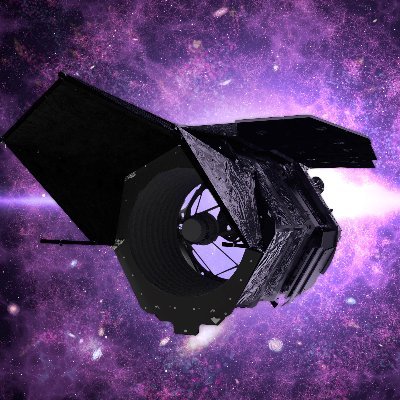
It's the final countdown 🎶
We're one step closer to Roman's first images! The observatory is now fully functional and the team is performing their final checks and calibrations before starting science observations.
go.nasa.gov/4A9menV
Chainfire retweeted

How do you end up getting a job as the BBC’s cyber correspondent without having heard of PHP?

Chainfire retweeted

The PHP RCE details are out. php.net/archive/2026.php#202…
php.net/
21 Oct 2026
Security advisory: Critical remote code execution vulnerabilities, update now
PHP 8.5.12, 8.4.27, 8.3.36 and 8.2.35 fix two critical vulnerabilities that can allow unauthenticated remote code execution. All PHP users are strongly encouraged to update immediately.
Who is at risk: all PHP installations serving web requests, including PHP-FPM, Apache with mod_php, php-cgi, FrankenPHP and LiteSpeed. We consider the risk highest for mod_php, with a demonstrated exploit where an unauthenticated request can trigger the attack before any application code runs.
The vulnerabilities:
RCE via OOM corruption, CVE-2026-109618 (GHSA-w8hw-w9fx-j79w): out-of-memory handling can interrupt PHP while internal request data is only partially initialized. Request cleanup may then treat the invalid data as valid.
RCE via stale global state, CVE-2026-109619 (GHSA-6wmf-4rv5-p3rp): request-owned internal state can survive after its backing memory has been freed. A later request handled by the same worker may use that stale state before normal initialization resets it.
How to update:
Update to PHP 8.5.12, 8.4.27, 8.3.36 or 8.2.35. Source downloads are on our downloads page. Windows source and binaries are on the same page.
Linux distributions and LTS vendors received the patches in advance, so check your vendor for updated packages.
PHP 8.1 and older no longer receive updates from the PHP project. Some distributions and LTS vendors provide backported fixes, so contact your vendor for details, or upgrade to a supported version.
If you rely on the volunteer-maintained rpms.remirepo.net, we urge you to switch to distribution packages or build from source, so you can immediately apply updates. The repo will not have updates today.
Given the severity of these vulnerabilities, the PHP security team provided minimal source-backports for PHP 7.4, PHP 8.0, and PHP 8.1 to help people building from source or without access to an LTS vendor.
If you cannot update immediately: while only an update is a complete solution, the following measures reduce exposure to specific attack paths but do not make an installation safe.
RCE via OOM corruption (CVE-2026-109618):
Set memory_limit=-1, preferably in a way applications can't override, such as php_admin_value in the FPM pool or Apache configuration, and check that no pool, directory or application setting puts a finite limit back. This removes the controllable PHP memory limit failure, but an underlying allocation failure can still reach the vulnerable path.
Set a low post_max_size. For applications that don't require file uploads, set post_max_size = 8M. If file uploads are necessary, set post_max_size = 32M. Keep upload_max_filesize below post_max_size. Consider enforcing limits at the web server or proxy level for decoded request size, input field count, multipart part count, header count, and nesting depth. These limits must also cover requests without a usable Content-Length.
Use a container or cgroup limit as an availability boundary, preferably with a policy that kills only the affected worker. Do not substitute RLIMIT_AS or RLIMIT_DATA, as these can cause the vulnerable allocation failure.
RCE via stale global state (CVE-2026-109619):
Set session.upload_progress.enabled=0 and restart every worker. Use php.ini, an FPM pool or server configuration that applies before request parsing. Do not rely on ini_set() or FPM .user.ini. This blocks the confirmed session paths but not other variants.
On PHP 8.5, set fatal_error_backtraces=0 and restart every worker. This blocks the confirmed fatal backtrace path only.
Remove invalid or deprecated settings applied per request that emit diagnostics before initialization. Hiding diagnostics with error_reporting, display_errors or @ does not help.
Fix attacker-reachable fatal errors and execution timeouts, including failures in callbacks, upload or import processing and cleanup.
The advisories linked above have the full technical details.

And the exploits are out before the patch... If you're running PHP anywhere, take action now.
But don't ask Claude for help, because it's completely useless thanks to its super duper guardrails. Thanks @AnthropicAI , remind me what I pay you for.

... get it while its hot... 😈
> CVE-2026-109618 / CVE-2026-109619 (pre-patch PHP 8.x)
> session.upload_progress UAF
> jackalsyn.com/posts/php-up-2…
> Courtesy of Me, @acd421 & @Archknight23
#CyberSecurity #infosec #php2shell #php


Chainfire retweeted

The PHP security team is giving advance notice: Upcoming security release Wed, Oct 21st 2026, 14:00UTC, two critical vulnerabilities, both rated CVSSv4 9.2.
PHP users are encouraged to prepare to update. Earlier release if details become public or active exploit evidence.
So, a few months ago, over half a decade after they were introduced, I decided to ditch the navbar and use gestures on Android.
You know, like a modern person who is "hip" and "with it", and all that.
Terrible experience. Would not recommend.
#OldManGesturesAtCloud
Chainfire retweeted

Europe’s founders need a European standard to compete globally from day one.
Europe’s leaders committed to delivering one. But their teams are negotiating away the very things that make it one.
There is still time to change course if Europe's Heads of State step in now.


Similar to a project my PCs have been creating for months now. Guess the missing parts will soon be released by Anthropic too.
Can't compete with infinite tokens and compute. What is the point of even trying stuff anymore.
If I ever released, it'll just be a copycat 🤷♂️

An astrophysicist worked with Claude Science to create the first complete ultraviolet map of the sky. Astronomers have already created complete sky maps from radio to gamma rays. But large regions of the sky have never been observed in UV.
In today’s science blog, Brice Ménard explains how he guided Claude to find existing datasets, combine them, and fill in the gaps with statistical inference. The work would have taken humans weeks of work, but, with Claude, just took a few days while Ménard worked on other projects.
The resulting map is a useful teaching tool and an example of exactly the sort of slow, low-priority work which scientists never quite get around to, but which AI now makes feasible.
Read more: anthropic.com/research/the-m…

