Music. Astronomy. Aviation. Check out my music on Spotify!
- Tweets3K
- Following267
- Followers1.3K
- Likes23.6K






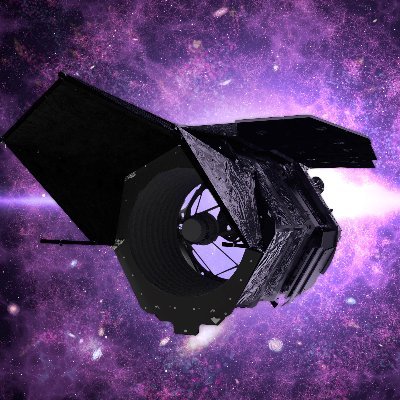

ALT This test image captures the very first photons of starlight to reach the Wide Field Instrument on NASA’s Nancy Grace Roman Space Telescope. It was taken as an initial performance assessment with the detector array still stowed as it was for launch, far from best focus. Roman’s primary science instrument has opened its eyes to the universe for the first time, revealing a sea of out-of-focus stars, each spread out over many thousands of pixels. The image, which zooms into one detector and zooms again to a single star in the insets, offers a baseline the Roman team will work from to align the telescope’s optics and tune the focus. The team will soon activate the instrument’s fine-guidance system, which will mean Roman can lock onto targets. They’ll also focus the observatory, which will shrink each star’s light to appear as a crisp point, rather than the broad, donut-like features seen here (which appear as expected given the instrument’s present configuration).


ALT Two images of the Moon are superimposed. In the first, a dark quarter-Moon fills the bottom of the image, fading into black above, where the shadowed portion of the Moon is indistinguishable from the black of space. The second image appears as a rectangle in that black space. It shows a pale piece of Moon in mid-grey tones, with one bright white blotch, an impact flash, in the lower right.


ALT Earthset captured through the Orion spacecraft window at 6:41 p.m. EDT, April 6, 2026, during the Artemis II crew\u2019s flyby of the Moon. A muted blue Earth with bright white clouds sets behind the cratered lunar surface. The dark portion of Earth is experiencing nighttime. On Earth\u2019s day side, swirling clouds are visible over the Australia and Oceania region.\nIn the foreground, Ohm crater has terraced edges and a flat floor interrupted by central peaks. Central peaks form in complex craters when the lunar surface, liquefied on impact, splashes upwards during the crater\u2019s formation. Credit: NASA



ALT Peering out one of the four windows near the display console on the Orion spacecraft, the Earth is illuminated by the blackness of space and grows smaller as the crew journeys closer to the Moon. This image was taken by an Artemis II crew member on the fourth day of the mission. Credit: NASA