

Associate Professor at ShanghaiTech University & Adjunct Faculty Member at Institute for Immunology Tsinghua. Expertise in designing CAR-T, TCR-T, and CAR-Treg.
Shanghai, CHINA
Joined February 2023
- Tweets92
- Following265
- Followers136
- Likes91





Haopeng Wang retweeted

『Anti-LAG-3 with or without anti-PD-1 in recurrent glioblastoma: a phase 1 trial』
Nature Medicine 10 July 2026
再発膠芽腫患者に対する抗LAG-3抗体 relatlimab の単独療法およびnivolumab併用療法を評価
インターフェロン応答が高く、T細胞クローン性の高い腫瘍では併用療法への反応が良好

Haopeng Wang retweeted

A warm welcome to Beijing, China on Aug 24–25, 2026 for "25 Years of Human Genome" – featuring ex-NHGRI Dir. Dr. Eric Green, NGS pioneer Dr. Jonathan Rothberg, NIPT inventor Dr. Dennis Lo & other top scientists. Agenda & Registration: sunneyxielab.org/25_years_of…

Haopeng Wang retweeted

Online Now! FDA-approved fulvestrant-induced CAR phase separation enables precise control of CAR T antitumor function dlvr.it/TTSDt7 #stemcells
Haopeng Wang retweeted

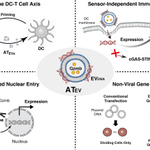
Online Now: T cell extracellular vesicles go nuclear to turn cold tumors hot dlvr.it/TSJd1y


Haopeng Wang retweeted
『Coordinated IL-2 and TGF-β Signaling via a Novel Fusion Protein Selectively Expands and Activates Regulatory T Cells』
bioRxiv March 11, 2026.
CUE-401はIL-2とTGF-β3を組み合わせた二機能性バイオ医薬で、Tregを選択的誘導・増殖・安定化させ自己免疫反応を抑え動物モデルで免疫寛容達成

Haopeng Wang retweeted
Now online! Pyruvate is a natural suppressor of interferon signaling by inducing STAT1 protein pyruvylation dlvr.it/TRC81z

Haopeng Wang retweeted
Congratulations to Honggui, Jiankun, and Tan for improving the single-cell 3D genome resolution by a factor of 4 (to 5 Kb). This allowed direct visualization that multiple enhancers cluster to a particular gene promoter at the same time in a single cell.
nature.com/articles/s41588-0…
Haopeng Wang retweeted
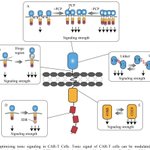
In the latest issue! Ligand-induced ubiquitination unleashes LAG3 immune checkpoint function by hindering membrane sequestration of signaling motifs dlvr.it/TKZSzG

Haopeng Wang retweeted
Congrats to Xinyao and Xie Chen! In eukaryotes, multiple transcription factors bind cooperatively to a regulatory region on genomic DNA to control gene expression. In this paper (bit.ly/3GV1BoP), we present an experimental metric for quantifying such cooperativity.

Haopeng Wang retweeted

Science Spotlight: New insight into LAG3's checkpoint function, a blood-based T cell assay for Type I diabetes, a degrader using a new E3 ligase, and paper from newcos. BioCentury's roundup of translational innovations buff.ly/RYy1W0J
Haopeng Wang retweeted

Ligand-induced ubiquitination unleashes LAG3 immune checkpoint function. @HaopengWang_Lab found ubiquitination of LAG3 promotes its inhibitory function rather than its degradation, and is required for suppression of antitumor immunity in vivo. ow.ly/xOKh50VkhNt

Haopeng Wang retweeted
Now online! Ligand-induced ubiquitination unleashes LAG3 immune checkpoint function by hindering membrane sequestration of signaling motifs dlvr.it/TJZsP5
Haopeng Wang retweeted

Thrilled to share our @SciImmunology paper! Rodent PD-1 is weaker than human PD-1 (reduced ligand binding & signaling) & lacks a conserved vertebrate motif. Humanizing mouse PD-1 disrupts T cell anti-tumor responses, raising many questions. Kudos to @MasubuchiTakeya for leading this work, and @jackbuimdphd @ZhengtingZou @CWu2009 et al. for collaboration.science.org/doi/10.1126/scii… See also excellent media report by @mario_maguilera today.ucsd.edu/story/scienti…

Haopeng Wang retweeted

Glad to share our new publication @ImmunityCP , reporting a new E-CAR that can form mature immunological synapse through phase separation. Paper link: authors.elsevier.com/a/1kATc…

Haopeng Wang retweeted

PD-1 and its ligands dimerize in cis via transmembrane domain interactions to enhance T cell inhibition @jwang133 @SciImmunology @MichaelLDustin
science.org/doi/10.1126/scii…

Haopeng Wang retweeted

Excited to share our new finding of “B cell-reactive triad of B cells, follicular helper and regulatory T cells at homeostasis”,Open Access at nature.com/articles/s41422-0…
Haopeng Wang retweeted

Super-resistant CAR Ts take on cancers nature.com/articles/s41587-0…
Haopeng Wang retweeted
In vivo human T cell engineering with enveloped delivery vehicles go.nature.com/47vW1Rp

Haopeng Wang retweeted

The power of tears. @ShaniAgron, @Sci_CadM &co @LabWorg show that human tears contain a chemical signal that activates human #OlfactoryReceptors, alters activity in an olfaction-#aggression brain network, and lowers male #AggressiveBehavior #PLOSBiology plos.io/3tjmqEh
