

Patagónico, xeneize y algo de economista..."navegando contra el viento" (F. C. G.)
Joined August 2015
- Tweets934
- Following391
- Followers79
- Likes7.3K




Para los que se refugian en el discurso de "son todos iguales o corruptos", no da lo mismo...aplica para Argentina perfectamente

The outcome of Brazil’s election has consequences far beyond Brazil.
If Lula wins, we are one step closer to preserving Earth’s largest rainforest.
If Flávio Bolsonaro wins, we risk a return to the policies that drove deforestation up under his father.

25
Nacho retweeted

The outcome of Brazil’s election has consequences far beyond Brazil.
If Lula wins, we are one step closer to preserving Earth’s largest rainforest.
If Flávio Bolsonaro wins, we risk a return to the policies that drove deforestation up under his father.
Nacho retweeted

REGISTRATION IS OPEN
Poznan Winter School on 'Money and Post-Keynesian Economics'
Online, free
With lectures by MARC LAVOIE, ANTONELLA STIRATI, MARIO SECCARECCIA, LOUIS-PHILIPPE ROCHON, @KappesSylvio , @MariaCbgoes , and more.
Register here:
fundacjalipinskiego.pl/aktua…


Nacho retweeted
The winners of the Nobel Prize in Economics tend to have one thing in common: they’ve passed through an elite US university.
This year’s award reinforces the trend.
And the problem of elite concentration, while perhaps unsurprising, is more severe in economics than in any other field.
A recent study compared the institutional clustering of award-winning researchers across academic disciplines. The study looked at around 6,000 prizewinners from 18 areas of the natural sciences, engineering and the social sciences.
The study found that economics is *the only field* in which elite concentration is increasing over time.


BREAKING NEWS
The Royal Swedish Academy of Sciences has decided to award the 2026 Sveriges Riksbank Prize in Economic Sciences in Memory of Alfred Nobel to Robert E. Hall and Michael Woodford “for microeconomic foundations of macroeconomic stabilisation.”
#NobelPrize

Nacho retweeted

Se puso de moda decir que la informalidad no es tan mala. Pero las condiciones de vida entre laburantes formales e informales siguen siendo zarpadamente diferentes.
Alrededor del 10% de los ocupados formales son pobres. En cambio, en los informales la pobreza ronda el 35%.

Una pérdida enorme...

Hoy murió Anwar Shaikh, uno de los grandes economistas marxistas de nuestro tiempo.
En 2020 conversó con Jacobin sobre Marx, las crisis, la competencia capitalista y la necesidad de que la teoría parta siempre de «lo real».
jacobinlat.com/2020/11/anwar…

8
Nacho retweeted
I say this with the utmost seriousness as a scholar of international political economy: the rules-based international order is dead.
At the UN General Assembly, Trump, in very casual language, talks about annihilating another country. The room stays quiet. No collective protest. No formal objection.
And this goes far beyond rhetoric.
The US *has* bombed Iran, in clear violation of international law.
The US *has* kidnapped Venezuela's head of state and is in the process of looting the country's natural resources, in clear violation of international law.
The US *has* tightened its blockade on Cuba, in clear violation of international law.
Then there is, of course, the genocide in Gaza, for which the US has provided unconditional support.
After World War II, the US was one of the primary architects of a system meant to encourage global cooperation. But the US has consistently broken that system's rules to advance its imperial interests.
The system has therefore lost all its legitimacy.

Breve análisis interesante sobre los resultados de las últimas evaluaciones PISA a nivel global. Básicamente, muestra un retroceso severo entre países desarrollados, mientras que países en desarrollo y, en particular, China lideran en educación

If you really want to understand where the world is at and where it's going, you probably cannot get anything more meaningful than the OECD's PISA study - a global test given every 3 years to an insane 760,000 15-year-olds across 91 countries.
No report globally, by any institution, better captures whether countries are building or squandering their future.
The latest PISA results just came out yesterday (oecd.org/en/publications/202…) and the results are genuinely fascinating, and in some way pretty depressing.
Why depressing? Because, sadly, the numbers show that the world is getting dumber: as you can see on the first graph below 👇, since roughly 2012 scores in science, reading, and mathematics have been in continuous decline across OECD countries.
The reading score is particularly concerning: it literally cratered, dropping 28 points since 2015, the equivalent of almost 1.5 years of schooling lost according to the report.
To make matters even worse, the reading skill that's dropped the most across the board is precisely the one we most desperately need: the capacity to critically assess what you read, cross-reference sources, and tell signal from noise.
On average, sadly, 15-year-old kids globally are - more and more - incapable of slowing down and actually thinking about what they're reading.
Interestingly though, when you look into the details, this great "dumbing down" isn't across the board: it's overwhelmingly concentrated in wealthy Western countries, while many developing countries are actually getting significantly smarter.
For instance rich countries like Finland, the Netherlands, and Norway are in freefall, while countries like Cambodia, Türkiye, and the UAE are posting big gains.
To be clear, this doesn't mean that developing countries are now "smarter" than rich ones: save for one notable exception, that's still not the case. But they are catching up fast, both because rich countries are getting "dumber" and because they're themselves getting smarter.
The one exception is, as you'd expect, the "smartest" of them all, by a huge margin: China.
It is pretty much in a league of its own: just look at the ranking in the table (only kids in Beijing, Shanghai, Jiangsu and Zhejiang got tested - 4 regions covering 200 million people).
China's maths results are particularly insane: according to the report, the best level in maths - level 5, where "top performers" begins - starts at 607. The AVERAGE kid in China is 612: "normal" Chinese kids are at a level that is considered elite in the rest of the world.
In fact, and that's probably the funniest number in the entire report, look at the column called "Share of low performers in science, reading and mathematics": China is only at 1.8% 😅
Which means that only 1.8% of Chinese kids are rated as low performers in all 3 subjects, almost a rounding error. Even Singapore, the second best and generally considered best-in-class in education, is at 6.8% - almost 4 times worse. My country France, is at 21.3% - almost 12 times worse 😢
All of this - incidentally - dispels the common myth that there would be some kids who are just genetically beyond redemption and simply can't be taught: China proves that with the right system, virtually every child can reach proficiency.
So what does this all say about the world and where it's going, besides the fact that, if the future belongs to those who can think, China has never been better positioned to own it?
I think the more general picture is this: there is nothing inevitable about any country's trajectory.
Finland was the world's education darling fifteen years ago - now it's in complete freefall (see the last graph 👇). Cambodia was at the bottom of every table - now it's posting the biggest gains ever recorded in the study. What changed wasn't the children: it's still Finnish kids (Finland has one of the lowest levels of immigration in the West), and it's still Cambodian kids.
It also doesn't matter much - or at least it matters less - if a country is wealthy or not. For instance in Southeast Asia, both Malaysia and Indonesia - the 2 biggest ASEAN economies after Singapore - are faring very badly, while Thailand and Vietnam, both poorer, have better educated kids whose scores are continuing to improve.
So that's the final takeaway: the kids don't change, they all have potential, always, as China's 1.8% proved.
What does change is what adults decide to do with that potential. It's both hopeful - because it means any country can choose to turn things around at any time - and also sad given the results - because it means so many countries are choosing to fail their children.


31
Nacho retweeted

If you really want to understand where the world is at and where it's going, you probably cannot get anything more meaningful than the OECD's PISA study - a global test given every 3 years to an insane 760,000 15-year-olds across 91 countries.
No report globally, by any institution, better captures whether countries are building or squandering their future.
The latest PISA results just came out yesterday (oecd.org/en/publications/202…) and the results are genuinely fascinating, and in some way pretty depressing.
Why depressing? Because, sadly, the numbers show that the world is getting dumber: as you can see on the first graph below 👇, since roughly 2012 scores in science, reading, and mathematics have been in continuous decline across OECD countries.
The reading score is particularly concerning: it literally cratered, dropping 28 points since 2015, the equivalent of almost 1.5 years of schooling lost according to the report.
To make matters even worse, the reading skill that's dropped the most across the board is precisely the one we most desperately need: the capacity to critically assess what you read, cross-reference sources, and tell signal from noise.
On average, sadly, 15-year-old kids globally are - more and more - incapable of slowing down and actually thinking about what they're reading.
Interestingly though, when you look into the details, this great "dumbing down" isn't across the board: it's overwhelmingly concentrated in wealthy Western countries, while many developing countries are actually getting significantly smarter.
For instance rich countries like Finland, the Netherlands, and Norway are in freefall, while countries like Cambodia, Türkiye, and the UAE are posting big gains.
To be clear, this doesn't mean that developing countries are now "smarter" than rich ones: save for one notable exception, that's still not the case. But they are catching up fast, both because rich countries are getting "dumber" and because they're themselves getting smarter.
The one exception is, as you'd expect, the "smartest" of them all, by a huge margin: China.
It is pretty much in a league of its own: just look at the ranking in the table (only kids in Beijing, Shanghai, Jiangsu and Zhejiang got tested - 4 regions covering 200 million people).
China's maths results are particularly insane: according to the report, the best level in maths - level 5, where "top performers" begins - starts at 607. The AVERAGE kid in China is 612: "normal" Chinese kids are at a level that is considered elite in the rest of the world.
In fact, and that's probably the funniest number in the entire report, look at the column called "Share of low performers in science, reading and mathematics": China is only at 1.8% 😅
Which means that only 1.8% of Chinese kids are rated as low performers in all 3 subjects, almost a rounding error. Even Singapore, the second best and generally considered best-in-class in education, is at 6.8% - almost 4 times worse. My country France, is at 21.3% - almost 12 times worse 😢
All of this - incidentally - dispels the common myth that there would be some kids who are just genetically beyond redemption and simply can't be taught: China proves that with the right system, virtually every child can reach proficiency.
So what does this all say about the world and where it's going, besides the fact that, if the future belongs to those who can think, China has never been better positioned to own it?
I think the more general picture is this: there is nothing inevitable about any country's trajectory.
Finland was the world's education darling fifteen years ago - now it's in complete freefall (see the last graph 👇). Cambodia was at the bottom of every table - now it's posting the biggest gains ever recorded in the study. What changed wasn't the children: it's still Finnish kids (Finland has one of the lowest levels of immigration in the West), and it's still Cambodian kids.
It also doesn't matter much - or at least it matters less - if a country is wealthy or not. For instance in Southeast Asia, both Malaysia and Indonesia - the 2 biggest ASEAN economies after Singapore - are faring very badly, while Thailand and Vietnam, both poorer, have better educated kids whose scores are continuing to improve.
So that's the final takeaway: the kids don't change, they all have potential, always, as China's 1.8% proved.
What does change is what adults decide to do with that potential. It's both hopeful - because it means any country can choose to turn things around at any time - and also sad given the results - because it means so many countries are choosing to fail their children.
Nacho retweeted

The Inexorable March of Electrification: Pure Electric Share of New Car Sales: July 2025 vs. July 2026
1 Laos: 36% → 100%
2 Norway: 97.2% → 97.6% (petrol car sales = 15 cars)
3 Denmark: 65.2% → 80.1%
4 Singapore: 40.0% → 64.6%
5 Netherlands: 30.8% → 47.3%
6 China: 33.1% → 44.3%
7 Belgium: 32.5% → 42.8%
8 Sweden: 34.2% → 40.7%
9 France: 17% → 35.0%
10 UK: 21.5% → 27.5%
The death of petrol engines continues to track tech S-curves in both developed and emerging markets
Wires chewing pipelines

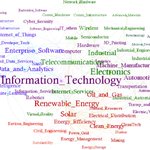
Artículo publicado hace un par de semanitas! con @vazrodando y Vero Robert, sobre la evolución de la base de conocimiento del sector de dispositivos médicos y una comparación de distintas trayectorias nacionales, de países líderes dentro del sector. academic.oup.com/icc/advance…

15

Nacho retweeted

The end of the end of history.
The Economist now sees Leninism as the reason for China’s competitiveness. Wasn’t a whole-of-state approach supposed to be doomed? China’s escape from shock therapy was the first existential blow to neoliberalism. This is the nail in its coffin.


Nacho retweeted

📢Invitación - Seminario CEED:
"Aportes relegados de la agenda de la contabilidad nacional: una evaluación de la apropiación del valor desde la crítica de la economía política" con Matías Sánchez (@CEPED_FCE) y @JuanMGrana
Jueves 6/8, 11h Híbrido
Anotate:
docs.google.com/forms/d/e/1F…

Nacho retweeted
Many people assume the Chinese economy is extremely dependent on trade with the rest of the world: truth is it's the second LEAST dependent economy in the world (with the US).
They've paradoxically managed to become the largest trading partner of almost all countries while not depending on foreign trade.


Nacho retweeted
A new research paper finds that catch-up development is largely a myth.
Since 1960, the income gap between advanced economies (the core) and developing economies (the periphery) has widened by 170–270%, depending on the currency concept.
Global inequality is getting worse.


Nacho retweeted

🇨🇴 67 leading international economists, scholars, and public policy figures have signed an open letter backing Colombia’s economic transformation under President Gustavo Petro, saying the country is demonstrating that “another economic path is possible” by breaking from decades of neoliberal orthodoxy.
The signatories include Thomas Piketty, Yanis Varoufakis, Jayati Ghosh, Ha-Joon Chang, James K. Galbraith, Isabella Weber, Jason Hickel, Ann Pettifor, and former Ecuadorian President Rafael Correa.
Published ahead of Colombia’s June 21 presidential runoff, the letter cites falling poverty, record-low unemployment, a rising share of national income going to workers, advances in land reform, growth in non-extractive exports, and a major expansion of renewable energy.
The vote will decide whether Petro’s project continues under his leftist ally Iván Cepeda or is reversed by far-right outsider Abelardo de la Espriella, who narrowly led the first round and has pledged a sharp turn back toward market orthodoxy.
The authors acknowledge ongoing challenges including debt, inflation, fiscal pressures, and weak private investment, but reject calls for austerity, wage suppression, indiscriminate liberalization, and deeper dependence on extractive industries.
They said Colombia’s experience carries significance beyond its borders for countries seeking development strategies rooted in redistribution, productive transformation, economic democracy, and climate justice.
Letter ⬇️

ECONOMISTAS POR LA VIDA 🫰🇨🇴 Renowned economists — including @PikettyWIL @Jayati1609 Ha-Joon Chang @yanisvaroufakis @J_K_Galbraith @IsabellaMWeber @jasonhickel
@ann_pettifor @FadhelKaboub — unite in defence of the economic gains secured by President @PetroGustavo.


