

Building and analyzing machine-velocity economies. Digital assets • AI • RegTech • economics & policy. Christian ✝️ | Constitutionalist
Cincinnati USA
Joined February 2009
- Tweets6.2K
- Following3.9K
- Followers4.3K
- Likes45K








HilesFiles retweeted

Effective Immediately, all organizations using PHP for their systems are advised to be prepared for an update addressing two critical vulnerabilities. PHP is widely used for web applications. These vulnerabilities often provide a direct path to the server's file system or database. If an immediate update is not feasible, it is recommend that organizations take the system offline until it can be fully mitigated. NSA will follow up shortly with more specific guidance.
HilesFiles retweeted

I wrote this almost two years ago (Feb. 2025) and I was over the target. Now @DataRepublican has written the deets. I know you're swamped, mighty warrior, but this is as succinct an outline of your book as possible, from a fellow time traveler.
It's one of those "I can't believe I wrote this" pieces that come out of the noggin every now and then.
@MsMelChen
empathy.guru/2026/02/07/the-…

They're going to keep going until all that's left are commercial US models.
Why isn't the US leading a public utility effort to create advanced open source models instead of forcing other companies to pay the toll?
IMHO, It's going to hurt adjacent innovation in the long run.
"If you like your doctor, you can keep him."


I literally cannot believe there are still crypto bro hypesters out in the market ripping a 2017 shitcoin playbook page, only now around tokenized RWAs and stablecoins.
Looks like the Federal Court docket is gonna get full again soon.

The winners the next decade won't be the ones with the best marketing. It will be the players whose clients are confident their vendors actually understand how the thing works.
HilesFiles retweeted

@BakerjBrandon, @KenTheJr_v1 and @MichaelHiles all writing bangers about maximizing the velocity of capital.
Here's the latest on their blog from the @conduit_network team.
cndt.io/blog/agents-will-tra…

HilesFiles retweeted

San Francisco held roughly 1,000 residents in January 1848. Two years later it held 25,000, with wharves, newspapers, banks, and functioning courts, and no government planned any of it.
James Marshall pulled gold from the American River at Sutter's Mill on January 24, 1848. California at that moment had no legislature, no land registry, and a military governor commanding a few hundred soldiers who kept deserting to the goldfields. Every textbook predicts Hobbesian chaos.
Instead, miners wrote their own law. Each camp held a meeting, set claim sizes, elected a recorder, and enforced the rules themselves. Hundreds of mining district codes emerged independently and converged on the same principles: first use establishes ownership, abandonment forfeits it, disputes go before a jury of fellow miners. Congress found the system so effective it codified it in the Mining Act of 1866.
Commerce ran ahead of any charter. Samuel Brannan got rich selling shovels instead of swinging them. Eggs fetched a dollar apiece in 1849, a lot of money for the time, and that price pulled flour and lumber around Cape Horn faster than any ministry of supply ever moved anything. Wells Fargo carried the mail because the Post Office couldn't. Merchants wrote contracts and extended credit with no commercial code on the books.
City planners insist order requires their permission. Property law, courts, and trade networks all emerged before any planner arrived: built by profit-seekers under rules they drafted themselves at camp meetings. California's first cities stand as proof that humans can flourish without bureaucracy.
The next time a bureaucrat tells you markets collapse without government, ask them who surveyed San Francisco.

HilesFiles retweeted

For all of history we've used tools to build better tools, and every time we did, everything got faster.
Now one of those tools is intelligence itself.

HilesFiles retweeted

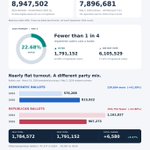
Well, according to the latest Police data, and Michael’s cool charts, Cincinnati Ohio crime is not down. It shot up dramatically in September. @MichaelHiles
hilesfiles.github.io/cincy-c…

Did not have me rooting for the ATF director on X on my 2026 bingo card... but here we are.


"You don't rise to the level of your aspirations and goals, you fall to the level of your systems."
- James Clear, Atomic Habits
HilesFiles retweeted

Jesus is not a fake god. He is a historical figure with strong contemporary attestation, claimed divinity through resurrection accounts that launched the world's largest religion, and stands apart from the purely mythological figures in that image.
HilesFiles retweeted

Shut the Front Door: Zohran Mamdani Receives Federal Security Clearance redstate.com/kyle-becker/202…

Well @OpenAI I got your email.
You changed service delivery for what I signed up to get, cutting the service in half for the same rate.
I will use the "free" credits that you gave and then simply be canceling my subscription to your misrepresented bullshit.
I am sure a lot of others will be doing the same.
HilesFiles retweeted
Murray Rothbard published "What Has Government Done to Our Money?" in 1963, two years after the Kennedy administration quietly accelerated deficit spending and a decade before Nixon finished destroying what remained of the gold standard on August 15, 1971. Rothbard wrote it as a weapon, rather than a textbook.
The book tears apart the mythology that central banking is a neutral technical institution. Rothbard traces the mechanics of money from commodity origins through state capture: governments monopolize the mint, debase the currency, create central banks to launder the counterfeiting, and finally sever the gold link entirely so the theft faces no hard constraint. Every step follows the same logic: The state expands the money supply, hands the new money to politically connected spenders first, and you absorb the price increases after the purchasing power dilutes. Inflation is a tax, collected without a vote.
The clearest lesson in the book is that fractional reserve banking is legalized fraud. Banks (used to) lend out money they simultaneously owe depositors on demand. This creates credit cycles: artificial booms followed by necessary busts. The Federal Reserve, chartered in 1913, exists to backstop that fraud and prevent the liquidation that would otherwise discipline reckless banks.
The book's legacy is substantial. It gave the post-1971 hard money movement a readable, rigorous foundation. Ron Paul cited it repeatedly during his Federal Reserve auditing campaigns in the 2000s. Bitcoin advocates adopted its framework wholesale, treating the 21-million-coin cap as the digital gold standard Rothbard demanded.
The villains are identifiable and institutional: the Federal Reserve, the Treasury, and every Congress that chose inflation over honest taxation because inflation hides the cost. The dollar has lost over 97% of its 1913 purchasing power. Rothbard named the mechanism before most people admitted it existed.
