

4th-year PhD candidate at #WestlakeUniversity majored in Computational Structural Biology, Protein designer, AIDD/CADD developer, Tech savvy, Amateur astronomer
Hangzhou, China
Joined May 2020
- Tweets95
- Following203
- Followers314
- Likes5.6K


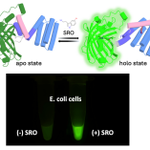






Design de novo sensor from scratch?
Introducing ProBuilder: A backbone generative algorithm for designing ligand-induced binders.
We report de novo sensors for serotonin, zinc, etc. A versatile framework for future sensor development.
preprint👇
biorxiv.org/content/10.64898…


Our screening revealed that these de novo binders possess dynamic potential beyond static affinity.
To harness this, we introduced a "smart repeat" strategy: precisely tuning the folding energy barrier between holo and apo states.
Simple, yet powerful, worked in hek293 cells


1
2
358
Huge thanks to the whole team Yitao, Rui, Qihan, algorithm developmed from @WChentong @minchaofang, and our mentors Dr. Cao @lxcaosd for guidance. Couldn't have done it without you guys all! This is the beginning, more sensors to unlock in the future:) Stay tuned! 👀
Lastest work of our lab! 🚨
ML + ultra-high-throughput screening = IMUSE. ~5× better activity. 30% hit rate (>4.9× improvement). De novo enzyme space just got mapped. Don't sleep on this:
biorxiv.org/content/10.64898…
#enzymedesign #SynBio #deeplearning

4
317
Peldom Zhang retweeted

De novo design of metalloproteases for targeted amyloid-β cleavage biorxiv.org/content/10.64898… #biorxiv_synbio

Latest publication of our lab! 🎉
Amantadine-controlled protein-designed assembly, as an ideal amantadine-inducible gene switch for therapeutic applications

De novo design of small molecule–regulated protein oligomers @ScienceMagazine
1. Researchers have developed a novel computational method to design protein oligomers regulated by small molecules, focusing on the FDA-approved drug amantadine. This approach enables precise control over protein assembly, offering potential applications in biotechnology and cell-based therapies.
2. The study introduces a "docking-while-binding" technique that simultaneously optimizes protein-protein and protein-ligand interactions. This method allows for the de novo creation of ligand binding pockets directly at the protein-protein interface, enabling the design of homotrimers, heterodimers, and heterotrimers.
3. The designed amantadine-regulated protein oligomers were validated in cellular and animal models, demonstrating their ability to control gene expression, protein localization, and reversible condensate formation. Notably, the system achieved noninvasive, dose-dependent control of gene expression in mice through oral administration of amantadine.
4. The compact size of the protein components (~65 amino acids) and the use of an orally bioavailable small molecule make this system highly suitable for translational applications. The approach opens new avenues for developing next-generation chemically inducible protein assembly tools.
5. The study highlights the potential for further optimization using deep learning models and the incorporation of additional ligands to enhance sensitivity. This work represents a significant advancement in the field of chemogenetics, providing a versatile toolkit for manipulating complex biological processes.
📜Paper: science.org/doi/10.1126/scie…
#ProteinDesign #Chemogenetics #SyntheticBiology #Biotechnology #GeneRegulation

"One method to design them all, and in the darkness bind them."
Introducing our lab's new unified #proteindesign method HalluDesign!
This lab-proven single approach lets us design universal binders (incl. antibodies/peptides) for: DNA/protein/ion/ligand

🚀 New Paper: We’ve just released HalluDesign – a novel framework for protein optimization and de novo design using AlphaFold3-style models, without finetuning or gradient backpropagation! 🎉
biorxiv.org/content/10.1101/…
1
3
274
Lastest paper of our Lab!🎉
Light-controlled de novo protein assemblies

De novo design of light-responsive protein–protein interactions enables reversible formation of protein assemblies
#science #publication #research #journal
lifescience.net/entries/7932…

Paper link: nature.com/articles/s41557-0…

84
A breakthrough in glioblastoma treatment! Qihan Jin of our lab, de novo designed binders on CAR-T cells to target tumor antigens. Remarkable results in mice, clinical trials are underway. #proteindesign #glioblastoma #CART
@lxcaosd
nature.com/articles/s41551-0…
Witness of the history in protein design!

BREAKING NEWS
The Royal Swedish Academy of Sciences has decided to award the 2024 #NobelPrize in Chemistry with one half to David Baker “for computational protein design” and the other half jointly to Demis Hassabis and John M. Jumper “for protein structure prediction.”

2
211
Congratulations to Lu lab! D-binder design inspired by mirror biology.
nature.com/articles/s41422-0…

Peldom Zhang retweeted

Glad to see our paper:Proteus: Exploring Protein Structure Generation for Enhanced Designability and Efficiency accepted by icml2024. Excited to witness the full potential that structure generation methods can achieve.
Paper:
biorxiv.org/content/10.1101/…
Code:
github.com/Wangchentong/Prot…
🎉 Celebrating 1000 stars on our GitHub repository! 🌟 A repo for recording papers of Deep Learning for Protein Design. Join us in advancing computational biology! Check it out: github.com/Peldom/papers_for… #DeepLearning #ProteinDesign

Congratulations to @WChentong ! Latest work of our lab

New backbone diffusion model Proteus from Longxing Cao’s group, displaying better backbone self consistency than RFdiff and Chroma. Some experimental evidence presented as well.
biorxiv.org/content/early/20…

5
489
Pipeline updated! ProteinMPNN is great helpful in providing better design after FastDesign, thank all contributors!

ProteinMPNN paper: science.org/doi/10.1126/scie…
Github: github.com/dauparas/ProteinM…
Colab notebook: github.com/dauparas/ProteinM…
HuggingFace notebook: huggingface.co/spaces/simond…
Hallucinating symmetric protein assemblies paper:
science.org/doi/10.1126/scie…
Thanks to all collaborators!

2
This is so cool👏, high distance accuracy is such required to control electronic paths.

De novo protein design of photochemical reaction centers
nature.com/articles/s41467-0…

3
Great helpful for verification of de novo designed metal binding protein😀

Accurate prediction of transition metal ion location via deep learning biorxiv.org/cgi/content/shor… #biorxiv_biophys
Today I finally met Prof. Yigong Shi, and officially joined #WestlakeUniversity as a 1st year PhD student, so excited to start my next journey!

12