

Digital assets & tokenization consultant Contributing Editor at @DefiantNews. Previously CEO at @Arch_Finance / @BCG.
New York, USA
Joined October 2009
- Tweets424
- Following1.1K
- Followers638
- Likes5.3K






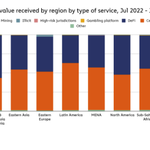

Stock issuers are increasingly saying no to tokenized stocks: Rejections climb to 33 for the first venue in the SEC stock token exemption (the OKX-ICE partnership).
Didn't think companies would be so against other tokenizing their shares, that's half the tickers that were proposed are saying no.

OKXICE ISSUER OBJECTIONS REACH 33, NARROWING PLANNED STOCK-TOKEN LINEUP
The @okx-backed venue added seven objectors. Objections cover 31 of 63 original symbols, according to The Defiant’s tally.
Read more here:
thedefiant.io/converge/tradf…

ALT Comparison of OKXICE’s original roster: 63 symbols from 62 companies, of which 31 symbols from 30 companies face disclosed objections and 32 symbols from 32 companies do not.
SoFi @SoFi launched the SOFIE deposit token yesterday, which pays 4.4% APY
THAT'S HUGE
Why:
- One of the highest-yielding USDC savings products out there. pays more than the average savings account, more than the 3.75% Coinbase pays on USDC
- It is the first bank-issued deposit token offered to U.S. retail, as far as I can find. (JPMorgan has one, but JPMD is institutional only)
Is this even legal?? Yes, and it's how banks compete with stables after their extensive lobby:
- It lands the same week the OCC finalized its GENIUS Act rule. It kept the ban on stablecoins paying yield but of course a deposit token is not a stablecoin under that law. It is a deposit, where yield is perfectly legal
Here's where it gets interesting:
- SoFi’s own savings account pays 3.3% with direct deposit and 0.80% without.
- The 4.5% tier costs $10 a month and caps at $20k
- SOFIE pays 4.4% on any balance with no fee
- Both carry the same FDIC coverage
So why not just pay 4.4% on the savings account? Whats' the deposit token even for?
- It converts 1:1 into SoFi's stablecoin SoFiUSD
- While SOFIE itself cannot be transferred anywhere, SoFiUSD can leave to an external wallet
For the bank, it's a way to retain users on both sides:
- SoFi users can got to SOFIE for yield and transfer to SoFiUSD when they want to trade crypto, issue a collateralized loan etc./ any other DeFi activity.
So 110 bps is the retention spend. It also buys the right to say “we do digital assets” and it keeps crypto-curious deposits on the balance sheet.
We discussed here:

How is SoFi Paying 4.4% on Tokenized Deposits? nitter.gq/i/broadcasts/1yGBePgjR…

Everyone was cheerleading Joe Wesienthal coming around to crypto, but did he really?
He says that after laughing at the "blockchain not bitcoin crowd" he has to admit those guys were right, and provides stablecoins and perps as examples of why blockchain tech is actually interesting (but I guess BTC is still not??)
That continues to miss the point entirely. Public, open blockchains like Bitcoin, Ethereum, Solana, work BECAUSE OF/ THANKS TO their cryptocurrencies BTC, ETH, SOL. You cannot separate the two.
It's like saying, gold is just a shiny roc, but metallurgy is fascinating, or the US economy is so strong, but the US dollar is just a piece of paper.
A public blockchain's cryptocurrency provides its security. It incentivizes miners and validators to contribute stake or energy to the network. Without BTC, you cannot have the Bitcoin blockchain... feels weird saying this in 2026, should be so obvious to anyone following the industry.

MAYBE I WAS WRONG ABOUT BLOCKCHAIN TECHNOLOGY
I wrote about how I always used to make fun of the guys who said things like "Bitcoin is speculative, but the underlying blockchain technology is interesting." And now I think maybe they kinda had a point.


1
3
1,393
Today JPMorgan said JPM Coin runs on Ethereum mainnet and naturaly everyone rushed to say “banks are coming onchain"
but JPM was already onchain, on @base since Nov 2025. I went to see what their deposit token was doing there and... am I reading this right and it only has $1M supply? Two holders and last transfer was 241 days ago.
if that's the case, the meeting to coordinate the press release was prob worth more 😬
I'm mostly bullish deposit tokens but this proves "we're still early" tm (pls tell me I have the wrong contract lol)

paolo taking shots at @RobinhoodApp 🫣
also, why not both?

Tokenisation is not for for providing tokenised versions of Google and Meta.
It is to help companies and entrepreneurs raise capital in markets where tradfi does not serve them.
1
72
Two stablecoin announcements today that point to the same theme: players with distribution are choosing to partner with stablecoin issuers rather than mint their own.
@arbitrum made @Paxos' USDG its ecosystem dollar and joined Global Dollar Network, which pays partners up to 100% of the returns on the reserves backing USDG held on their platforms.
@ether_fi, which reports more than $300 million in stablecoin balances already sitting on its platform, said it will launch a dollar stablecoin on @ethena's white-label stack. Ethena manages the reserves, the minting, the redemptions and the compliance.
Both are choosing to rent instead of issue a stablecoin. the upside is they get to keep at least part of the economics of the dollars its users already have sitting idle, without any of the admin and compliance headaches.
It undermines the prediction that every bank, fintech and even big-box retailers will have their own stablecoin, which was common when GENIUS was just approved. Issuance is commoditizing.
here are the two news stories from @DefiantNews
thedefiant.io/news/defi/ethe…
thedefiant.io/news/defi/arbi…

1
37
Wow. @Stripe is reportedly paying $7B+ for @OpenRouter, which, as it stands, is an off-chain alternative for the onchain micropayments stack the payments giant has been building.
Stripe's machine payments docs set a 1-cent minimum for stablecoins, compared to 50 cents for cards, since cards can't handle 1-cent payments. That's the case for blockchain rails.
But growth had been slow. Tempo, the chain Stripe co-built so machines could pay each other, collected $5.34 in fees over the past 24 hours, according to @DefiantNews
Meanwhile on OpenRouter, millions of sub-cent AI charges get metered against one prepaid deposit, rather than settling onchain.
Growth with this model has been explosive. OpenRouter’s homepage on Monday listed 200 trillion monthly tokens and 10 million users.
OpenRouter's revenue is the credit card fee on those token purchases: 5.5% + $0.80 on cards, 5% on crypto. (Stripe had already processed those card payments as its PSP. Now it owns the fee entirely.)
Again, all entirely off-chain.
Maybe there's a plan to integrate OpenRouter to onchain flows, but without confirmation on that, it's a bit... awkward.
Open USD @openstandard news is huge.
Here's why + hot takes to watch
OUSD proposes free mint/redeem fees and hands nearly all of that reserve yield, betting that stablecoins, value accrues to distribution, not issuance.
BUT that thesis is NOT entirely new. Paxos USDG launched free mint/redeem and yield for distribution partners in 2024 but dethroned no one.
So what's new isn't really the model but the caliber of distribution: Visa + Mastercard + Amex + the banks. There were 140 logos in that release.
Hot take 1:
OUSD is a bigger threat to Circle than Tether. Coinbase, which takes half of USDC reserve income, is Circle's main distribution engine, and has a stake in in the compnay, is a OUSD partner!
Makes sense for Coinbase to be hedging its dependence, but definitely rough for Circle.
Hot take 2:
Open USD is not so open. Not just any business can join. There's an application process with no public guidelines on how partners are picked. Open Standard's site says joining means "adopting Open USD as a core transactional asset within your platform or service offering."
Hot take 3:
How neutral is neutral governance?
A "board made up of the partners" almost certainly doesn't mean all 140 get a vote. Who sits on the governing board versus who merely integrates the token is undisclosed.
Hot take 5:
Open Standard's own announcement didn't actually name a blockchain but Solana and Tempo each volunteered that they're day-one hosts.
This is a loss for Ethereum, which wants to become the settlement layer for global finance (though of course more chains will be added later).
Here's @ConvergeDefiant coverage
thedefiant.io/converge/tradf…

162
We're seeing leaders emerge in the crowded SpaceX tokenized stocks space
Just within Solana ecosystem we have
- @Backpack issued SPCX
- @OndoFinance issued SPCXon
- Kraken's xStocks issued SPCXx
SPCX now has 10,000 holders, nearly double xStocks' SPCXx
👇
thedefiant.io/news/markets/s…

2
127
Not bad:
@HyperliquidX 's reference contract called the SpaceX IPO valuation within 3%.
The May 18 launch implied a $1.78 trillion market cap at a $150 reference. Today's open priced SPCX at $135, a $1.75 trillion market cap.
Binance stock trading: 84% of week-one volume from emerging markets, $400M AUM in 7 days. Crypto-native rails are doing what traditional brokers never did for these users.
thedefiant.io/converge/tradf…

1
75
Card networks are now competing directly for the machine-economy layer.
Mastercard launched AP4M, made for machine-to-machine payments, with 30+ crypto partners (Coinbase, Ripple, Solana, Polygon, Aave, Stellar, etc.)
AP4M is a separate product from Mastercard's 24/7 stablecoin-settlement rollout, announced in April 2025.
1
1
75
More here:
thedefiant.io/converge/tradf…

40
The debate around @circle and the $285 million Drift exploit has focused on whether the issuer failed to take steps to freeze the stolen USDC. I argue this framing misses the fact that Circle took active steps, under its sole control, to issue new USDC to the malicious party through its CCTP bridge.
Full analysis:
newsletter3.thedefiant.io/p/…

Circle's Impossible 230M USDC Choice
And how the controversy is handing Tether a PR win.
thedefiant.io 1
94
Nice headline today: Visa and Bridge are rolling out stablecoin-linked cards to 100+ countries.
My takeaways:
1. Cards are becoming crypto's gateway to real-world payments.
Anyone can hold stablecoins, and now they can spend them without going through the clunky QR codes and apps of the past. Just swipe a card.
2. While the UX is staying the same, the rails are being overhauled.
The actual news in this announcement is that Visa is using Bridge and Lead Bank to settle card transactions onchain (on Solana).
--
Now we'll have to see what adoption is like: how many more stablecoin-linked cards will be issued, and will people actually use them.
more here:
thedefiant.io/news/tradfi-an…

98
Holding stablecoin inventory is no longer capital-prohibitive for BDs.
@SECGov signaled that broker-dealers can apply a 2% haircut (vs. potentially 100%) to positions in qualifying USD stablecoins (under the Net Capital Rule).
Implications:
- Economically viable to hold stablecoin liquidity
- Lowers barriers to offer crypto services beyond ETFs
- Opens path to act as regulated USD liquidity bridges into crypto rails
- Crypto-native firms will face greater competition from legacy incumbents
As stablecoins make it into payment and securities settlement flows, this is a massive infrastructure opportunity for well-capitalized TradFi players.
sec.gov/newsroom/speeches-st…
Crypto fintechs are moving up the stack, slowly disintermediating legacy banks by pursuing their own bank charters.
Implications:
- crypto native firms will potentially get more direct access to Fed payments infra, which means
- stablecoin payments are getting more efficient
- reduced reliance on sponsor banks - banking as a service will have to evolve
to consider:
- is crypto finally moving away from regulatory arbitrage? will the edge be precisely in how it can ingrain itself in regulated rails?

Bridge has received OCC conditional approval to organize a federally chartered national trust bank. This will enable us to operate stablecoin products and services under direct federal oversight, including:
- Custody
- Orchestration
- Issuance
- Reserves management
Stablecoins are becoming core financial infrastructure. Institutions need regulatory clarity, operational resilience, and scalable systems to build with confidence. A national trust bank establishes that foundation.
3
245
Visa USDC 7-day settlement is more interesting for acquirers than issuers.
Here's why:
• Merchants are willing to pay to get their money faster (PSPs like @stripe charge merchants ~0.6% for next-day settlement)
• For acquirers, it's easy to off-ramp 24/7 back to fiat via @circle
• For card issuers, this means lower pre-funding needs, but it comes attached with exposure to an asset that most treasurers don't know how to rate yet.
• Also re issuers, most issuing bank ops remain in traditional banking hours, so migrating card pre-funding to 7-day might be more of a burden than a meaningful operational gain.
For issuing banks to get on board, stablecoins need recognition as cash equivalents or similar balance sheet arrangements, or for tokenization to go far enough so that treasury teams are forced to bother with them.
--
usa.visa.com/about-visa/news…

2
174
Tokenizing a fund is easy. Finding real traction is not.
@jpmorgan just launched MONY, a tokenized money market fund on Ethereum. The fund joins BlackRock’s BUIDL, Franklin Templeton’s BENJI, WisdomTree’s WTGXX, Fidelity’s FDIT, and others.
Sounds great but…
1/4
Collectively, these tokenized funds manage less than $10B, roughly 0.2% of the $7T global money market fund market, and none has more than 1,000 investors: most of whom are crypto-native.
The real bottleneck is actual demand to buy and use these tokenized assets. That shift requires portfolio managers, corporate treasurers, and institutional investors to operate natively on crypto rails.
Some adoption will come as SWIFT, NASDAQ, and the DTCC modernize their core infrastructure, using DLT and tokenized representations to make fund operations 30–60% cheaper.
But here’s the real unlock:
2/4
1
1
39
Spot on: RWAs won’t break out through issuance alone.
They break out when they work inside DeFi — permissioned where needed, composable by design.
Canonical tokenization is a big step toward
In our latest podcast, we spoke with @rleshner of @SuperstateInc - the takeaway is, DeFi needs RWAs and RWAs need DeFi:
"Bringing non-crypto-native assets on-chain is the only way DeFi becomes a massive financial system.”
But also, "tokenized securities only take off when they become useful building blocks in DeFi."
"The market is tiny — $300 million. We literally haven’t started.”
Watch the full interview with one of the founders who started DeFi and is now at the foundations of RWAs:
108
1/ Stablecoins have strengthened the U.S. dollar’s global position:
99% of supply is USD-denominated.
Issuers like @tether & @circle now hold >$180B in U.S. Treasuries; effectively top 20 buyers of short-term U.S. debt.
2/ For Washington, that’s a win: stablecoins act as digital eurodollars — exporting dollar liquidity and deepening Treasury demand.
3/ But not everyone wants more exposure to Treasuries.
In Central Asia, one small country is experimenting with a very different design: Kyrgyzstan’s gold-backed USDKG.
4/ @USDKG_Official is pegged to the dollar but backed by physical gold.
It’s designed for cross-border payments and remittances, especially in corridors where SWIFT access is unreliable.
5/ Why does this matter?
Because Kyrgyzstan’s economy runs on remittances and re-trade from/to (heavily sanctioned) Russia.
When traditional rails (SWIFT, visa/mc) slow or get sanctioned, token rails are now the default option.
6/ It’s not the first sovereign “commodity coin” idea (remember Venezuela’s Petro?),
but unlike the Petro, USDKG seeks to solve a real problem: moving money where correspondent banking doesn’t reach.
7/ It’s risky — the ability to defend the peg, redemption, and convertibility remain unclear.
It wouldn’t pass MiCA or the U.S. GENIUS Act.
But that’s not the point. I just needs to move money from A to B.
8/ That said, the country's crypto initiative has a bit of everything:
government ties (including the President's son),
@binance connections, big name contract auditors,
and PR narrative that blurs the line between innovation and the ICO-boom era theater. It’s equal parts necessity and spectacle.
9/ Meanwhile, on-chain gold is booming:
@tether's XAUT and @Paxos PAXG together now exceed $3B in circulation, up >100% YoY as gold hits record highs.
10/ USDKG sits right at the intersection of tokenization and geopolitics. It’s oddly not anti-dollar, but a dollar bypass.
📰 Full story: real-world.beehiiv.com/p/usd…

1
92