

1 on 1 Consulting: https://xitter.cf/t.co/8o88YQK1lb Cyprus Webinar: https://xitter.cf/t.co/kB4pM5InjB Webinars: https://xitter.cf/t.co/eytMFEm9Hw
Florida, USA
Joined March 2011
- Tweets2.4K
- Following249
- Followers4.4K
- Likes3.5K



Toine Manders retweeted

The greatest heist in world history...
Seven men boarded a private railroad car in New Jersey on the night of November 22, 1910, under fake names, and by the time they reached Jekyll Island, Georgia, they had begun drafting the legislation that would hand control of American money to the banks that needed controlling.
Nelson Aldrich organized the trip. He was a Rhode Island senator, the father-in-law of John D. Rockefeller Jr., and the chairman of the National Monetary Commission. He brought Paul Warburg of Kuhn, Loeb and Company, Frank Vanderlip of National City Bank, Henry Davison of J.P. Morgan and Company, and a handful of other men whose combined institutions held one-quarter of the world's investable wealth. They told no one. They used first names only on the island. The servants who staffed the Jekyll Island Club were replaced before arrival.
The cover story, once the trip leaked years later, was that these men gathered to reform a broken banking system for the public good. How generous of them.
They built a cartel with a government badge. The Federal Reserve would act as a lender of last resort, meaning your tax dollars and your inflated purchasing power would backstop the riskiest decisions made by the largest banks. Smaller banks, those that competed with Morgan and Rockefeller institutions, would face reserve requirements Washington enforced on their behalf. Credit expansion, which produces the boom-bust cycle you live through every decade, would now operate through a centralized mechanism immune from market discipline.
Warburg, who had spent years lobbying for a European-style central bank in America, drafted the core structure. Aldrich carried it to Congress. Congress passed it as the Federal Reserve Act on December 23, 1913, after many members had already left Washington for Christmas recess.
The scheme operated through rhetorical genius. They named it a reserve system, implying caution. They called it federal, implying public ownership. A private banking cartel now possessed the legal authority to manufacture money. You have been paying the interest on that arrangement ever since.

Toine Manders retweeted
Lysander Spooner committed the unforgivable act of taking the state's own logic and following it to its conclusion: anarchism.
Born in 1808 in Athol, Massachusetts, Spooner spent his adult life attacking government monopoly with the fury of a man who had personally been robbed. In 1844 he launched the American Letter Mail Company to break the Post Office's stranglehold on mail delivery. His rates undercut the federal monopoly immediately. Within two years Congress passed legislation explicitly banning private competition, because the Post Office could not compete on price and quality and survive.
That episode tells you everything. When the state wins, it wins by outlawing the competition.
Spooner's 1870 work "No Treason: The Constitution of No Authority" demolished the consent doctrine underpinning every modern government. A contract signed by men long dead binds you to nothing. You never signed the Constitution. Your grandfather never signed it. The men who ratified it in 1788 had no authority to mortgage your liberty to a federal government in perpetuity. Spooner made this argument with the rigor of a lawyer, which he was, having studied law under John Davis and Charles Allen in Worcester.
His natural law theory drew property rights from human labor directly, bypassing the state entirely. Production precedes the state. Rights precede legislation. Governments confiscate rights.
Free market thinkers inherited Spooner's anti-monopoly logic and applied it to every sector the state subsequently captured.

Toine Manders retweeted
Monopoly requires a gun at someone's back. Without state coercion forcing competitors out of a market, no single firm can permanently dominate one.
There is a sharp distinction between two types of monopoly. The first, a government-granted monopoly, uses legislation to make competition illegal. The second, so-called "market monopoly," exists only in textbooks. Standard Oil is the favorite villain here. John D. Rockefeller built Standard Oil to roughly 90% of U.S. refining by 1879 through relentless cost-cutting and voluntary contracts. He never arrested a rival.
Competitors were entering the kerosene market the entire time, and oil prices fell from 58 cents per gallon in 1865 to under 8 cents by 1885. Consumers benefited. The government then broke Standard Oil apart in 1911, and the successor companies collectively became more valuable than the original. Government intervention created problems where none existed.
In a genuinely free market, high profit margins do exactly what prices are supposed to do: they shout at every entrepreneur with capital that an opportunity exists. That signal draws entry. Entry competes profits down. The firm that refuses to innovate loses your business to the firm that does.
Permanent dominance requires one of two things: either your product is so superior that no one can match it (in which case you earned every penny, and society as a whole benefits from your productiveness), or you lobbied Congress to outlaw your competition. The U.S. Postal Service holds a legal monopoly on first-class mail delivery; without that, it would have stopped existing very long ago.
The state creates monopoly. The market dissolves it.


Toine Manders retweeted
Lyndon Johnson declared war on poverty in January 1964, and poverty promptly won.
The Office of Economic Opportunity launched that same year, spending $800 million in its first year alone. By 1980, the federal government had spent over $3 trillion (in today's dollars) across the constellation of Great Society programs: Medicaid, food stamps, housing subsidies, community action agencies, the whole apparatus. The poverty rate in 1964 sat at 19 percent. By 1973, it had fallen to 11 percent. Impressive, until you notice it was already falling at precisely that rate throughout the 1950s, before Johnson spent a single dollar.
The market was already doing the job.
What Johnson created was a dependency infrastructure. The Aid to Families with Dependent Children program paid higher benefits when no father lived in the household, which subsidized his departure.
Between 1965 and 1980, out-of-wedlock births among black Americans climbed from 25 percent to 56 percent. Charles Murray documented the numbers exhaustively in "Losing Ground" (1984), and the left never refuted the math; instead, they attacked Murray personally.
Bureaucracies administer poverty rather than eliminate it. Every dollar Washington sends to a poor family in Chicago passes through a federal agency, a state agency, a county office, and a caseworker's desk first. The machinery consumes a stunning share before anything reaches you.
Capital formation, voluntary exchange, and sound money pulled more people out of destitution in the 19th century than every federal program combined has since Johnson's cameras rolled in the Rose Garden.

Toine Manders retweeted

Gas in Europa is nu 11x zo duur als in de VS (€93 vs €8 per MWh). Een jaar geleden was het 'maar' 4x en nog nooit was dit verschil zo groot!
Voor energie-intensieve industrie is dit einde oefening. Investeringen gaan nu eenmaal naar waar de energie goedkoop is.
Maar ook voor gewone burgers levert dit energiestress. Ze worden ziek van een koud of schimmelig huis, of ziek van hun energierekening.
En wij? Wij sloten Groningen en verbieden boren op de Noordzee.
De EU moet af van de #greendeal, anders zal onze welvaart verder verdwijnen.


Toine Manders retweeted
Wie denkt dat onderstaand overdreven is, kijkt best even naar de cijfers.
Bijna de helft van de 18 tot 30-jarigen woont nog bij hun ouders. In 2003 was dat 40%.
Van wie zelfstandig wil wonen, lukt het nog maar 45% binnen twee jaar.
Het kindertal per vrouw daalde van 1,80 in 2010 naar 1,42. Volgens CBS speelt onzekerheid over wonen daarbij een belangrijke rol.
Ondertussen stegen de kosten van de asielopvang van €0,7 miljard in 2021 naar €3,7 miljard in 2025. Een plek in de noodopvang kost €65.100 per persoon per jaar.
Dat zijn beleidskeuzes van ons minderheidskabinet.
Bron: CBS en COA


U heeft totaal het verkeerde perspectief, ik ga een poging doen het uit te leggen, alhoewel ik uit de strekking van uw bericht proef dat een dergelijke uitleg waarschijnlijk paarlen voor de zwijnen zijn.
Jongeren die fulltime werken, belasting en premies betalen en toch gedwongen bij hun ouders blijven wonen krijgen letterlijk geen kans om een toekomst op te bouwen. Vanwege het beleid om statushouders voorrang te geven kunnen ze geen huis vinden, stellen ze het krijgen van kinderen uit of krijgen er minder, en bouwen ze geen zelfstandig leven op, terwijl van hen wel verwacht wordt dat ze de rekening voor migratie betalen.
Dat is geen abstract probleem: het CBS en Rabobank hebben becijferd dat het aandeel thuiswonende jongvolwassenen is gestegen, dat inmiddels bijna één op de vijf 18- tot 30-jarigen wil verhuizen maar niets kan vinden (tegen 6% in 2018). Daar komt bij dat NIDI-onderzoek de daling van het geboortecijfer van 1.80 naar 1.43 per vrouw direct koppelt aan de woningprijzen en het gebrek aan betaalbare gezinswoningen. Wie geen fatsoenlijke starterswoning kan krijgen, begint later of helemaal niet aan een gezin. Dat is structureel je eigen bevolking een toekomst in dit land ontzeggen.
Tegelijkertijd gaan er miljarden naar asielopvang. Alleen de COA-kosten liepen op naar 2.7-miljard in 2023 en stegen naar 3.5 tot 4.7-miljard in latere jaren: de bredere asielketen zit rond de 6-miljard of hoger. Per persoon in de asielopvang gaat het om tienduizenden euro’s per jaar, met noodopvang die nog eens bijna dubbel zo duur is. Nederlandse studies (@demo_demo_nl e.a.) laten zien dat asielmigranten en veel niet-westerse immigranten over hun levensloop netto honderdduizenden euro’s kosten, kosten gemaakt voor onderwijs, bijstand, toeslagen, zorg en justitie overtreffen de belastingen en premies die ze afdragen. Netto kosten deze migranten onze samenleving dus geld en dragen ze netto té weinig bij, behalve in negatieve zin. Criminaliteit, maatschappelijke en sociale ontwrichting, segregatie, etc. etc.
Wie de eigen werkende jongeren die meebetalen aan migratie geen woning en gezin gunt, terwijl diezelfde schatkist miljarden besteedt aan mensen die nog niets hebben bijgedragen en volgens de data in de meeste gevallen ook netto niets gaan bijdragen gedurende hun levensloop, zet eigen burgers op de tweede plaats. Dat is met de uitlatingen van @minister_vro een bewuste prioriteit gebleken: de kosten van open grenzen en statusverlening worden afgewenteld op de generatie die het zich het minst kan veroorloven, namelijk de generatie(s) die straks het stokje over moeten nemen.
Wie deze realiteit ontkent, kiest ervoor om de toekomst van Nederlandse starters op te offeren aan de doctrine van asielsolidariteit. Het structureel achterstellen van de eigen opkomende generatie(s), die nota bene meebetalen aan dit beleid betaalt, is onverdedigbaar. Het is, puur feitelijk bekeken, een vorm van verraad richting de eigen bevolking.
Toine Manders retweeted

The State Grocery Store.
New York’s mayor, Zohran Mamdani, is opening city-owned grocery stores. Five of them, the first one next year. The city will cover the rent and the construction, and a basket of staples will be sold about 30% below market. A "public option," he calls it, for where the market has failed.
It sounds kind. Poland had these stores for over forty years. See the picture below. Let me tell you how it ends.
1. Every Pole knew the joke. A man walks into a shop: "No meat?" The clerk: "No, sir. Here is no fish. No meat is across the street."
2. A store that cannot go bankrupt has no reason to stock what you want. A private grocer who guesses wrong goes broke. A state store that guesses wrong gets a bigger budget. So the shelves follow the plan, not the customer.
3. A price below cost is not a gift. It is a queue. When staples sell for less than they cost, demand runs ahead of supply, and the shelf is empty by ten in the morning. A local shop owner has already predicted it: a handful of stores for eight million people will be jam-packed.
4. The city promises not to compete with local shops – discounts only on the basics. That is how it always begins. In 1947, Poland’s communists launched what they called the "battle for trade." Taxes, inspections and price rules squeezed the private shops one by one, until the state store was the only store left.
5. Scarcity creates a new kind of power: access. The clerk keeps the good meat under the counter for friends. The party elite had their own shops – Poles called them the shops behind the yellow curtains. The store built for equality produced the most unequal access of all.
6. And look at why food is expensive in New York in the first place: rents, rules, taxes, and shops closing because theft goes unpunished. The city that makes groceries expensive now offers to sell them to you itself – typical socialism: fighting the problems you create first.
7. You don’t need to read Hayek to understand this. You only need to have stood in a Polish queue at dawn, with a ration card in your pocket.
Nobody voted for the queues and the vinegar (the only thing that was often left in the shops – because you can’t consume that much of it without anything else). They voted for the promise, but they still got what necessarily follows.
And in every socialist city, the shop that has no meat is always just across the street.


How Your Country Will Rot When You Elect Socialists.
A step-by-step guide. But first, look north – and then across the ocean.
Picture a young couple in Toronto. Two good jobs, no hope of ever buying a home. When she needs surgery, they wait – months. In 2022, a veteran and Paralympic athlete told Canada’s parliament that when she asked the government for a wheelchair ramp, a caseworker offered her assisted dying instead. When truckers protested, the government froze their bank accounts – a court later called that unreasonable. Canada wanted to be America with better manners. It became America’s poorer, sadder cousin.
Now picture a baker in Lyon. He gets up at four to bake, and spends his Fridays filling in forms written in a language only the administration speaks. Every year a new rule, a new tax, a new inspection. His son, an engineer, left for London. Half of what the country produces passes through the state, and the baker can’t remember the last time it gave anything back. Not even security – his shop window was smashed last week and his daughter doesn’t go out after 6 PM anymore.
That is where the road leads. Here is how you get there – meet the Millers. They don’t exist, but you know them.
Step 1 – Kindness. The candidate promises free childcare, frozen rents, free buses. Mrs. Miller votes for him. Who votes against kindness?
Step 2 – The faces. Look at who gets appointed. The young, photogenic spokeswoman, chosen because she looks good in the campaign photo – diversity of faces, uniformity of thought. The kindly old man who worries so much about your goods that soon you have few of them left... And behind them, the people who actually decide: the committee – appointed, never elected – filled with activists, each one certain he knows how the Millers should live.
Step 3 – The bill. First, the rich were supposed to pay. The factory owner moved to Texas, taking two hundred jobs with him. Then the property tax went up. Then the city borrowed – and the Millers’ grandchildren inherited the debt before they were born.
Step 4 – The rules. Their son wanted to build a small house on the family lot. Two years of permits, reviews and fees later, he gave up and moved away. Meanwhile, the landlord with frozen rents stopped fixing anything, and nobody built new apartments – why would they? Homes disappeared.
Step 5 – The state grocery store. To fight "greedy supermarkets," the city opened its own. It can’t go bankrupt, so it has no reason to stock what you want. Its subsidized prices drove the family grocer out of business. Then the shelves began to empty. Poland had these stores for forty years. In the end, the shelves held mostly vinegar only.
Step 6 – Disorder. The pharmacy on Main Street put the toothpaste behind glass. Then it closed. Shoplifting under a certain amount had stopped being prosecuted, so it stopped being punished, so it stopped being rare. The honest customers paid for the thieves – and then lost the shop.
Step 7 – Speech. Their daughter learned at college which words get you reported. Mr. Miller posted a joke and lost his account. Nobody was arrested. Nobody needed to be.
Step 8 – The wolf ticket. Then Mr. Miller spoke up at a school board meeting. A week later, someone called his employer. Then his bank closed his account – "reputational risk." Under communism, Poland called it the wolf ticket: no job, no university place, no future. Nobody goes to prison. You just can’t live.
Step 9 – Dependency. More neighbors now live on a program. At election time, the candidate promises to "protect your benefits." Nobody votes against their own check. The machine has built its own voters.
Step 10 – Shame, and the empty cradle. The school taught the Miller grandchildren that their country was a crime scene to be ashamed of. Their son, in a rented apartment with no house in sight, decided one child was enough. His daughter, grown up, decided none was.
The family ceased to exist – another civilization took their place.
And all of it happens behind a smokescreen. Every week a new outrage, a new enemy, a new crisis. Conflict and chaos – nurtured, encouraged. Divide people by race, by sex, by class, and they will never unite against the bill. The news is always about the battle, never about the budget. "You never want a serious crisis to go to waste," a White House chief of staff once said. They never do. While you watch the fire, the machine grows: one more agency, one more rule, one more committee.
Nobody in this story needs to be a villain, at least theoretically… The Millers are good people. Every step felt like progress. Every step looked kind, or fair, or safe.
That is how a country rots: not in a revolution, but one kind policy at a time – each one sending its bill to someone who isn’t in the room.
Look north. Look at France. You still have the choice.

Toine Manders retweeted
Brilliant post.
Fun fact: I never went to college. I saw my friends who were brought up next to me come home after a single semester and argue racist nonsense with me.
Not a single one of them learned anything useful in university. After 4 years, we joked about how far ahead I was in life because I had gained knowledge by working and reading instead of “studying”, not to mention the financial impact. To this day I don't regret my decision.
I love learning, but not the bullshit some bureaucrat decided I have to learn.
Have you noticed the insane pressure to put your kids through college – almost like a blackmail?
It is as if it was recruitment into a sect…
Because it is.
The sect of leftism.
Look at how it works. Every sect uses the same toolkit.
First, the threat. Without us, you are nothing. Your child will flip burgers, marry badly, disappoint the family. Parents hear it from teachers, from neighbours, from other parents at dinner. Nobody says it outright. Everybody feels it.
Second, the price of entry. Years of the child’s life, and often a debt that follows him for decades. A sect that costs nothing is easy to leave. A sect that cost you everything you defend to the end, because the alternative is admitting you were fooled.
Third, separation from the family. The child leaves home at eighteen, the age when the mind is most open and the family most absent. He arrives where nobody knows his parents, and everybody knows what to think.
Fourth, a new language. He comes home at Christmas with words his parents don’t understand, and a moral vocabulary in which they are the problem. The father who paid for it all is now part of what must be overcome.
Fifth, the reward for loyalty. The diploma is not proof of knowledge. It is proof of membership. It opens the doors – jobs, marriages, social standing – that members keep for each other.
And the cleverest part: the parents pay for it. Conservative families raise the child, feed him, form him for eighteen years. Then they pay to have him converted. No sect in history has managed that.
Now the honest part, which makes the blackmail worse, not better: the threat is partly real. In many professions the diploma is still the gate. That is exactly why it works. Blackmail only works when the hostage is real.
The diploma was meant to certify that a young person can think. It now certifies that he thinks correctly.
A society that only hires on the second has already stopped needing the first.
So what do we do? Not refuse education. Refuse the monopoly. Learning is not the same as college. A young person can master mathematics, physics, history, a trade and three languages without four years of moral re-education. If he must go, prepare him before he goes. Build alternatives that don’t ask for his soul as tuition. Hire people for what they can do, not for which sect stamped their papers.
We can make flying cars without them!
Toine Manders retweeted
In 2010, Polish workers cleaned the houses of British professionals. Today, Poland's GDP per capita sits above $43,000 in purchasing power parity terms, level with Spain and closing fast on France. That reversal took roughly one generation. This was deliberate policy, not luck.
Poland ran a flat tax on business income, kept labor markets comparatively flexible, and spent the 1990s dismantling the Soviet pricing apparatus faster than almost any neighbor. Capital read those signals immediately. Volkswagen, Samsung, and hundreds of smaller manufacturers moved production east. Warsaw became a financial hub, not a branch office.
The EU structural funds helped, obviously, pouring +-160 billion euros into Polish infrastructure between 2004 and 2020. Funds alone don't explain the difference. Ukraine received aid too. Poland built what mattered around the money: enforceable contracts, a functioning court system, and a bureaucracy that didn't simply steal the paperwork.
Respect property, enforce contracts, keep inflation credible, and capital flows toward you. Poland did roughly that for thirty years while Germany and France were busy building regulations that made hiring someone feel like adopting them legally.
The housekeepers became engineers, then managers, then founders. Warsaw startup valuations crossed 50 billion euros in aggregate by 2024. Polish engineers now earn salaries that make relocating to London feel irrational rather than mandatory.
Wealth is produced where producers are left alone to produce it. Poland left them alone just enough.
Another 10 years of this and people from the UK will be cleaning the houses of professionals in Poland.

Toine Manders retweeted

A reminder that wealth must be created before it can be distributed.
Wealth does not appear out of thin air. It is created through innovation, hard work, investment, and entrepreneurship.
If we destroy wealth creation, there will be nothing left to distribute.

Toine Manders retweeted
“Now the number that should keep you up at night. In 1995, GDP per person in France was about $27,000. In America, about $29,000. We were neck and neck. Today France is around $49,000. America is around $90,000. You are now nearly twice as rich per person as we are.
What changed? Not our talent. Not our engineers. Not our schools of mathematics. The only thing that changed is that we went all in on socialism”

My dear American friends, in my last post I gave you a snapshot of where France stands today. Now let me show you how we got here. I want you to see the whole movie before you buy the ticket.
After the war, France was a machine. We called it the Trente Glorieuses, thirty glorious years. We built Concorde, the most beautiful aircraft ever made. We built a fleet of nuclear reactors in about fifteen years and gave ourselves some of the cleanest, cheapest electricity in the world. We built Ariane and put Europe in space. We built the TGV, the fastest train on earth. We invented the Minitel, an online network in millions of homes before most of you had heard of the internet. We were not a museum. We were builders.
Then came 1981. François Mitterrand. Think of him as our Bernie Sanders, except he actually won. At his side, in the office next to his at the Élysée, sat a 37-year-old prodigy named Jacques Attali, his special adviser for the next ten years. The brightest minds of the left, convinced they could run an economy from a ministry.
Here's what they did. They governed with Communist ministers. In 1982 they nationalized dozens of banks and the biggest industrial groups in the country: Paribas, Suez, Saint-Gobain, Thomson, Pechiney, Rhône-Poulenc. They lowered the retirement age to 60. They cut the work week to 39 hours and added a fifth week of paid vacation. They created a wealth tax. They hired massively into the public sector.
Reality hit in less than two years. Capital fled, inflation ran wild, and the franc was devalued three times. In March 1983 Mitterrand had to slam on the brakes and impose austerity just to stay in the European monetary system.
But here's the trick: the brakes never reversed anything. They just slowed the ratchet. The so-called right came back with Jacques Chirac, and nothing was undone. Under Chirac's presidency, France passed the 35-hour work week. Left or right, every government added one more program, one more rule, one more tax, and nobody ever took one away.
At the same time, the political class did something even more destructive than bad economics. It turned the youth into a political instrument. Instead of teaching young people, including millions of children of immigrants, to love the country they lived in, it taught them a story of guilt and grievance: France as the oppressor, France as the thing to resent. You cannot integrate people into a country you've taught them to despise. We are living with the consequences of that narrative today, in our schools, our suburbs, our streets.
Then forty years of slow decline, all the way to Macron. And the story has a perfect ending. In 2007, Jacques Attali chaired a commission on how to unleash French growth. Its deputy rapporteur was a young civil servant named Emmanuel Macron. The commission proposed more than 300 reforms to free the economy. Almost none were ever implemented. Even the men who built the system knew it wasn't working, and even they couldn't undo it.
No balanced budget since 1974. Public spending around 57% of GDP. Debt above 3,300 billion euros. Growth stuck under 1%.
Now the number that should keep you up at night. In 1995, GDP per person in France was about $27,000. In America, about $29,000. We were neck and neck. Today France is around $49,000. America is around $90,000. You are now nearly twice as rich per person as we are.
What changed? Not our talent. Not our engineers. Not our schools of mathematics. The only thing that changed is that we went all in on socialism. The 35 hours, the endless regulation, the taxes that chase out anyone who builds, the belief that the state should do everything and the individual should ask permission for everything.
There's a line people love to attribute to Einstein: insanity is doing the same thing over and over and expecting different results. We tried. For forty years, we tried. Every government promised that one more program, one more tax, one more regulation would finally fix things. You just saw where it got us.
So if you choose the Democratic Party, which is literally turning socialist in front of your eyes, you will deserve what comes next.
Let me tell you exactly what will happen if you go down that road. Nobody will vote for decline. Every single measure will sound generous, compassionate, reasonable. Your builders will slowly leave or stop building. Your state will grow every year and never shrink. Your debt will compound. And in thirty years, your kids will look at a chart like the one I just described and wonder when it all went wrong.
You still have something we lost. You have Elon Musk sending rockets to orbit and landing them on their tail. You have Palmer Luckey building the defense industry of the future. You have Jeff Bezos, Jensen Huang, and thousands of founders nobody has heard of yet, building in garages right now.
Trust your entrepreneurs. Don't trust your politicians.
I come from your future. Don't make it yours.

Toine Manders retweeted
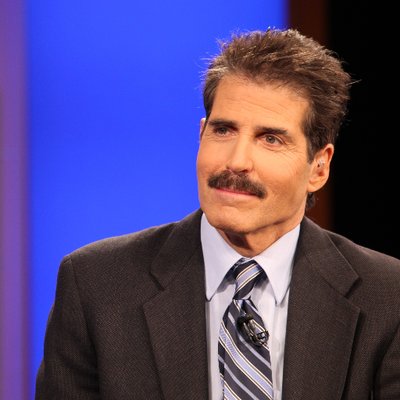
State troopers seized a pilot's $95,000 plane because a passenger had beer in her luggage.
It destroyed his business.
That punishment is clearly excessive, but a gov't lawyer says it's not: "He could still work as a mechanic."
Give me a break. Excessive fines destroy lives.
Toine Manders retweeted
Nicolae Ceaușescu demolished seven square kilometers of central Bucharest, including nineteen Orthodox churches and 40,000 homes, to erect a palace covering 365,000 square meters. He named it the "House of the People." The Romanian people lived without heat through winters that dropped below minus 20 Celsius while their government rationed bread.
This is central planning operating exactly as designed. When the state controls all capital allocation, the preferences of one man replace the preferences of millions. Prices no longer carry information about scarcity; political will does. The palace consumed 700,000 tonnes of steel, one million cubic meters of marble, and 900 million dollars in mid-1980s purchasing power. Meanwhile, Romanians queued for cooking oil and wore coats indoors through January. The regime made this tradeoff deliberately, consciously diverted resources, and suppressed anyone who objected.
Central planning always produces this: concentrated, visible monuments for the ruler, and dispersed, invisible suffering for everyone else. The ruler faces no profit-and-loss signal, no bankruptcy, no customer walking out the door. The people face compliance or a bullet. Without prices generated by voluntary exchange, planners cannot allocate resources rationally. Ceaușescu proved the theorem empirically, at enormous human cost.
Remove the monopoly on force, restore private property, and people will rebuild their own cities without tearing down churches to do it.


Toine Manders retweeted

"Socialists cry "Power to the people", and raise the clenched fist as they say it. We all know what they really mean - power over people, power to the State." — Margaret Thatcher

Toine Manders retweeted
The federal government spent $3.8 billion on DARE between 1983 and 2009, and every major longitudinal study concluded the program increased drug curiosity among participants. The General Accounting Office reviewed six long-term evaluations in 2003 and found DARE produced zero statistically significant difference in illicit drug use. The Surgeon General, the National Academy of Sciences, and the Government Accountability Office all said the same thing: DARE failed. Congress kept funding it anyway.
This is what central planners do. They identify a problem, design a solution without market feedback, spend decades ignoring contrary evidence, and protect the program because the bureaucracy depends on it. DARE gave police departments a public relations budget disguised as education. It gave officers a reason to enter schools. The incentive was never reducing drug use. The incentive was institutional survival.
A simpler mechanism is also at work. Tell a twelve-year-old that heroin, cocaine, and marijuana exist, describe their effects in vivid detail, and then instruct him not to try them. You've just handed him a menu. Prohibition teaches the product, not abstinence. Parents who handle this privately, without a uniformed officer narrating the pharmacology of methamphetamine, produce quieter, less curious children on the subject.
The market alternative already existed: voluntary community programs, church groups, family-driven education. None of these required a $3.8 billion federal mandate. The government crowded them out, delivered a worse product, and called the outcome a public health investment.
