

Crypto Enthusiast • Web3 Guy • Defi • AI • RWA • Gamefi • Multichain Analysis • Marketing Strategist • NFA • Threador 🧵🦅
space
Joined November 2010
- Tweets24.3K
- Following2.6K
- Followers21.1K
- Likes39.1K





spacebyte ⛓ retweeted

A crypto protocol can generate $100M in annual revenue and still be one of the worst tokens to hold through a bear market.
The numbers behind crypto’s revenue cycles are pretty brutal.
Across 227 protocols, median revenue contracted by more than 60% during major market downturns.
+ DEX-volume downturn: -62%
+ Bitcoin-market downturn: -65%
A protocol earning $10M monthly could see that fall toward $3.5M under comparable conditions.
Now imagine valuing that business using earnings from its strongest quarter. The multiple might look attractive, but the underlying revenue could be far less durable than it appears.
I think this is one of the biggest problems with how crypto fundamentals are evaluated.
Over the past 30 days, protocols generated approximately $1.22B in revenue.
+ @tether : $506M
+ @circle : $203M
+ Combined contribution: ~58%
Two stablecoin issuers accounted for more than half of tracked revenue.
Their economics are quite different from those of DEXs, derivatives exchanges and launchpads, where earnings depend heavily on trading activity and leverage.
Stablecoin issuers earn primarily from reserve assets and outstanding balances. Lending protocols depend on borrowing demand, utilization and interest rates.
These businesses can all experience revenue declines, but they don’t necessarily contract for the same reasons or at the same pace.
And there’s another complication.
A protocol generating more revenue doesn’t automatically have better token economics.
Consider two hypothetical businesses:
+ Protocol A: $50M annual revenue, with $40M allocated to token buybacks.
+ Protocol B: $100M annual revenue, with no direct tokenholder distribution.
Now assume A’s revenue falls 25% during a downturn while B’s declines 70%.
A would still generate $37.5M annually. B would fall to $30M.
The smaller business would now earn more through the downturn, while maintaining a clearer mechanism for returning economic value to its token.
That doesn’t guarantee A’s token will outperform. Entry valuation, dilution and buyback execution still influence returns.
But it shows why revenue size alone tells us very little about the quality of a token investment.
A derivatives exchange reporting record fees during a leverage-driven rally could be an excellent business. The question is how much of that revenue remains when leverage disappears and trading activity contracts.
The same applies to launchpads and protocols that rely heavily on incentives to attract users.
Personally, I’d rather evaluate a business generating $30M consistently across market conditions than one earning $100M at the peak and $10M when activity dries up, assuming comparable valuations and tokenholder economics.
Because a high-revenue protocol isn’t necessarily a durable business, and a durable business isn’t automatically a good token investment.
The strongest fundamental opportunities may come from protocols that can preserve earnings through downturns and convert those earnings into tangible value for tokenholders.

spacebyte ⛓ retweeted

One of my stronger convictions in RWA-Fi is that @pendle_fi is positioning itself at the forefront of the next wave of onchain capital markets.
We're talking about trillions $$$ in potential tokenised asset supply over the coming years, but bringing assets onchain is only half the equation.
The real opportunity lies in unlocking their productivity once they're there.
Its obvious that Pendle is increasingly becoming a fundamental layer for that.
A few developments worth highlighting:
1. From yield tokenisation to broader asset productivity
PTs have already established themselves as a core DeFi primitive for fixed-yield exposure + capital-efficient looping strategies.
With PendleLoop, that utility is expanding beyond traditional yield-bearing assets into leveraged exposure across BTC, ETH + tokenised equities.
Tokenised stock long strategies on @base now integrate borrowing through @aave, (up to ~4.2x leverage) enabling users to trade yield expectations towards helping them deploy capital more efficiently across different asset classes.
2. Becoming a value discovery layer for RWAs
From tokenised treasuries + private credit to AI infrastructure, reinsurance + equities, Pendle has reportedly listed 100+ RWA markets YTD.
*FYI: RWAs now account for >80% of its TVL.
What stands out is the breadth of exposure being brought into DeFi.
As more institutional assets come onchain, Pendle provides a venue where their yields can be priced, traded + incorporated into broader DeFi strategies.
Tokenisation creates asset availability, yield markets help turn that availability into financial utility.
3. Institutional credibility as a compounding advantage
The growing roster of asset managers is particularly notable:
🔸 Janus Henderson (deJAAA)
🔸 Franklin Templeton (FLHYon)
🔸 Partners Group (NGI+)
🔸 Bitwise (PPLUS)
Alongside its RWA Insights series featuring institutions such as Grayscale, Pendle is building relationships with some of the most established names entering tokenised finance.
This matters wayy beyond the immediate TVL contribution.
Institutional relationships bring credibility + differentiated asset supply, which can attract more liquidity, improve market depth + strengthen Pendle's position as a destination for future RWA listings.
And that's where the reinforcing flywheel gets interesting.
More institutional assets → broader yield markets → deeper liquidity + capital utility → greater incentive for new issuers to participate.
Ofc, the flywheel depends on actual market demand + sustainable liquidity, not simply the number of listings.
But the direction is pretty clear.
As tokenised assets proliferate, the opportunity increasingly shifts from who can bring assets onchain to who can make those assets productive.
Pendle is building a pretty compelling position at that intersection.
A 24/7 yield discovery layer for an increasingly onchain financial system.
Best part of this? We're still vv early in this transition.
Pendle 🫡

Same gold, different prices.
On October 27, @Tether’s XAUT traded at a 0.16% discount to spot gold, while @Paxos’ PAXG traded at a 0.05% premium.
That’s a 0.21 percentage-point gap between two tokens backed by the same commodity.
Their market values also differ considerably:
→ XAUT: $2.97B
→ PAXG: $1.77B
PAXG offers monthly reserve attestations and direct redemption fees starting at 0.125%. XAUT provides quarterly attestations and charges 0.25% for direct redemption.
But for retail holders who aren’t redeeming physical bullion, execution price and secondary-market liquidity could outweigh those differences.
XAUT has the larger market presence, while PAXG offers more frequent reserve reporting.
At what price difference would you actually choose one over the other?

Crypto doesn’t need another blockchain. It needs protocols that put existing infrastructure to work.
That’s the idea behind @Oly_Dao.
OLY combines ETH staking through Lido, Uniswap liquidity fees and trading-tax revenue to build around real DeFi activity.
Now, it’s expanding its role on Robinhood Chain, where $OLY already trades against tokenized NVIDIA and Tesla stocks, alongside BTC and ETH.
These markets need liquidity to function well. OLY wants to become one of the chain’s largest liquidity providers.
But the next chapter raises another question: why is a DeFi protocol creating the Bank of OLY with just 1,000 NFT Charters?
That’s the part I’m curious to learn more about.
🤝 Paid partnership

spacebyte ⛓ retweeted
.@Raydium’s revenue more than tripled in Q3, but memecoins are no longer its biggest source of swap fees.
According to Blockworks Research, Raydium generated $8M in net revenue during Q3 2026, with tokenized assets becoming its largest source of swap fees.
The numbers:
+ Q3 net revenue: $8M
+ Revenue growth: More than 3x
+ Annualized net revenue: $32M
+ Largest swap fee category: Tokenized assets
For a DEX historically tied to Solana’s speculative trading cycles, the changing revenue mix is arguably more important than the growth itself.
Consider $1B in trading volume.
+ At 5 bps: $500K in gross swap fees
+ At 20 bps: $2M in gross swap fees
That’s four times the fee generation without any increase in volume.
Of course, gross swap fees aren’t Raydium’s net revenue. LP allocations and protocol take rates determine how much the business retains.
But this illustrates how a different trading mix can improve fee generation without requiring equivalent growth in volume.
Tokenized assets also introduce different liquidity requirements, market-making costs and trading behavior, so their long-term profitability remains unproven.
Still, Raydium is developing another meaningful revenue source beyond memecoin trading.
If that continues across market cycles, it could change how investors assess Raydium’s business and the economics behind $RAY.

Private companies now have trillion-dollar valuations trading on crypto exchanges, even before their shares become publicly available.
Anthropic’s IPO filing has brought these markets back into focus, and October 27 data shows how differently exchanges are pricing exposure to Anthropic and OpenAI.
Anthropic’s last reported funding valuation was $965B. Its perpetual markets are now implying almost twice that amount.
→ @extendedapp : $1.877T (+94.5%)
→ @variational_io : $1.877T (+94.5%)
→ @binance : $1.880T (+94.8%)
→ @bitget : $1.882T (+95.0%)
→ @Lighter_xyz : $1.934T (+100.5%)
OpenAI shows a similar pattern against its last reported $852B valuation.
→ Extended: $1.410T (+65.5%)
→ Variational: $1.411T (+65.6%)
→ Binance: $1.413T (+65.8%)
→ Bitget: $1.438T (+68.7%)
→ Lighter: $1.501T (+76.1%)
What’s striking is how much the prices differ between exchanges.
Anthropic’s implied valuation varies by approximately $58B across these venues. For OpenAI, the difference reaches $90B.
And liquidity tells another part of the story.
Binance has around $50M in open interest on its Anthropic contract, compared with $2.4M on Lighter and just $24K on Extended.
So one of the lowest quoted valuations comes from a market with very little outstanding exposure.
These contracts aren’t private shares. They’re derivatives whose prices depend on liquidity, funding rates, margin requirements and settlement terms.
Without a publicly traded underlying share price to anchor arbitrage, large pricing differences can persist.
Pre-IPO perps are bringing continuous price discovery to private companies, but a quoted valuation is only as meaningful as the liquidity and settlement mechanics behind it.

Tokenized equities need more than an onchain ticker. They need assets people can actually use.
@Swisscheese_fn is building on Polygon, combining tokenized stocks with swaps, staking and borrowing. Its security measures include smart contract audits, cold storage, encrypted data and 2FA.
Reliable pricing, liquidity and compliance will determine how far this model can go.
With $SWCH listed on MEXC and Gate.io, SwissCheese is building its presence in the wider crypto market.
The goal is to make stocks functional assets within DeFi, not just put them onchain.

spacebyte ⛓ retweeted

𝗧𝗼𝗸𝗲𝗻𝗶𝘇𝗲𝗱 𝘀𝘁𝗼𝗰𝗸𝘀 𝗮𝗿𝗲 𝗺𝗼𝘃𝗶𝗻𝗴 𝗯𝗲𝘆𝗼𝗻𝗱 𝗵𝗼𝗹𝗱𝗶𝗻𝗴 𝗮𝗻𝗱 𝘁𝗿𝗮𝗱𝗶𝗻𝗴.𝗬𝗼𝘂 𝗰𝗮𝗻 𝗻𝗼𝘄 𝗯𝗼𝗿𝗿𝗼𝘄 𝗮𝗴𝗮𝗶𝗻𝘀𝘁 𝘁𝗵𝗲𝗺 𝗮𝗻𝗱 𝗯𝘂𝗶𝗹𝗱 𝗹𝗲𝘃𝗲𝗿𝗮𝗴𝗲𝗱 𝗲𝗾𝘂𝗶𝘁𝘆 𝗽𝗼𝘀𝗶𝘁𝗶𝗼𝗻𝘀 𝗱𝗶𝗿𝗲𝗰𝘁𝗹𝘆 𝗼𝗻𝗰𝗵𝗮𝗶𝗻.
I spent some time researching the latest development from @pendle_fi, and what caught my attention wasn't just the leverage. It was how three pieces of financial infrastructure are now working together on Base.
On October 22, Pendle introduced PendleLoop, allowing eligible users to build leveraged positions in tokenized US equities through @aave V4.
The supported assets include:
• AAPLc — Apple
• NVDAc — Nvidia
• GOOGLc — Alphabet
• TSLAc — Tesla
• AMZNc — Amazon
• MSFTc — Microsoft
• METAc — Meta
Here's what I found.
➊ 𝗙𝗶𝗿𝘀𝘁, 𝗵𝗼𝘄 𝗱𝗼𝗲𝘀 𝘁𝗵𝗲 𝗹𝗲𝘃𝗲𝗿𝗮𝗴𝗲 𝘄𝗼𝗿𝗸?
@aave already introduced lending markets for these equities in September.
@pendle_fi didn't create a new lending market. It built an interface that combines the transactions required to increase exposure.
Instead of manually buying tokens, supplying collateral, borrowing and repeating the process, users can manage the position through PendleLoop.
The mechanism works like this:
→ Purchase a tokenized stock.
→ Supply the tokens as collateral on $Aave V4.
→ Borrow $USDC against that collateral.
→ Use the borrowed $USDC to purchase additional stock tokens.
→ Repeat within the permitted collateral limits.
The result is a larger equity position than the capital initially committed.
At launch, available leverage ranged from approximately 2.6x to 4.2x, depending on the asset.
But leverage isn't free. Borrowing rates are variable, and a decline in collateral value can trigger liquidation.
➋ 𝗪𝗵𝗮𝘁 𝗮𝗰𝘁𝘂𝗮𝗹𝗹𝘆 𝗯𝗮𝗰𝗸𝘀 𝘁𝗵𝗲𝘀𝗲 𝘁𝗼𝗸𝗲𝗻𝗶𝘇𝗲𝗱 𝘀𝘁𝗼𝗰𝗸𝘀?
This is another detail worth understanding.
@coinbase Tokenized Stocks aren't simply synthetic assets following equity prices.
Each token represents a certificate issued by Coinbase Onchain SPV Ltd, with underlying shares held through Alpaca Securities (an SEC-registered broker-dealer).
The issuer holds those shares under a trust arrangement for token holders.
Corporate actions are also accounted for.
For example:
Dividends are reinvested into additional underlying shares (after applicable fees and taxes),rather than distributed directly to token holders.
This means the tokens provide economic exposure to the underlying equities, although their legal rights and redemption arrangements differ from holding ordinary shares through a brokerage account.
➌ 𝗡𝗼𝘄, 𝘄𝗵𝗮𝘁 𝗮𝗯𝗼𝘂𝘁 𝘁𝗵𝗲 𝗹𝗲𝗻𝗱𝗶𝗻𝗴 𝗺𝗮𝗿𝗸𝗲𝘁?
Aave V4's Equities Hub on @base supports the seven stocks as collateral for USDC borrowing.
At launch, the market had approximately:
• $29M in aggregate equity collateral caps.
• $32M USDC supply cap.
• $21M USDC borrow cap.
• Collateral factors ranging from 65% to 79%.
These are market limits, not actual deposits or borrowing volume.
And the collateral factors matter because they determine how much borrowing capacity each asset receives.
A token with a lower collateral factor generally requires more collateral for the same loan.
This also explains why PendleLoop cannot offer identical leverage across every stock.
➃ 𝗪𝗵𝗮𝘁 𝗱𝗼𝗲𝘀 𝘂𝘀𝗶𝗻𝗴 𝗣𝗲𝗻𝗱𝗹𝗲𝗟𝗼𝗼𝗽 𝗰𝗼𝘀𝘁?
Pendle is currently waiving its service fees on eligible non-PT looping positions until December 31, 2026.
However, that doesn't eliminate the cost of leverage.
Users still face:
• Variable USDC borrowing interest
• Transaction costs and slippage
• Liquidation risk when collateral values decline
Pendle has also announced borrowing incentives distributed through @Merkl_xyz.
Those incentives can reduce effective financing costs for qualifying positions, but they shouldn't be treated as permanent income.
➎ 𝗢𝗻𝗲 𝗿𝗶𝘀𝗸 𝗜 𝘁𝗵𝗶𝗻𝗸 𝗱𝗲𝘀𝗲𝗿𝘃𝗲𝘀 𝗺𝗼𝗿𝗲 𝗮𝘁𝘁𝗲𝗻𝘁𝗶𝗼𝗻
The lending market operates 24/7, but the underlying US stock market doesn't.
Aave uses Chainlink's tokenized equity price feeds, which publish prices 24/5.
During weekends and US market holidays, the feeds retain their last published prices.
That creates a pricing gap:
• A stock could experience a major development outside regular market hours
• while its onchain collateral valuation remains unchanged until the feed updates.
For leveraged positions, a sharp repricing when the feed resumes can become a liquidation problem.
So 24/7 access doesn't mean continuous price discovery or protection from market gaps.
✦ Conclusion
What I find significant is how the responsibilities are divided:
→ @coinbase handles the tokenized equity structure.
→ @aave provides the collateral and borrowing infrastructure.
→ @pendle_fi makes the transactions accessible through one interface.
Each component existed before this integration, but combining them reduces the work required to use tokenized equities in DeFi. And I think that distinction matters.
Issuing more tokenized stocks doesn't necessarily create more demand for them. The stronger test is whether holders are willing to supply those assets as collateral, borrow against them, and maintain positions after promotional incentives expire.
That's what I'll be monitoring:
▸ collateral deposits
▸ actual borrowing demand
▸ utilization
▸ how these markets behave during periods of equity volatility
Because the ability to tokenize a stock has already been demonstrated. Whether that stock can support a liquid, sustainable lending market is the more important question.

Stablecoin deposits are growing across DeFi, but the capital isn’t flowing evenly between assets or lending markets.
The latest 30-day data shows sUSDS leading individual pool inflows, while USDC is attracting deposits across several @Aave, @sparkfinance and @Compound_xyz markets.
The largest inflows:
→ sUSDS / Sky Ethereum: +$383.1M (+8.6%)
→ USDC / Aave Arbitrum: +$38.0M (+20.9%)
→ RLUSD / Spark Ethereum: +$20.0M (+200%)
→ USDC / Aave Base: +$17.3M (+9.7%)
→ USDC / Aave V4 Ethereum: +$11.5M (+35.7%)
→ USDC / Spark Ethereum: +$9.0M (+22.3%)
→ USDT / Aave V4 Ethereum: +$7.6M (+38%)
What’s particularly revealing is the distribution of USDC inflows.
Across the seven USDC pools shown in the latest inflow table, deposits increased by approximately $92M in aggregate TVL.
Arbitrum and Base accounted for $55.3M of that increase, while Ethereum’s newer Aave V4 Core market grew 35.7%.
But deposit growth doesn’t necessarily translate into higher yields.
@Aave’s USDC supply APY on Arbitrum fell from 2.93% to 2.37% despite attracting $38M in additional deposits.
On Base, the opposite happened. USDC deposits grew $17.3M while supply APY increased from 3.96% to 4.17%, with utilisation reaching 90.3%.
That suggests the relationship between available liquidity and borrowing activity differs considerably between markets.
Meanwhile, sUSDS attracted $383.1M into @SkyEcosystem’s savings product, with its APY increasing from 3.60% to 3.80%.
The distinction is important because savings deposits and lending deposits don’t represent identical forms of capital demand.
These figures describe the largest inflowing pools, not net flows across every market. Outflows elsewhere can offset much of the growth.
Stablecoin adoption is one thing. Attracting deposits into specific markets, maintaining utilisation and generating sustainable borrower demand is another.
The distribution of capital across DeFi is becoming just as revealing as the total supply of stablecoins.

spacebyte ⛓ retweeted

Everyday I log in here I see that so many people still have a skill issue.
> being raped by memes on pumpdotfun ? pivot to NFTs join the best communities there are many out there.
> still can’t win from NFTs ? Pivot to trading perps and prediction markets take your time to learn how to trade before trading there are prop firms for Gods sake to use and practice how to trade.
> and if at the end of all these you still can’t make a little profit from crypto then build something of value that would provide services to teams in crypto.
Add a little fee for those services and it must be worth the price (MUST)
And if at the end of all these you are still unlucky and you still can’t win then Give up.
don’t run yourself to absolute zero cause you want to win in crypto.
I’m not a motivational speaker I’m just telling you the hard truth fren.
pivot to learning a trade or something don’t waste your youthful years aping memes and trading perps to absolute zero.
As always happy Sunday lads❤️
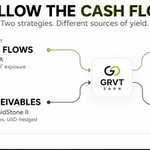
4.5% vs ~11% target APY across two RWA strategies on @grvt_io:
Balanced Bundle
• Target APY: ~4.5%
• Primary exposure: BlackRock CLOA
Opportunistic Bundle
• Target APY: ~11%
• Primary exposure: BlackOpal LiquidStone II
The difference goes beyond yield. The Balanced Bundle focuses primarily on AAA rated CLOs, while the Opportunistic Bundle targets income from Brazilian credit card receivables with FX hedging.
Both provide access to real-world credit, but with different risk profiles.
What makes this move interesting is where GRVT is taking Earn.
The upcoming upgrade aims to bring fixed-income strategies generating returns from interest, premiums and invoices onchain, with target yields of up to 11%.
GRVT is also working toward letting users use their Earn balance as trading margin while it continues generating yield.
@grvt_io isn’t just adding another way to earn yield. It’s trying to make capital productive without separating earning from trading.
If executed well, that could make Earn a much bigger part of the GRVT experience.



Four lending markets, four very different amounts of capital actually borrowed:
@0xfluid
• TVL: $874M
• Active loans: $666M
• 76% loan intensity
@maplefinance
• TVL: $2.68B
• Active loans: $1.92B
• 72%
Jupiter Lend
• TVL: $1.76B
• Active loans: $1.08B
• 61%
@Morpho
• TVL: $11.27B
• Active loans: $5.77B
• 51%
Morpho is by far the largest market here, with $11.27B in TVL and $5.77B in active loans, but its loan intensity is closer to 51%.
Morpho still wins comfortably on absolute scale, but Fluid and Maple are currently converting a much larger share of deposited capital into outstanding credit.
That creates a very different ranking depending on what you care about.
By TVL, it goes:
Morpho → Maple → Jupiter → Fluid
By loan intensity, it flips to:
Fluid → Maple → Jupiter → Morpho
Same four protocols, completely different order once the focus moves from capital accumulated to capital actually borrowed.
spacebyte ⛓ retweeted

Aave just recorded its strongest quarter ever, with total deposits surpassing $33B. 👀
The numbers tell an important story about where DeFi lending is heading.
➤ In Q3 2026:
• Total deposits grew by $9.5B, up 40%.
• Aave V4 deposits increased 6x to over $1.4B.
• Active loans reached approximately $13B.
• Aave DAO generated $84M in revenue year-to-date.
But the development is what @aave is building beyond these numbers.
Aave is expanding its lending infrastructure to support more than traditional crypto assets.
Tokenized stocks from @coinbase are already live on V4, with deposits reaching $16.5M and active loans exceeding $5M.
Native Bitcoin collateral and institutional custody-based lending are also in development.
➤ Why does this matter?
Bitcoin holders could access borrowing without wrapping their $BTC into another asset, while tokenized stocks could allow users to borrow against assets like @Apple, @amazon, and @Google.
This opens new ways to connect traditional financial assets with DeFi lending.
Meanwhile, Aave App has attracted over $40M in deposits in just two months, showing demand for simpler ways to access on-chain financial services.
Aave is also preparing Tokenomics 3.0, built around three components: buybacks, staking, and token burns.
My opinion: DeFi lending is expanding beyond the crypto assets it started with.
The next stage is about connecting more assets, more capital, and more users to on-chain credit markets.
Aave is positioning itself for that expansion.

spacebyte ⛓ retweeted

crypto keeps building faster ways to move money, but one weak point isn't going away
ai is making phishing and social engineering more convincing, and even the best blockchain can't protect users who are tricked into signing a malicious transaction
this is where wallets like binancecoin:native ecosystem projects and self custody tools need to compete on more than fees and speed
clear transaction previews, smarter warnings and safer recovery can matter more than another feature launch
the next big wave of adoption won't come from making crypto easier to use alone
it'll come from making it harder to lose everything by mistake

.@trdEverything is putting $3,000 USDT up for grabs every week across three leaderboards.
Perps volume, prediction markets volume, and profit.
You can compete based on how you trade, whether that’s generating volume or focusing on profitability.
Three leaderboards, one weekly prize pool.

💸 New Leaderboards and Bigger Rewards
$3,000 USDT total prize pool every week for 3 leaderboards:
• Perps Volume (our existing board)
• Prediction Markets Volume
• Profit (both perps and prediction markets)
$1,000 USDT per board, split among the top 10 traders.
The new leaderboards start this week, with final rankings every Thursday at 6 pm HKT.

spacebyte ⛓ retweeted

there are dozens of crypto wallets, but not every wallet supports the same blockchains.
here’s a simple breakdown of the major options ↓
1/ broad multi-chain software wallets
best for managing assets across multiple blockchains.
→ @BitgetWallet > 130+ chains
→ @TrustWallet > 100+ blockchains
→ @TokenPocket_TP > 100 to 1,000+ claimed networks
→ @GemWallet > 100+ blockchains
→ @MathWallet > 200+/223+ public chains
→ @GuardaWallet > 70+ blockchains
→ @CoinomiWallet > 50+ blockchains, 10,000+ tokens
→ @imTokenOfficial > Ethereum, Bitcoin, TRON, Cosmos, and more
→ @exodus > major blockchains + hundreds of tokens
→ @EdgeWallet > 130+ assets
→ @CoinbaseWallet > EVM chains, Solana, Bitcoin, and more
→ @Blockchain > Bitcoin, Ethereum, Solana, and other supported networks
→ @BinanceWallet > 30–60+ chains
2/ specialized software wallets
best for specific blockchains, ecosystems, or DeFi activities.
→ @Blockstream Green > Bitcoin, Lightning, and Liquid
→ @monero GUI > Monero only
→ @MyMonero > Monero only; check current service status
→ @MetaMask > EVM networks, plus supported Bitcoin, Solana, and TRON features
→ @myetherwallet (MEW) > Ethereum and ERC-20 tokens
3/ hardware wallets (cold storage)
best for users who want dedicated devices to protect their private keys.
→ @Ledger > 50+ blockchains
→ @Trezor > major blockchains and thousands of supported assets
→ @Tangem > 80–100+ networks, 16,000+ tokens
→ @ELLIPAL Titan 2.0 > 40+ blockchains, 10,000+ tokens
→ @KeystoneWallet 3 Pro > multiple major blockchains
→ @BitBoxSwiss > Bitcoin, Litecoin, Ethereum, and selected other assets
→ @SafePal S1 > 200+ claimed blockchains
so, which should you use?

spacebyte ⛓ retweeted
A company paying salaries onchain shouldn't have to expose every employee's paycheck.
That's one of the practical problems @primus_labs and @allscaleio tested on BNB Chain.
On September 1, both teams completed a technical validation of confidential stablecoin payroll, involving four fictional employees and four sample payments.
The results were straightforward:
• All four payments were recorded onchain.
• Individual salary amounts remained encrypted.
• Authorized users successfully recovered the correct salary figures.
✦ So how does this work?
AllScale handles payroll preparation, settlement, and reconciliation, while Primus uses FHETransform to encrypt salary amounts before they’re submitted to the smart contract.
Employees can then access their salary details by signing a wallet message, without paying gas to view them.
However, this doesn’t make payroll completely anonymous.
- Company wallets
- Recipient addresses
- Timestamps
- Transaction records
…remain visible. The protection applies to compensation amounts.
That’s an important distinction.
Businesses can retain public settlement records without exposing individual salaries.
The validation involved only four sample payments, so larger-scale deployment and operational readiness still need further testing.
Now, with @primus_labs Epoch 2 underway, there's also an opportunity for creators researching these technical developments.
✦ Here’s what participants should know:
→ 0.3% of the $PRIM supply is allocated to the campaign.
→ The top 450 creators across three language regions qualify for rewards.
→ Your four highest-scoring eligible posts determine your Mindshare score.
→ Each creator can submit up to 10 posts per epoch.
There’s also a referral multiplier tied to Primus XP activity, which can contribute to your final score.
For me, the useful part of this campaign is having more reasons to examine what Primus is actually building, from confidential payroll to verifiable offchain data.
If you're planning to participate in Epoch 2, you can join through my referral link:
s.kaito.ai/RsenLO4

spacebyte ⛓ retweeted

why should fixed-income opportunities be mostly associated with banks and large investors?
i think this is one area where bringing traditional finance on-chain could make a real difference...
and it's something @grvt_io is working towards with grvt earn
for years, fixed-income strategies have been an important part of how institutions manage their capital
but accessing similar opportunities hasn't always been simple for everyday users
grvt wants to change that by bringing tokenized fixed-income strategies to its self-custodial platform
here's what makes it interesting
> access to strategies traditionally associated with institutional investors
> eligible assets targeting up to 11% apy, not guaranteed
> opportunities brought on-chain through tokenization
> more control over assets through a self-custodial approach
and there's a much bigger picture here
the traditional fixed-income market is estimated at around $160T
grvt isn't trying to move all of that on-chain, but making even a small part of these opportunities more accessible is an interesting direction
personally, i think the real value isn't just the potential yield
it's giving more people access to financial strategies that were traditionally harder to reach
of course, institutional-style strategies still carry risks, and higher target yields don't mean guaranteed returns
but if grvt can make these opportunities easier to access and understand, that's a meaningful step towards connecting traditional finance with crypto...

Moving assets between chains should feel this simple.
With USDG deposits from Robinhood Chain and USDC from Arc now supported on @grvt_io, getting funds into the platform just got easier.
Small improvements like this make a real difference to the user experience.

