

Right here right now.
United States
Joined March 2010
- Tweets4.5K
- Following1.3K
- Followers2K
- Likes2.8K


Alberto Cabello 🟧 retweeted

🇻🇪🏆 Three Venezuelan players have just made history by winning the World Series with the Milwaukee Brewers and the World Baseball Classic with Venezuela in the same year!
Congratulations to William Contreras, Jackson Chourio and Antonio Senzatela on this remarkable achievement!


Alberto Cabello 🟧 retweeted

GRACIAS JAPON SIEMPRE 🫰🇯🇵
VIDEO COMPLETO EN YT
私たちはあなたを愛してます
youtu.be/e9CT7GQB4iA
Alberto Cabello 🟧 retweeted

a big boost for the people of venezuelan people this weekend as nobel peace prize winner maria machado
—by far the most popular political figure in her country—returns home.


Alberto Cabello 🟧 retweeted

Reducir las protestas en Francia a la supuesta invasión de personas de países pobres, africanos, y musulmanes, como hace un grupo de influyentes periodistas de derecha extrema, es básicamente errado, sesgado y oportunista. Es, en pocas palabras, hacer política. Lo que no critico.
Alberto Cabello 🟧 retweeted

It is a basic principle of American democracy that the government can’t selectively target individuals simply because of their political beliefs or what they say. But that’s exactly what the Trump Administration is doing to Congresswoman Ilhan Omar of Minnesota.
To understand why this is so appalling, it’s important to know the facts. Congresswoman Omar came to this country with her father when she was 12 years old. Five years later, her father became a naturalized citizen. If Ilhan had been 18 at the time, she would have had to apply for citizenship separately. But because she was 17, she became a naturalized citizen automatically.
Congresswoman Omar went on to graduate from college, work as a community organizer, become the first Somali-American legislator elected to public office in the U.S., and win a seat in Congress. There, she has been one of the Trump Administration’s fiercest critics, which has led the president to repeatedly single her out as someone who he believes does not belong in this country.
Now the Administration is actively trying to deport Congresswoman Omar, seemingly based solely on the unsubstantiated theory that she was actually 18 when her father was naturalized, and therefore is not a citizen. Federal agents have raided her home, confiscated personal records, and seized her phone — all to try and uncover a nonexistent smoking gun from 20 years ago that will somehow make their case.
Think about that. The full weight of the federal government is being brought down on a law-abiding elected official because she has dared to criticize the president. And it’s not the first time this has happened. Under President Trump, the Justice Department has repeatedly gone after those he considers his political enemies — from the Attorney General of New York, to the former head of the FBI, to members of the Federal Reserve.
In those cases, the prosecutions either stalled or were dismissed for having no basis in law, and the same is likely to happen in this case. But not before Congresswoman Omar’s life has been turned upside down, her legal bills have piled up, and she’s been forced to spend time fighting unsubstantiated charges instead of serving the people of Minnesota.
The fact that any president, or any administration, is willing to engage in such transparent efforts to intimidate someone should outrage all Americans, regardless of how they feel about Congresswoman Omar’s political views. Because if this becomes the new normal, there’s no reason to believe it will stop with her — or that future presidents, in either party, won’t do the same.
Alberto Cabello 🟧 retweeted

“We only give a couple of instructions to people when they go to work for us. One of them is to think like an owner. And the second one is to just tell us the bad news immediately.” – Warren Buffett
Alberto Cabello 🟧 retweeted

"In 2008, the US Drug Enforcement Administration (DEA) launched Project Cassandra to disrupt Hezbollah’s finances by targeting drug trafficking and money laundering. The investigation revealed Margarita Island to be a ‘back node’ – a logistical and financial hub where criminal proceeds could be systematically converted into operationally accessible resources, often with the acquiescence of the Venezuelan authorities. The DEA concluded that Hezbollah was involved in large-scale cocaine trafficking from South America to Europe and the Middle East; had complex money-laundering schemes that relied on the illicit car trade, cash processing and informal financial networks; and had integrated its criminal proceeds into its political and military structure".
engelsbergideas.com/essays/h…

Alberto Cabello 🟧 retweeted

Creatine is known for building muscle and improving athletic performance. A new UCLA study just found it does something completely different: it powers the immune cells that direct your body's cancer-fighting response.
Researchers at UCLA published findings in iScience showing creatine supplementation enhances dendritic cell function and suppresses tumor growth in preclinical models. The work identifies a metabolic bottleneck in cancer immunity and suggests creatine might help address it.
What dendritic cells do
Dendritic cells serve as coordinators of your immune system's response to cancer. They patrol tissues, capture pieces of tumor cells, and present those fragments to T cells in lymph nodes. This presentation activates T cells to recognize and attack cancer.
Without functional dendritic cells, T cells never get properly instructed. The immune system fails to mount an organized response against tumors. Patients with more dendritic cells in their tumors tend to have better outcomes and more active immune responses.
There is an energy problem in dysfunctional dendritic cells.
Dendritic cells require significant energy to function. When they encounter danger signals from tumors, they activate, migrating to lymph nodes, ramping up production of surface molecules that interact with T cells, and secreting inflammatory signals.
All of this requires ATP, the cellular energy currency. Inside tumors, dendritic cells face a hostile metabolic environment. Cancer cells consume available glucose and other nutrients aggressively. Immune cells competing for those same resources often lose out, leaving them energy-depleted and dysfunctional.
Where does creatine fit in?
Creatine functions as an energy buffer. Inside cells, an enzyme called creatine kinase adds a phosphate group to creatine, creating phosphocreatine. When ATP gets consumed during cellular work, phosphocreatine rapidly donates its phosphate back to regenerate ATP.
This system is particularly important in tissues with high, fluctuating energy demands like muscle and brain. Athletes supplement with creatine to maintain ATP availability during intense exercise.
The researchers found dendritic cells also rely on this system.
When activated, dendritic cells dramatically upregulate expression of the creatine transporter, the protein that imports creatine into cells. Intratumoral dendritic cells showed especially high transporter levels compared to dendritic cells from spleens.
So how did the team test their hypothesis?
The team used two complementary approaches.
First, they generated mice lacking the creatine transporter specifically in immune cells. Dendritic cells from these knockout mice showed impaired survival and activation when stimulated. They expressed lower levels of costimulatory molecules needed to activate T cells and produced fewer inflammatory cytokines.
When these creatine-deficient dendritic cells were co-cultured with T cells, the T cells proliferated less, produced fewer effector molecules, and showed reduced activation markers. The dendritic cells couldn't effectively prime an immune response.
Second, the researchers tested whether creatine supplementation could enhance normal dendritic cell function.
Adding creatine to cell cultures improved dendritic cell survival and ramped up their activation. The cells displayed more surface proteins that signal readiness to interact with T cells and pumped out higher levels of inflammatory signaling molecules that coordinate immune responses.
There were some interesting mechanistic findings as well.
RNA sequencing revealed creatine supplementation activated energy-dependent inflammatory signaling pathways in dendritic cells. Metabolic profiling showed creatine-treated cells maintained higher ATP levels and increased phosphocreatine stores.
The researchers directly measured ATP in dendritic cells. Cells lacking the creatine transporter showed significantly lower ATP levels after activation compared to normal cells. Creatine supplementation restored and even enhanced ATP availability.
This ATP preservation appears critical for dendritic cell function.
Many of the processes required for activation, including protein synthesis, trafficking of molecules to the cell surface, and cytokine secretion, are energy-intensive. When ATP drops, these functions fail.
The tumor experiments were particularly fascinating.
The team tested whether creatine supplementation could enhance anti-tumor immunity in mice bearing B16 melanoma tumors, an aggressive cancer model. Mice received either regular drinking water or water supplemented with creatine.
Creatine-supplemented mice showed significantly slower tumor growth. Analysis of the tumor tissue revealed more activated dendritic cells with higher expression of maturation markers. These tumors also contained more activated T cells producing IFN-γ, a key anti-tumor cytokine.
Importantly, the anti-tumor effect of creatine required functional dendritic cells. When the researchers depleted dendritic cells, creatine supplementation no longer suppressed tumor growth. This confirmed dendritic cells were the critical cell type mediating creatine's effects.
Human relevance
The researchers tested whether their findings applied to human cells. They generated dendritic cells from human blood monocytes and treated them with creatine. Human dendritic cells responded similarly to mouse cells: enhanced activation, increased costimulatory molecule expression, and improved capacity to stimulate T cell responses.
This cross-species validation strengthens the translational potential. The creatine transporter and creatine kinase system are evolutionarily conserved between mice and humans.
Key takeaways:
• Dendritic cells upregulate creatine transporter expression when activated, especially in tumor environments
• Creatine functions as an ATP buffer, maintaining energy availability during dendritic cell activation
• Knockout of creatine transporter impairs dendritic cell survival, activation, and ability to prime T cell responses
• Creatine supplementation enhances dendritic cell function in both mouse and human cells
• Oral creatine supplementation suppressed melanoma tumor growth in mice through dendritic cell-dependent mechanisms
• The effect was mediated by improved dendritic cell ATP levels and enhanced inflammatory signaling
It's a super fascinating study for what it tells us about the role of creatine outside of musculoskeletal function. There are some limitations, however.
The tumor experiments used a single cancer type in young, healthy mice. Whether creatine supplementation works across different tumor types, in aged mice, or in the context of existing immunotherapies remains untested.
The creatine doses used in mouse drinking water translate to relatively high human equivalent doses, though still within the range commonly used by athletes (typically 3-5 grams per day).
The study measured associations between creatine treatment and immune activation but didn't fully map all downstream mechanisms. Additional signaling pathways likely contribute.
All experiments used syngeneic tumor models where mice develop cancer from transplanted tumor cells. Spontaneous tumor models or patient samples would provide additional validation.
This work adds to emerging evidence that creatine plays immunomodulatory roles beyond its established effects on muscle and brain. Previous studies from other groups showed creatine enhances CD8 T cell function and polarizes tumor-associated macrophages toward anti-tumor phenotypes.
The convergence across multiple immune cell types suggests creatine metabolism represents a general mechanism supporting anti-tumor immunity in metabolically challenging tumor environments.
Dendritic cells represent a logical target for metabolic interventions. They're relatively rare in tumors but have outsized influence on whether productive immune responses develop. Enhancing their function could amplify downstream T cell responses.
Current cancer immunotherapies focus heavily on T cells, particularly checkpoint inhibitors that release brakes on T cell activity. But those therapies depend on T cells already being properly activated. If dendritic cells fail at the initial priming step, checkpoint inhibitors have less to work with.
Metabolic support for dendritic cells could complement T cell-directed therapies. The combination might prove especially valuable in immunologically cold tumors that lack robust immune infiltration.
The practical advantage of creatine is accessibility. It's inexpensive, widely available, well-tolerated at typical doses, and has decades of safety data from use in athletes. The safety profile makes it a reasonable candidate for clinical testing.
The next step is human trials examining whether creatine supplementation enhances immune responses in cancer patients, particularly those receiving immunotherapy. Endpoints would include dendritic cell activation markers in blood and tumors, T cell responses to tumor antigens, and clinical outcomes.
The study provides proof of concept that targeting dendritic cell metabolism can enhance anti-tumor immunity and identifies creatine as a specific intervention worthy of further investigation.

Alberto Cabello 🟧 retweeted

📚 Au Japon, des gens vont désormais en boîte de nuit… pour s’asseoir silencieusement et lire un livre pendant qu’un DJ joue de la musique d'ambience.
Le concept s’appelle JUCY BOOK RAVE et se déroule notamment dans un club souterrain de Shimokitazawa, à Tokyo. Ici, pas besoin de danser ni de hurler pour parler à la personne située à 30 centimètres de vous. Les participants viennent avec un livre, s’installent dans la pénombre et lisent pendant que la musique accompagne leur soirée.
Alberto Cabello 🟧 retweeted

Delcy Rodríguez—a leading member of the torturing, election-stealing regime which all but destroyed Venezuela—looks comfortable in power. Yet her position could still come under threat economist.com/the-americas/2…

Alberto Cabello 🟧 retweeted

100 years ago today, John Coltrane was born.
For 20 days, I’ve shared one essential Coltrane recording each day.
For the final one, something more personal: a family film edit set to my all-time favorite Coltrane piece: “Equinox”
Alberto Cabello 🟧 retweeted

The World is Changing: AI For Creativity
By Jeffrey Katzenberg
A few months ago, I sat in my office in Silicon Valley and watched as a tech founder showed me something extraordinary. On the screen was a fully realized, beautifully lit, well-composed animated scene. It was stunning and it made me feel exactly what I felt in 1986 watching Luxo Jr. That was the first time I watched a computer-animated 3D character take a breath and seem, against all reason, to have life. It left me in awe.
Later that day, I received a text from an artist I've known for thirty years, 350 miles to the south, in the city where I spent most of my career. After seeing a similar video, she texted: "Is this the end of us?" My answer was, "Certainly not.”
I have spent the better part of the last decade in Silicon Valley, but the heart of my career has been in Hollywood. Being deeply connected to both worlds means I have deep loyalties to each and a responsibility to speak honestly to both.
In 2023, I said that these new AI tools would cut the time and cost of producing world-class animation by as much as ninety percent within three years. Some colleagues were alarmed, many were furious.
There is growing fear and resistance surrounding AI within the creative community. I deeply understand it, because I've spent countless hours walking through animation studios watching gifted artists bent over their desks, rebuilding a single second of film for the tenth time because the ninth version wasn't quite right. I've sat in screening rooms where four years of people's labor played out in minutes, and I knew the name of every person that had spent countless hours bringing those images to life. The creative process is a calling, there's really no other way to describe it. From the outside some see resistance. From the inside, it is love.
People do not fight this hard for things they don't care about. The pushback coming out of Hollywood represents the collective effort of people who are deeply passionate about their craft.
Is History Repeating Itself?
The history here is more complicated than either side may realize. In 1906, the most famous composer in America, John Philip Sousa, published an essay titled “The Menace of Mechanical Music." He warned that the phonograph would become "a substitute for human skill, intelligence and soul."
Sousa's fight was not really about the machine, it was about money. The machines were playing his compositions, and the men who built them weren't paying him a cent. His campaign helped create the Copyright Act of 1909. He did not stop the technology. He changed the terms under which it could use his work.
A hundred years ago, sound came to the movies. We remember it now as a miracle, and it was. What we forget is who paid for it. Before sound, tens of thousands of musicians made their living in the orchestra pits of movie houses, scoring every film live, every night, in towns all over the world. When the soundtrack arrived, the work of one composer and one orchestra was recorded for a film that went into thousands of theaters. The union fought back with everything it had, taking out newspaper ads across the country warning against the menace of "canned music," one of them showing a mechanical man tearing the strings out of a harp while an angel wept.
They were not fools, and they were not Luddites. They were right. Those pit jobs did not come back. And yet (this is the part we have to be brave enough to admit), sound gave us the movie musical, the modern score, sfx, sound design, audio engineering, and an art form vastly larger than the one it disrupted. And it helped keep Hollywood in the forefront of world entertainment for the rest of the century and into the next. The loss was real. And yet the art form expanded.
This is a story that has been told over and over again. To resist technology is to risk irrelevance. Just look at Kodak or Blockbuster. To embrace technology is to open doors of new possibility. Just consider Apple and Netflix.
What I Learned From Walt Disney
In the mid-1980s, I was tapped to lead Disney's animation division at a moment when the studio was at an inflection point. Animation wasn't just another business unit. It was the soul of the company, a medium revered because of Walt's genius and his passion. But the production system was cumbersome and unforgiving. A single movie was 125,000 individual hand-drawn and painted cels, photographed one frame at a time. Every revision carried a cost measured in months. These degrees of difficulty shaped the kinds of stories we could tell.
We found our way forward in an unexpected place: Walt himself. The Disney archives held astonishing recordings of Walt explaining his creative process. His own writings. His notes and storyboards. Work product captured at every stage of his process. This was truly a gift. Listening, reading, sitting with the work itself, we heard him talk about character, about emotion, about how an audience feels when a character truly comes alive. He talked about making bold choices and refining a scene until it genuinely moved people. We didn't hear a word about pencils or paintbrushes. In fact, Walt was famous for being a technologist, forever hunting for state-of-the-art tools, often inventing them himself to achieve the images he saw in his head. But he never defined animation by the tools. He defined it by whether the audience believed the character. His principles were timeless. The tools were not.
That realization changed everything. We co-developed the Computer Animation Production System (CAPS) with a young Northern California company called Pixar, replacing hand-painted cels with CGI. In The Little Mermaid, the final scene shimmered with a dimensionality and light that the old process simply couldn't achieve. In Beauty and the Beast, the ballroom sequence moved with a cinematic sweep that placed the audience inside the emotion of the moment. In Aladdin, the Cave of Wonders felt vast and alive, and the Magic Carpet became an intricate, compelling character all its own. In The Lion King, the stampede carried a scale and intensity that raised the emotional stakes beyond anything we'd done before. Technology didn't diminish the craft, it expanded the canvas. It gave artists more room to create.
A decade later, the canvas expanded again. When Disney released Pixar's Toy Story, it wasn't simply a technical milestone. It was proof that a fully computer-animated film could carry real emotional weight, that it could make audiences laugh, cry, and believe. At DreamWorks, we made the difficult decision to sunset hand-drawn animation and become a fully computer-animated studio. It was the right thing to do, but it was not without pain. It cost talented people their place in an industry where they had worked their whole lives. Some made the leap to the new tools and did the finest work of their careers. Some never did.
Tools are never the point. The instruments change with every generation. What endures is taste and imagination. The magical ability to make an audience feel. One of the greatest storytellers of our generation, George Lucas, succinctly captured the eternal essence of this issue: “It’s not the how, it’s the why.”
A Distinction With a Difference
I asked one of the leading AI models a question that has been challenging me for months. What is the difference between reasoning and creating? Its answer changed how I think about almost everything happening in this industry. It said . . .
Reasoning and creating are two distinct cognitive modes, though they also work together. Reasoning is fundamentally evaluative and analytical. It operates on what already exists: facts, premises, evidence. It moves toward a conclusion that was in a sense already implied by the input. Reasoning is constrained by logic and truth. Its goal is to arrive somewhere correct, not to invent somewhere new.
Creating is fundamentally generative. It produces something that didn't exist before. And crucially, there's no single right answer waiting to be found. A blank page has infinite valid responses. Creation involves choices that can't be fully justified by logic alone. Taste, intuition and vision fill the gap where deduction runs out.
Reasoning is what Silicon Valley has been perfecting. Creating is what Hollywood has been practicing for more than a century. AI today operates almost entirely on the reasoning side of the line. It can deduce, evaluate, optimize, and pattern-match brilliantly. And while it can create, there is a real distinction to being creative. What it doesn’t yet have is those things that make us human: empathy, devotion, serendipity, the kind of creativity that comes from a person trying to say something only they could say. When the bot generates a piece of art, it is not trying to communicate anything. It is statistics, not soul; it is emulating things that have been done. By contrast, human creativity isn’t about repeating patterns of zeros and ones; it is about doing something new.
One day, AI may close this gap. Three years ago, the leaders building AI would have called what they are achieving today, improbable, if not impossible. Impossible is no longer improbable.
Today, the line between reasoning and creating is real. Even the leading technologists acknowledge we are not there yet. There is no scientific path to crossing this divide that anyone in the field can articulate today. Understanding that gap is where we will find common ground.
A Path Forward
In 2016, I closed one chapter in Hollywood with the sale of DreamWorks and opened another in Northern California, co-founding WndrCo. We’ve backed more than 50 founders building the next generation of technology and watched how breakthroughs in Silicon Valley emerge, first as experiments, then as platforms, and finally as infrastructure that reshapes entire industries. It's worth remembering that the last great revolution in animation also came from the north. Pixar was a Northern California company, forged not in the conventions of the Hollywood studio system, but in the technological breakthroughs of Silicon Valley. I've spent years on both sides of this bridge. For sure, I don’t have all the answers (take Quibi, for one!). But, from my past and present vantage points of my long career, here is what I see . . .
Brilliant people in Northern California building this technology have made something extraordinary. They have earned the right for the rest of us to be, if not believers, at least optimistic that what comes next will be remarkable. But they have not made an artist. The tools are powerful, but they are not what makes a story matter. That knowledge lives 350 miles to the south, inside people whose life's work has informed the very models you are building. The right path forward includes them by design, with credit, with consent, and with compensation. Build this with the storytellers. Not on top of them. Taste is not something that can be synthesized, it is uniquely human.
At the same time, Hollywood needs to accept that AI is not going away. The energy they are spending trying to make it disappear is energy they are not spending deciding the terms on which it will exist. And the terms are everything. The north needs something from it that they cannot build and cannot buy: creativity. The kind that takes a blank page and conjures a single right answer where there was none and has held audiences for a century. Without it, the most powerful reasoning engine ever invented will still be missing the only thing that makes a story worth telling.
The artists who learn to wield these new instruments will do things the engineers never dreamed of. They always have. Edison invented the motion picture but made terrible movies. It took Chaplin, Lloyd, Keaton and so many others to make movies emotional. Now, the canvas is about to expand yet again. We should decide now that we intend to paint on it.
There are so many valuable lessons in history. This has happened many times before, and it was never settled by the technology. It was settled by the terms. Sousa did not stop the phonograph; he helped write the law that made sure composers got paid. And two years ago, when the writers and the actors walked out, they were fighting for the very things Sousa was fighting for in 1906. Consent, compensation, the basic recognition that human creative work has a price that must be paid. The terms of that fight are still being negotiated, but the principle is older than any of us.
The tools-versus-no-tools argument is a trap. First, we must all agree that there should be terms. Then we can have the crucial debate about what fairness requires.
What I Learned From Steve Jobs
Years ago, Steve Jobs said, "It's in Apple's DNA that technology alone is not enough. It's technology married with the liberal arts, married with the humanities, that yields us the result that makes our hearts sing." He was describing a device. But he could just as easily have been describing this tale of two cities.
What I See Coming Soon
As the barriers and the costs come down, more films will get made, not fewer. Studios will get to take more risks. There will be more seats at the table, and very soon entirely new forms of storytelling. In the 1980s, animation was dismissed as a niche corner of the business. Today it is one of the most beloved and profitable forms of storytelling in the world. In live action, filmmakers like Steven Spielberg, James Cameron and Peter Jackson embraced new visual tools not as shortcuts, but as instruments, and expanded cinema in the process. Every time storytelling has met a genuine technological shift, from synchronized sound to color to computer animation, it has redefined the boundaries of the medium and grown larger in the process.
Assuredly, I don’t have all the answers, but I am confident that the creative opportunities will expand yet again. How we come through this is a choice. The north has the new tools. The south has the creative soul. The best future will draw on the best of both worlds.
Alberto Cabello 🟧 retweeted
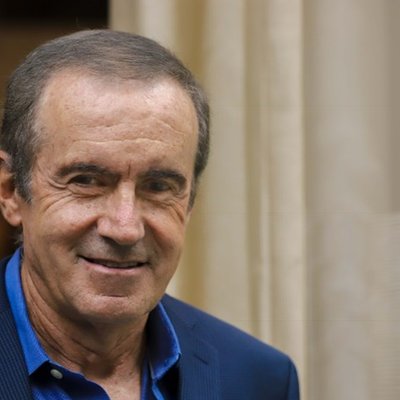
Una foto habla más que mil palabras. Esta foto va a legitimar a Delcy Rodríguez ante el mundo. Sienta un precedente para que otros jefes de estado la reciban de igual a igual, como si fuera una presidenta democrática. Que ironia: Mientras Trump la recibía sonriente en Nueva York, no dejaban regresar a su Venezuela a María Corina Machado, la líder del movimiento opositor que ganó las elecciones del 2024. Una bofetada a la democracia.

24 de Julio 2027 esa es la fecha por la que tenemos que pujar para las elecciones. Es coherente y oportuna. Solo falta que Maria Corina regrese y la fije como meta. Salud!

Alberto Cabello 🟧 retweeted

Wow. Kenya is planting trees with seed balls covered in charcoal dust to keep animals from eating them, fight climate change, and combat #deforestation.
We have the solutions; implement them. #ActOnClimate.
#ClimateAction #climate #energy #nature #rewilding #GreenNewDeal