

Quantum Technologies with Molecular Materials. Continuously seeking work-life balance. Co-founder of @miroptics. Associate Prof. of Physics @usach.
Santiago, Chile
Joined August 2015
- Tweets5.9K
- Following1.2K
- Followers1.4K
- Likes13.9K




Pinned Tweet
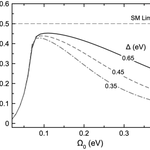
Excellent description of how cavity QED can change the way chemistry is done, and the pressing challenges that researchers in the field are facing.
Quotes from me and @MarissaWeichman, Wei Xiong, @oriolvendrell, Angel Rubio and Blake Simpkins.
tinyurl.com/yc5drhya

Felipe Herrera retweeted

Jun Ye has been named a 2026 Wolf Prize laureate in Physics! 🏆
Ye shares the prize with Immanuel Bloch, Max Planck Institute for "transformative, widely applicable advances in the control of ultracold atomic systems."
Read more: colorado.edu/physics/2026/10…
@CUBoulderPhys @NIST @CUBoulder

ALT Jun Ye
Felipe Herrera retweeted

💜🏛️ Décima entrega de Históricas en el MNHN. Hoy destacamos a Patricia Salinas Zurich, geóloga formada en la @uchile, pionera de la paleontología chilena 👩🏻🔬

"El fútbol une al mundo"

“Fueron los niños los que sacrificaron su cancha en beneficio de esta familia”: el orgullo de Mejillones tras el nacimiento de los polluelos de colibrí
theclinic.cl/2026/08/22/fuer…

Felipe Herrera retweeted

"Canada has a rare chance to lead in quantum. But we can only capitalize on our headstart if we learn from how we lost our initial edge in AI."
In his latest piece for Maclean (@macleans), Christian Weedbrook (@_cweedbrook), Founder and CEO of Xanadu reflects on his journey, the breakthrough of our modular Aurora system, and what it will take to build the world’s first quantum data centre in Toronto.
Read the full essay: macleans.ca/society/technolo…

Felipe Herrera retweeted

This quantum breakthrough could lower the energy cost of carbon capture dlvr.it/TTc2yW #EarthDotCom #EarthSnap #Earth

Excited that our article "Enhancing Infrared-Laser Dissociation of Molecules with the Electromagnetic Vacuum" is now published in @PhysRevLett.
We prove the electromagnetic vacuum reduces the energy needed to break chemical bonds orders of magnitude.
journals.aps.org/prl/abstrac…
Exciting collaboration with Prof. Johan Triana @hjoxan. Work done at @FisicaUsach and @FisicaUCN. Funded by @ANID_Chile, @ICMilenio_cl.
#Physics Wins

Deepfakes are everywhere, but digital forensics investigators are fighting back.
Learn more: scim.ag/4deiMOT @NewsfromScience


Felipe Herrera retweeted

Deepfakes are everywhere, but digital forensics investigators are fighting back.
Learn more: scim.ag/4deiMOT @NewsfromScience
Felipe Herrera retweeted

Shortly after receiving the Nobel Prize in Literature for poems including works that convey the stark realities of child exploitation, Gabriela Mistral became a delegate to the UN and helped found UNICEF.
Learn more: nobelprize.org/stories/fight…

ALT Portrait of Gabriela Mistral.
Felipe Herrera retweeted
“Just one thing; don’t follow the existing research. Think for yourself. That’s very important. Another thing I have to say is, if you want to be a great scientist, you have to see others, discuss. Recognise that this is a great scientist. This is my advice.”
Some pieces of advice from Susumu Kitagawa to all young students aspiring for a career in science.
Discover more: nobelprize.org/prizes/chemis…

Felipe Herrera retweeted

Five amazing teachers across UBC Science have been recognized with 2026 Killam Teaching Prizes! Congratulations to Varada Kolhatkar (@UBC_CS), Nadine Borduas-Dedekind & Roman Krems (@UBCChem), Jess McIver & Janis McKenna (@UBCphas). @KillamTrusts
bit.ly/4tacExJ

Felipe Herrera retweeted
Researchers used lasers to encode quantum information into a single molecule of carbene—a first step toward a molecular quantum computer.
Learn more: scim.ag/4nESbiA @NewsfromScience

Felipe Herrera retweeted

“Reducir la ciencia a “un libro bonito en una biblioteca” no solo desvaloriza el trabajo de miles de investigadores e investigadoras. Empobrece, además, una discusión crucial para Chile: cómo construimos futuro en lugar de administrarlo”. latercera.com/cartas-al-dire…

Felipe Herrera retweeted

#DestacamosUSACH Dr. Leonardo Gordillo, académico de nuestro Departamento de Física, destaca como coautor de un artículo publicado en Physical Review Letters, un reconocimiento a trabajos de alto impacto en la disciplina. journals.aps.org/prl/abstrac…

Felipe Herrera retweeted

¡Ya están abiertas las postulaciones a #FondecytIniciación 2027! Convocatoria que financia proyectos de investigación individual de 2 a 3 años, en todas las áreas del conocimiento, dirigida a nuevas y nuevos investigadores. Encuentra más información en anid.cl/concursos/concurso-d…


Felipe Herrera retweeted
Following the first independent investigation in 50 years of Monte Verde—a landmark archaeological site in Chile—researchers in Science report that it may be much younger than previously believed.
According to the study, Monte Verde dates from ~8000 to 4000 years old, not 14,500 years, as previously thought. scim.ag/4sYP5HS

Insightful

These vague posts about RSI are insufferable, but there really has been a step change with frontier agents. Here are some observations I've seen in 2026:
- One of my former PhD students gave an agent an old ML paper we wrote and the agent trained a better model without intervention.
- I was able to port my chemistry textbook from tensorflow to pytorch with minimal effort using claude code
- I asked codex to convert a reveal.js presentation from HTML to PPTX and it did it with one correction. Not really research, but a task that I didn't even think was possible
- Our internal roadmap at @EdisonSci no longer slips and we're sometimes completing projects early. Maybe we just got better at planning.
- we've internally done things like autoresearch and found similarly that the proposed research ideas and execution are now compelling enough to just run without human intervention.
- both opus 4.6 and 5.4 are able to browse the web much better and have the tenacity to do tasks like "visit every biotech with a TPD, download their pipeline, and add the indication area to a spreadsheet."
- One of my PhD students was able to set-up GRPO training of a multi-turn reasoning model for relaxing crystal structures with a simulation as the reward function. This would normally require a research team and a lot of time, but he did this while managing a newborn and writing his thesis.
- I also notice that the kind of code coming out of LLMs now is code I could never have written. Like its use of heredoc/variable expansion are beyond my CLI brain.
Personally, these observations add up to a big change happening right now and we're on the precipice of some big changes in how research is done.