

Official X for Firecode. Coding Interview Prep - Done Right. See what the hype is about at https://nitter.gq/t.co/ATzwG2aScM
San Francisco, CA
Joined April 2015
- Tweets704
- Following79
- Followers3.2K
- Likes459

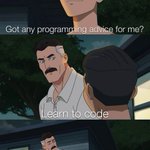





One to add for anyone with a technical round: say the brute force out loud before you optimize it. Interviewers score the path you take, not just the final answer, and the silent candidate who jumps to the clever version gives them nothing to score.
53
The usual answer: a count-min sketch for approximate counts plus a size-k heap for the leaders. It's approximate, and that's the point. The follow-up is really asking whether you know when exact stops being affordable.
1
9
Makes sense at that level. The one piece some teams keep is a short "read this diff, what breaks?" exercise. It's still a conversation about technical judgment, just with something concrete on the table for both of you.
1
108
If it's the multi-level format others describe, the usual trap is over-engineering level 1. Get it working simply, keep the pieces small so level 3 doesn't force a rewrite, and run it after every level. Working and tidy beats clever and unfinished. Good luck!
1
169
That intuition gets built the slow way: write it yourself, get it wrong, find out why. The next generation can still get it. It just has to be on purpose now, because the job won't force it on them anymore.

Software engineers have been adapting to technology changes and paradigm shifts for decades (compare your SWE stack today with what it was 20 years ago). In this regard, we were much more prepared for AI to dramatically change how we build software (i.e., we almost write no code manually anymore).
AI can produce very high-quality code, especially if you know how to guide it well. However, I'm worried about one thing: The people getting most value out of LLMs and AI coding agents today are the experienced software engineers who cut their teeth writing code manually for decades and have good intuitions on how to build good software.
I wonder what will happen to the next generation of SWEs who never wrote code and their entire experience was prompting AI agents to build stuff, add features, and fix bugs.
54
We are absolutely and irreparably cooked: terminal2shell.com

1
145
The ones that hurt most are the follow-ups. You solve top-k with a heap, then: "now the data is a stream that doesn't fit in memory." Same problem, completely different answer, 10 minutes left.
1
1
9
Problem 1: I will deeply understand every solution.
Problem 140: it's two pointers, next.
The interview, on a problem I've solved twice: …
55
The step most roadmaps leave out: going back. Redo your week-2 problems in week 6 with no notes. The ones you can't redo were only seen, not learned, and that's the list to study next.
14
Reading code. Hand them an AI-written solution that passes the sample tests and fails on one edge case, and watch whether they find it. Linked lists still matter, just as something you read and question instead of recite.
1
1
21
Probably yes, if the debugging is real. The tell is whether they can say why the fix works with the AI closed. That's a 15-minute test, and it's still a fundamentals interview, just a better-shaped one.
7
Something like: "I use AI to move faster, and I'm the one who checks it. Last month it gave me a solution that passed the tests but broke on empty input, and I caught it because I traced it first." One real story beats any phrasing.
1
4
And the third one quietly changes the first. With AI-assisted rounds, DSA turns into "is this generated solution actually O(n log n), and what input breaks it?" Same fundamentals, read instead of written.
1
1
50
Not that unpopular with the people running large loops. The alternative I'd add rather than replace with: hand them a working solution with one bug and ask them to find it. Same fundamentals, harder to fake, closer to the job now.
1
13
It doesn't. The judge checks your output and a memory limit loose enough that O(n) fits easily. In an interview that line is the whole question though, and the interviewer will ask what your extra array costs.
26
The interview version:
"reverse this linked list"
"sure. have you ever needed to?"
"no"
"me neither"
"...you're hired"
337
"Evaluating results" is the one nobody practices on purpose. Interviews still mostly check whether you can write the code, while the job is turning into reading an agent's code and deciding if it's right.
90
Streak protected on Diwali counts double 🪔 Tomorrow's upgrade for 303: build a prefix-sum array once, then every query is prefix[r+1] - prefix[l], O(1). That's what the "Immutable" is hinting at.
1
1
22