
Spreading the gospel that Science & Art are best friends! Splicing, sequence degeneracy, pleiotropy, molecular & brain evolution, music theory. PhD @voineagulab
Sydney, Australia
Joined February 2012
- Tweets282
- Following295
- Followers90
- Likes403



Giulia (Juli) Xin Wang retweeted

This man swallowed an antibiotic pill without water at bedtime and woke up with severe chest pain & vomiting.
Endoscopy showed pill fragments stuck in the food pipe causing extensive damage -condition called pill-induced esophagitis which can cause permanant damage.
Caused by Doxycycline pill in this case. List of medications that can cause this👇
Antibiotics: Tetracyclines (especially doxycycline, which is the most frequent), clindamycin, amoxicillin, metronidazole, ciprofloxacin, and rifaximin.
Nonsteroidal anti-inflammatory drugs (NSAIDs): Aspirin and aceclofenac.
Bisphosphonates: Alendronate and ibandronate (risedronate may be slightly less risky).
Other agents: Potassium chloride, ferrous sulfate, ascorbic acid, acetaminophen, warfarin, quinidine, and certain chemotherapeutics like dactinomycin, bleomycin, and methotrexate.
To avoid 💊pill-induced esophagitis, follow these easy steps to help pills pass quickly and safely through your esophagus:
-Drink plenty of water—at least a full glass (200-250 mL or more) when taking the pill.
-Stay upright (sit or stand) for at least 30 minutes after swallowing; don't lie down right away.
-Don't take pills just before bed; wait at least 30 minutes before lying down.
-If you're at higher risk (like elderly or have swallowing problems), ask for liquid versions, IV options, or less irritating alternatives.
-Always follow the specific instructions for the medication (e.g., take bisphosphonates on an empty stomach with water and stay upright).
-Have a small snack or meal after taking the pill to help push it down.
Image credit-
Roro GM, Folvik G, Louis L, Bane A. Drug-induced esophageal injuries with an atypical presentation mimicking acute coronary syndrome. BMC Gastroenterol. 2021;21:486. doi:10.1186/s12876-021-02063-2.

Gotta think about what industrial research is really for and what a supermarket is not for. I hope somewhere there’s a gut microbiologist studying the impact of purslane/verdolaga/kulfa/马齿苋 on the gut–brain axis and on longevity.
youtu.be/JeWdVR1LoKA?si=ejAF…
1
46
Hello, fellow Cell & Developmental Biology enthusiasts! Check out our fresh-off-the-oven program for the 2025 Cell & Developmental Biology Symposium at NSW!
Join us on Nov 5th, 2025!

📢Please SAVE the DATE: Join us for the 2025 @ANZSCDB NSW Branch Cell & Developmental Biology Symposium
📍 Garvan Institute, Sydney
🗓️ Wed 5 Nov 2025 | 9am – 6pm
🎤 Keynotes: @dougall_norris, @KateGQuinlan, @SilviaM_Velasco and @ry_lister
🏆 Prizes for best oral, poster & image

2
72
Are you a cell or developmental biology researcher? Join us at this very first online @ANZSCDB seminar and check out the exciting research by Dr. Polo and Dr. White on Thursday, August 28th, 2025, at 12 pm AEST!

@ANZSCDB is pleased to launch our Zoom seminar series!
Our first seminar kicks off on Thursday August 28th, 2025 at 12pm AEST with Professor Jose Polo and Dr Melanie White.
Please register and attend to ensure the success and long-term sustainability of this initiative.

1
79
Giulia (Juli) Xin Wang retweeted

Astrocytes have long been conceived as passive support player cells in the brain. But today @ScienceMagazine (via 3 reports) they got a big upgrade for their active role in neuromodulation and control of brain function
science.org/doi/10.1126/scie…

Giulia (Juli) Xin Wang retweeted

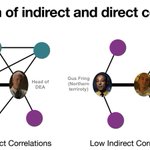
GPT-like models trained with bio data (mostly RNA) are likely to learn correlation patterns and make useful interpolations (predictions).
Since their correlative patterns reflect indirect correlations, extrapolations should be interpreted with caution.

Giulia (Juli) Xin Wang retweeted

1) DeepSeek r1 is real with important nuances. Most important is the fact that r1 is so much cheaper and more efficient to inference than o1, not from the $6m training figure. r1 costs 93% less to *use* than o1 per each API, can be run locally on a high end work station and does not seem to have hit any rate limits which is wild. Simple math is that every 1b active parameters requires 1 gb of RAM in FP8, so r1 requires 37 gb of RAM. Batching massively lowers costs and more compute increases tokens/second so still advantages to inference in the cloud. Would also note that there are true geopolitical dynamics at play here and I don’t think it is a coincidence that this came out right after “Stargate.” RIP, $500 billion - we hardly even knew you.
Real: 1) It is/was the #1 download in the relevant App Store category. Obviously ahead of ChatGPT; something neither Gemini nor Claude was able to accomplish. 2) It is comparable to o1 from a quality perspective although lags o3. 3) There were real algorithmic breakthroughs that led to it being dramatically more efficient both to train and inference. Training in FP8, MLA and multi-token prediction are significant. 4) It is easy to verify that the r1 training run only cost $6m. While this is literally true, it is also *deeply* misleading. 5) Even their hardware architecture is novel and I will note that they use PCI-Express for scale up.
Nuance: 1) The $6m does not include “costs associated with prior research and ablation experiments on architectures, algorithms and data” per the technical paper. “Other than that Mrs. Lincoln, how was the play?” This means that it is possible to train an r1 quality model with a $6m run *if* a lab has already spent hundreds of millions of dollars on prior research and has access to much larger clusters. Deepseek obviously has way more than 2048 H800s; one of their earlier papers referenced a cluster of 10k A100s. An equivalently smart team can’t just spin up a 2000 GPU cluster and train r1 from scratch with $6m. Roughly 20% of Nvidia’s revenue goes through Singapore. 20% of Nvidia’s GPUs are probably not in Singapore despite their best efforts. 2) There was a lot of distillation - i.e. it is unlikely they could have trained this without unhindered access to GPT-4o and o1. As @altcap pointed out to me yesterday, kinda funny to restrict access to leading edge GPUs and not do anything about China’s ability to distill leading edge American models - obviously defeats the purpose of the export restrictions. Why buy the cow when you can get the milk for free?
Giulia (Juli) Xin Wang retweeted

Doing good science is 90% finding a science buddy to constantly talk to about the project.

Giulia (Juli) Xin Wang retweeted
Did you know that it’s actually possible for you to say, “I don’t know enough about this to have an opinion”
Giulia (Juli) Xin Wang retweeted
Top 4 things to know about doing science:
1. You need to have someone you can talk to
2. One-on-one discussions are the best
3. Think about discussions as improvisations and use the ‘yes, and’ rule
4. Create a safe space so both of you feel open to saying seemingly silly things

Giulia (Juli) Xin Wang retweeted

'From synapse to sensation: the role of circTulp4'
cell.com/trends/neuroscience…
@TrendsNeuro 'Spotlight' by Juli Wang @giuliaxin & Irina Voineagu @VoineaguLab
discussing @SebasGiusti et al. 2024 @ScienceAdvances, Damian Refojo group
science.org/doi/10.1126/scia…

Giulia (Juli) Xin Wang retweeted

🪱"All genes are created equal, but some are more equal than others" Happy to share our recent work dissecting a parent-of-origin effect in worms, which could have important implications for our understanding of the evolution of imprinting @IMBA_Vienna
doi.org/10.1038/s41586-024-0…

Giulia (Juli) Xin Wang retweeted

A genetic element aka a transposable element. Just say it ffs!! 😜🐒
nature.com/articles/s41586-0…

Thank you @SydneyRNASalon for this splendid opportunity for me to learn from so many master minds in the field of RNA biology🪢🧵🧬. It was fun to share our project and receive all the inspiring questions and advice🧠!

Final short talks by Julie Wang, on ZMYND8 KO impairs 🧠 organoid development; Rick Cazzoli on TrUTh - targeted uptake therapy to deliver #RNA + drugs to #cancer tumours #SydneyRNA2024


Giulia (Juli) Xin Wang retweeted

Amazing symposium on Australian Neuroscience Pioneers chaired by Prof Marcello Costa and Prof Elspeth McLachlan #ANS2023 @AusNeuroSoc


Giulia (Juli) Xin Wang retweeted

🧠⚡ Stoked to share the first paper from my PhD, now out in Cerebral Cortex! ⚡🧠
academic.oup.com/cercor/adva…
Interested in how brain stimulation can generalise the gains from cognitive training? We are!
@shaneehrhardt @HannahFilmer1 @jbmattingley @garner_theory @PaulEDux
1/ 10

Giulia (Juli) Xin Wang retweeted

Worth reading this whole thread- and the ones that are linked as well. Excellent refutation of pseudoscience masquerading as science. Thanks, @joshdubnau !

Not taking sides.
Consciousness theory slammed as ‘pseudoscience’ — sparking uproar nature.com/articles/d41586-0…

3
84
Giulia (Juli) Xin Wang retweeted

Nouveau labo!
Je cherche des étudiant(e)s gradué(e)s voulant travailler dans le domaine de l'épissage de l'ARN en #cancer et #immunologie.
New lab!
I'm looking for grad students interested in #RNAsplicing in #cancer and #immunology
mqvlab.com
@jrRNAscientists
