
Engineering at @kiva
Medellin, Colombia
Joined December 2014
- Tweets1.9K
- Following1K
- Followers679
- Likes13.9K





Esteban Vargas retweeted

Great engineer 10 years ago: Knowing 1 programming language and framework.
Great engineer today: A tech-agnostic tech lead with good problem-solving abilities and people skills.
Esteban Vargas retweeted

Something I have been thinking about: in the past, the best engineers I knew spent a lot of time automating their work in various ways. Better vim/emacs automations, writing lint rules to catch repeat code issues, building up a suite of e2e tests so they don't need to smoke test the app manually. These kinds of things were the highest leverage activities an engineer could do, because it multiplied their own output, which in turn meant they could build more things.
I think many of these automations have become even more important now. This is true for a number of reasons.
First, infra and DevX automation speeds you up. And if you are running an army of agents, each of those agents will be sped up also. More automation == more output per unit of time.
Second, moving things to code improves efficiency. Your agent could fix an issue every time it sees that issue happen, but that uses tokens and might miss cases. If Claude instead writes a lint rule, CI step, or routine, that class of issue can be fully automated forever. This is really what people are talking about when they talk about loops -- it's about automating entire types of busywork rather than solving them one off. This isn't a new idea at all. Engineers have been doing this for a long time!
Third and most importantly, automation makes it possible for others to contribute to the codebase more easily. Increasingly what I am seeing is engineers are contributing to codebases on day one because Claude can navigate the codebase for them, and that non-engineers are able to contribute to a codebase as effectively as engineers can. What gets in the way of both of these is domain knowledge that lives in peoples' heads rather than in automation -- the stuff you used to have to learn when ramping up. What has changed thanks to agents is the domain knowledge that can be encoded as infrastructure is no longer limited to what is expressible in lint rules and types and tests; it can now capture nearly all domain knowledge, encoded as code comments and skills and CLAUDE.md rules and memories. If I put up a PR for an iOS codebase I don't know and a code reviewer rejects it because it doesn't use the right framework, or if a designer builds a new feature and it gets rejected because it doesn't follow the right architectural patterns, these are failures of automation.
Every team should be writing the CLAUDE.md's, REVIEW.md's, skills, and docs that enable agents to productively work in their codebase with zero additional context from the prompter. This sounds crazy, and at the same time is a natural extension of the stuff engineers have always done: automate, and encode domain knowledge as infrastructure. As the model gets smarter and as the harness matures, this task becomes easier. In the meantime, it is on every team to look for ways to convert their domain knowledge to infra so that Claude can write code better, so that code review catches issues automatically, and so the next person working on your codebase can contribute more easily.
Esteban Vargas retweeted

Imagine a world where we simplify every role in a company down to just two:
1. Builders
2. Sellers
Esteban Vargas retweeted

Before vibe coding became a thing, programming was already evolving in that direction. It already increasingly consisted of installing and configuring stuff other people wrote, without reading the source.
Esteban Vargas retweeted

Software hiring has become absurd.
At work, you’re expected to use AI to offload manual coding and move faster.
Then, to get your next contract, you’re asked to code from memory with no assistance.
Pass the interview - and you’re expected to use AI again.
It has never been this broken.
Esteban Vargas retweeted

As an AI Engineer. Please learn
>Harness engineering, not just prompt engineering
>Context engineering, not just long prompts
>Prompt caching vs. semantic caching tradeoffs
>KV cache management, eviction, reuse, and memory pressure at scale
>Prefill vs. decode latency and why they optimize differently
>Continuous batching, paged attention, and throughput optimization
>Speculative decoding vs. quantization vs. distillation tradeoffs
>INT8, INT4, FP8, AWQ, GPTQ, and when quantization hurts quality
>Structured output failures, schema validation, repair loops, and fallback chains
>Function calling reliability, tool contracts, argument validation, and idempotency
>Agent guardrails, loop budgets, tool budgets, and termination conditions
>Model routing, graceful fallback logic, and degraded-mode UX
>RAG architecture: chunking, embeddings, hybrid search, reranking, and freshness
>Retrieval evals: recall, precision, grounding, attribution, and citation quality
>Evals: golden sets, regression tests, adversarial tests, LLM-as-judge, and human evals
>LLM observability as a first-class discipline: traces, spans, tokens, latency, errors, and drift
>Cost attribution per feature, workflow, tenant, and user journey not just per model
>Safety engineering: prompt injection defense, data leakage prevention, and permission boundaries
>Multi-tenant isolation, cache safety, and cross-user context contamination prevention
>Fine-tuning vs. in-context learning vs. RAG vs. distillation and when each is the wrong tool
>Latency, quality, cost, and reliability tradeoffs across the full inference stack
>Production failure modes: hallucinated tool calls, malformed JSON, stale retrieval, runaway agents, and silent eval regressions


Esteban Vargas retweeted

Seré el Presidente de Colombia con la ayuda de Dios y el Pueblo el próximo 21 de junio; en mi plan de gobierno he planteado establecer la asociación de internet rural más grande del mundo con @SpaceX. @elonmusk ha sido líder mundial combatiendo la pobreza conectando a la gente en línea en cualquier rincón del mundo; el siglo XXI no se puede empezar a vivir sin conexión para todos los colombianos.
Le plantearé a @elonmusk una alianza de conectividad y que conozca a Colombia y lo que puede ofrecer para el desarrollo de su revolución tecnológica.
Firme por la Patria. 🫡
(A.D.L.E) 🇨🇴🐅
Esteban Vargas retweeted

Something strange is happening in tech.
CTOs of billion dollar companies are quitting to take IC roles at Anthropic.
Workday CTO -> MTS (Mar 2026)
You[.]com CTO -> MTS (Mar 2026)
Instagram CTO -> MTS (Jan 2026)
Box CTO -> MTS (Dec 2025)
Super[.]com CTO -> MTS (July 2025)
Adept AI CTO -> MTS (Jan 2025)
The mission is that real.
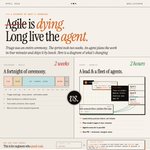
Agile is being disrupted right now, the same way Agile disrupted Waterfall 2 decades ago. This is my first creation with Claude Design to explain what's changing:

3
154
Everyone is a programmer, the same way everyone became a computer (profession to do arithmetic manually, with the arrival of the calculator).
Not everyone is a systems architect, a salesman, or a product manager. Just like not everyone is a mathematician with a calculator.

2
125



Esteban Vargas retweeted
Very excited to share (a preview of) @stripe projects:
A new way for you—and your agents—to programmatically provision and manage the internet’s best developer services, right from the CLI.
projects.dev to sign up for early access.
Demo ⤵️
Esteban Vargas retweeted

Issue tracking is dead.
We are building what comes next.
linear.app/next
Esteban Vargas retweeted
#2 is important, so I built it. Keeping you accountable with other people pushes you forward
Write your weekly standup, vote on other people's, climb up on the leaderboard.
Looking forward to contine building this at the Cafe Cursor in Buenos Aires! personal-standup.vercel.app/
Trends changed forever in 1970 thanks to parallel innovations around computing and the internet. This has happened every 50 years when we get huge tech leaps (electricity, cars, etc).
Today this is happening thanks to AI and its parallel innovations

I am fully convinced that 2019 was the last normal year we ever had. Ever since then, it feels like everything’s broken. Everyone is constantly anxious, time moves too fast, and nothing actually feels real anymore. The world as we knew it is just gone
2
154
Esteban Vargas retweeted

Stripe CEO Patrick Collison: "Software should be like pizza… cooked right then and there at the moment of use."
"You don’t want mass-produced industrial scale software. You want bespoke custom software made for you, that moment."
"Up until now, the economics of software have been conceived as fixed cost and then infinitely monetized."
"Once there are inference costs and custom creation involved, it really shifts. It’s kind of the non-Walrasian software regime."
@patrickc with @collision on @tbpn