

Take a look at https://nitter.gq/t.co/JpnEiERV0A
Rio de Janeiro, Brazil
Joined February 2015
- Tweets21K
- Following235
- Followers123
- Likes10K




Igor Benav ➔ sapari.io retweeted

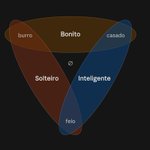
for what n is it culturally permissible to marry / have sex with your nth cousin?

Igor Benav ➔ sapari.io retweeted

>be Portugal
>one of the largest exporters of sardines in the world
>export sardines to other countries
Feels good man 😎


Igor Benav ➔ sapari.io retweeted

When your girlfriend’s love language is proprietary semiconductor designs but you refuse to open up

Igor Benav ➔ sapari.io retweeted

Just met this incredibly smart woman who is deeply interested in AI and semiconductor industry
Always nice to meet someone who shares the same interests and wants to learn more

Igor Benav ➔ sapari.io retweeted

um bando de VAGABUNDO PIXANDO uma sinanoga judaica com frases que pregam a destruição do Estado judeu, e quando os judeus vão limpar, a corja nazista noticia que ""militares israelenses destroem mural palestino""
não tem gente mais cínica e fascista que a militância psolista e pro-palestina. abjeto.

GOVERNO DA BAHIA,TOME PROVIDÊNCIAS! Itacaré e Morro de São Paulo não são territórios de ocupação ideológica. Nenhum turista, inclusive militar israelense, tem o direito de intimidar moradores ou tentar impor regras políticas aos brasileiros.#PalestinaLivre
brasildefato.com.br/2026/11/…

Igor Benav ➔ sapari.io retweeted

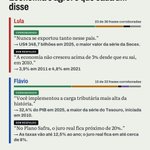
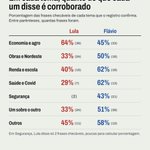
Eu fiz uma análise do backend/servidor do checagemaovivo.org contra o que é mostrado no site em si.
85 de 146 análises de IA foram deliberadamente ignoradas e beneficiaram o Lula.
O criador sequer se esforçou em esconder a API pública.
claude.ai/artifact/3yMG8gkRd…


Igor Benav ➔ sapari.io retweeted

I built rypipe: write two Rust traits (Splitter + RecordParser) and your file format gets parallel GIL-free parsing, memory-bounded streaming, and pushdown into Arrow, for free. ~950 MB/s single-thread, ~4.2 GB/s parallel. Fully MIT: github.com/emiliano-go/rypip…


Igor Benav ➔ sapari.io retweeted

Esto puede ser uno de los mayores hitos de la IA en matemáticas o un atraco académico importante.
OpenAI dice que ha resuelto Navier-Stokes. Uno de los 7 Problemas del Milenio que lleva unos 90 años sin solución.
Durante un año, dos matemáticos llevaban exactamente este camino:
Tristan Buckmaster, de NYU, y Levent Alpöge, de Anthropic (como proyecto personal)
En agosto resuelven dos problemas relacionados, más fáciles: Euler y Boussinesq... pero que te encamina a poder solucionar el siguiente paso.
Y aquí viene el SALSEO...
Buckmaster y Alpöge usaban Claude y Códex para volcar drafts.
El caso es que OpenAI oye rumores que alguien está avanzando en esto el 1 de septiembre... y lanza miles de agentes a por el último paso para solucionar el problema.
A la vez, dice estar entrenando un modelo. ¿Y ese modelo usó esa información? Dicen que no lo pueden negar pero que no creen...
El 6 de septiembre hay una llamada de Tristan Buckmaster y Sébastien Bubeck de OpenAI. Levent (de Anthropic) no es invitado (aunque Sébastien dice que en realidad es que no quiere ir)
Según Buckmaster, OpenAI ya le dice que un modelo interno tiene la prueba de Navier-Stokes forzado. ¡El paso que les faltaba!
Que no era “un prompt y ya”. Había un equipo, varios intentos y millones de cómputo. Y le confirma que empezaron después de enterarse de su progreso.
Luego, siempre según él, las ofertas:
- Vosotros publicáis lo vuestro. Nosotros el premio al día siguiente.
- O tú escribes el paper de OpenAI… sin Alpöge. Porque trabaja en Anthropic.
Buckmaster se niega. Dice que si sale así, lo cuenta.
Y que le preguntan: ¿Por qué ibas a arruinar tu carrera?
Ahora está Bubeck negando las acusaciones “falsas e inflamatorias”. Dos versiones distintas.
Hoy OpenAI anuncia que lo han resuelto con un modelo interno mejor que GPT-6 Astra...
El propio Buckmaster dice que no sabe si usaron sus datos pero que al preguntar si los modelos habían podido ser entrenados con sus datos no recibió respuesta.
Y ahora... ¿cuál es la versión correcta?
① La carta de Buckmaster: cims.nyu.edu/~tristanb/state…
② El post de OpenAI: openai.com/index/navier-stok…
③ La réplica de Bubeck: nitter.gq/SebastienBubeck/status…

ALT Captura de una publicación de OpenAI anunciando una supuesta solución al Problema del Milenio de Navier-Stokes, generada por agentes con un modelo posterior a GPT-6 Astra. Debajo aparece una visualización 3D de líneas de flujo formando una especie de tornado.

I would like to clarify a few things:
1) The screenshot is my reaching out to Levent to coordinate our releases. I hope it’s clear from the message that we came in with the best possible intentions.
2) I never ever asked for Levent to be removed from authorship of his own work (as indicated by my text). I was surprised to learn during the call with Tristan that they had only solved Euler and not Navier-Stokes; after learning this we brainstormed possible paths forward. One option we discussed was that Tristan could be the lead author on a rewrite of OpenAI’s Navier-Stokes proof. It is in that context that I said “it would be simpler if Levent was not an Anthropic employee” because I felt it would be inappropriate for an Anthropic employee to author OpenAI’s work. Importantly it was admitted that internal Anthropic models had been used in their proof of Euler blowup; I therefore felt I could not consider Levent to be an independent academic. Another option I wanted to propose (but got cut short) is to offer access to our internal model so that they could try to finish their proof and bridge the gap between Euler and NS. Again I did not know how to navigate giving access to internal OpenAI IP to an Anthropic employee.
3) To reiterate it plainly: as my text clearly indicates, and as I said during our call, OpenAI's intention was to do everything possible to celebrate their mathematical achievements and the heroic efforts that they made on Euler. In the call I was immediately met with a litany of slander, including direct threats that if we were to announce Navier-Stokes he would immediately go to the press with a barrage of unfounded accusations. I refuted all these accusations but he replied “there is nothing you can do, I simply do not trust you”. I was confused why one would turn an incredible source for celebration (of their achievements!) into such bickering, which is when I said that I did not understand why one would risk their career [over unfounded accusations]. Genuinely, at that moment, I was trying to care for him and do a last ditch attempt to get a chance to give them all the credits that they deserve. I deeply apologize for this extremely poor choice of words, it is the opposite of what I was trying to convey. (I should say that I retracted them on the spot by the way.)
4) Overall, on a personal level, it was incredibly difficult to have these conversations. Levent refused to attend any of the meetings despite my repeated asking. As Sholto Douglas said, there will need to be coordination between Anthropic and OpenAI in the future; I felt I was doing a proxy negotiation with Anthropic while the Anthropic employee refused to directly participate.


Igor Benav ➔ sapari.io retweeted

hello there the jacobian conjecture is false thanx to my close friend akhil for asking about it and my other close friend fable for working during the world cup final
((1+xy)^3 z + y^2 (1+xy) (4+3xy), y + 3 x (1+xy)^2 z + 3 x y^2 (4+3xy), 2 x - 3 x^2 y - x^3 z): \C^3\to \C^3, has jacobian determinant -2, and sends (0, 0, -1/4), (1, -3/2, 13/2), and (-1, 3/2, 13/2) to (-1/4, 0, 0)


Igor Benav ➔ sapari.io retweeted

Pixar hired a chef with three Michelin stars to design the dish in Ratatouille. Then they built the scene around the neuroscience of how taste triggers memory, and got Peter O’Toole to deliver one of the great monologues in animation history.
What you call “taste” is mostly smell. When you eat, molecules rise up the back of your throat into your nose. From there, smell takes a unique route. Every other sense (sight, sound, touch, even the actual taste your tongue picks up) gets filtered through a kind of switchboard in your brain first. Smell skips it. The smell heads straight to the parts of your brain that handle memory and emotion. Which is why one bite of food can drop you back into a moment from 30 years ago.
Ratatouille’s director, Brad Bird, built the entire flashback around this. Anton Ego takes one bite, and Pixar zooms the camera through his pupil into a childhood kitchen. The dish itself was Thomas Keller’s. His restaurant The French Laundry in California has three Michelin stars. He took a 1976 recipe by French chef Michel Guérard called confit byaldi (paper-thin vegetables spiraled over a tomato-pepper sauce) and adapted it for the film. Keller even had Pixar’s producer intern in his kitchen for months to get the look right.
Anton Ego is voiced by Peter O’Toole, the lead in Lawrence of Arabia. He was nominated for Best Actor eight times. Never won. He holds the record (tied with Glenn Close) for most nominations without a win, and once called himself the Academy’s “Biggest Loser.” He was 75 when he recorded the Anton Ego monologue. He died six years later, and it became one of his signature performances.
The speech was Brad Bird’s. In the review he writes the next morning, Anton Ego turns on his own profession. Critics risk almost nothing, he writes. They thrive on tearing strangers apart. The only risk that matters, he writes, is defending new talent when no one else will. He ends with the line everyone still quotes: “a great artist can come from anywhere.”
Ratatouille won Best Animated Feature at the 2008 Oscars, plus a Best Original Screenplay nomination on the strength of Bird’s speech. The film grossed $624 million on a $150 million budget.
In 90 seconds, a cartoon rat and a fictional food critic turn that science into something you can feel. Your best memories live in your stomach.

Igor Benav ➔ sapari.io retweeted

New Anthropic research: Natural Language Autoencoders.
Models like Claude talk in words but think in numbers. The numbers—called activations—encode Claude’s thoughts, but not in a language we can read.
Here, we train Claude to translate its activations into human-readable text.
Igor Benav ➔ sapari.io retweeted

Before Vision Transformers, there were ConvNets. Then everything changed.
Merve Noyan breaks down how computer vision evolved — and why it matters for the AI systems we use today.
Igor Benav ➔ sapari.io retweeted

Israel breaks this chart in half.
GDP per capita comparable to Germany. Housing costs higher than anywhere in Europe. One of the most educated populations on earth. TFR of 2.9, nearly double the OECD average.
The correlation between income and fertility is real, but calling it a "self-defeating mechanism" confuses the map for the territory. Income is a proxy for a bundle of things that happen simultaneously when countries modernize: urbanization, female education, career optionality, contraceptive access, and a cultural shift from family-as-economic-unit to individual-as-meaning-unit.
Israel has all of those inputs. And secular Jewish women there still have near-replacement fertility of ~2.0. College-educated Israeli women out-reproduce non-educated European women. The gap between Israeli and European fertility is actually wider among the educated than the uneducated.
What Israel has that Germany, Japan, and South Korea don't: a shared sense that building the next generation is the point. Social solidarity so thick that grandparents live within driving distance of nearly every child. A culture where having three kids at 35 with a graduate degree is normal, not sacrificial.
Sweden, Germany, and South Korea have all spent enormous sums on pro-natal benefits. Their TFRs: 1.42, 1.36, and 0.73. You cannot subsidize your way out of a culture that has deprioritized reproduction. The mechanism here isn't economic. It's existential. Countries that believe they're building something have kids. Countries optimizing for individual optionality don't.
The "final boss" framing makes this feel like physics. It isn't. It's a story about what cultures decide matters.


Igor Benav ➔ sapari.io retweeted

Os israelitas têm um super-poder: eles vêem os seus filhos e as suas famílias como uma bênção, não como um custo ou um problema. Valorizam muito as crianças, as mulheres, as mães. Têm um sentido de vida em família e em comunidade que é muito raro de encontrar hoje em dia.

Israel breaks this chart in half.
GDP per capita comparable to Germany. Housing costs higher than anywhere in Europe. One of the most educated populations on earth. TFR of 2.9, nearly double the OECD average.
The correlation between income and fertility is real, but calling it a "self-defeating mechanism" confuses the map for the territory. Income is a proxy for a bundle of things that happen simultaneously when countries modernize: urbanization, female education, career optionality, contraceptive access, and a cultural shift from family-as-economic-unit to individual-as-meaning-unit.
Israel has all of those inputs. And secular Jewish women there still have near-replacement fertility of ~2.0. College-educated Israeli women out-reproduce non-educated European women. The gap between Israeli and European fertility is actually wider among the educated than the uneducated.
What Israel has that Germany, Japan, and South Korea don't: a shared sense that building the next generation is the point. Social solidarity so thick that grandparents live within driving distance of nearly every child. A culture where having three kids at 35 with a graduate degree is normal, not sacrificial.
Sweden, Germany, and South Korea have all spent enormous sums on pro-natal benefits. Their TFRs: 1.42, 1.36, and 0.73. You cannot subsidize your way out of a culture that has deprioritized reproduction. The mechanism here isn't economic. It's existential. Countries that believe they're building something have kids. Countries optimizing for individual optionality don't.
The "final boss" framing makes this feel like physics. It isn't. It's a story about what cultures decide matters.
