COO at https://nitter.gq/t.co/CfergEXvd6 | Getting FMCG brands into retail | 1200+ distributors & resellers signed | Helped a client enter 17 new markets in under 12 months
Free strategy session →
Joined October 2013
- Tweets131
- Following104
- Followers112
- Likes502


Man dropped all the sauce ffs

Keep it simple young man.
You can easily hit $40K/mo with just:
- @OpenAI Codex $100/mo plan
- @loopsterGTM
- @treg_ai and @quickenrich for contact data
- @infrasuite Pre-Warmed mailboxes
- Reoon (email verifier) (buy through app sumo)
- @apify API -- Harvest's scraper collection (Scrape LinkedIn)
- @rapidapi for Google Maps data
- @InstantlyAI or PlusVibe (Sequencer)
- @Calendly (free)
- @GoogleWorkspace for your business Workspace
- Build and host your site for free via @github & @vercel
- Sales assets (decks) via Codex (free)
- Booking flow video assets (free)
- @SlackHQ /@WhatsApp / Email client communications
- @LinkedIn optimized personal/business profiles
- @resend for inquiry form intake (your website) (free)
- @Cloudflare entire infra for when you're ready to get nerdy (pretty much free)
- This is where it ends, keep it simple af
The only activity that counts is putting campaigns up, getting meetings book and taking qualified calls - that should be 99.9% of your focus, CASH IN.
You gotta really check each of those domains you buy if they are blacklisted and set up properly, but yeah most of the times they are quite shit.
Just grab domains and inboxes using zapmail or smth similar, best is to just grab the domain and leave it for a week or two and then add the inboxes and start the warmup.




Perplexity comback in 2027?

Computer managed $30k in Meta ad spend for Get Maine Lobster, outperforming their agency.
Compared to their usual ads, Computer delivered 3.5x revenue with 63% higher ROAS. It automated creative analysis, ad production, and media buying.
Read more: pplx.ai/gml
Of course they are leaving UK. At this point I don't know what is worse for entrepreneurs... building in EU or in the UK. They are both anti business, literally. We are 5 years behind USA.


Amazing take. @TheJeremyHaynes has built a lot of the biggest names on the internet: Tai Lopez, Grant Cardone, Ryan Serhant, Robert Kiyosaki and many more.
Jeremy is targeting a very specific demographic, just like @kanekallaway said in this post.
While Hormozi is going for a broader audience, which totally makes sense just looking at the things he is selling; books, workshops and consulting.
The biggest lever in Jeremy's positioning is that 1M/m goal, thats a fucking high goal unlike many other courses/communities that will teach you how to get your first 10k/m or 100k/m.
Thats crucial cause he keeps his churn at almost zero on a 10k per month product which is insane.
Reason is that exact goal he set, people keep paying him for a long time because it takes them longer to hit that goal compared to 10k/m or 100k/m goal + since he is charging 10k a month, it keeps him accountable to improve his stuff every single month.
He is a monster.

Lately, I'm finding myself getting more value per video from Jeremy Haynes than Hormozi on the business front.
Worth explaining how the psychology works (as this shines a light on exactly how to approach your content if you're a business owner).
Btw, I love both and nobody shares this type of insight publicly, so not aimed as a slight at all.
Hormozi clearly has a deeper skill bag, more proof, better articulation/explanation than almost anyone else in the business space.
The problem is, as he scaled his content volume, specifically long-form, he watered down the potency of the value.
This came from a combo of less focus on pre-production, more focus on live, and probably lifestyle fit (getting tired of making the content).
There were 4-5 videos in a row where I watched the more live version of Hormozi and it felt like a waste of time.
This had never happened before.
This is a problem for two reasons:
• It trained me that not every video was going to be valuable for me
• It trained me that I didn't need to watch every one of his videos
Over time, this slowly erased the reflexivity for me to "see Hormozi, click Hormozi" which is why I don't watch his content as much anymore.
^Btw, if you have built this with your perfect target viewer group, the worst thing that can happen is for you to lose it because of self-inflicted strategy change
Now he may strategically prefer to make content that is more general, aimed at a fatter part of the base of the pyramid (more beginners), but if his number 1 goal is conversion of business owners $3M/year and up, this watering down is worst possible scenario.
Contrast this with Jeremy.
It's clear Jeremy has a deep marketing bag as well, but he's extremely narrow and precise with the filtering of his video topics.
He'll say he doesn't have a strategy, but inherently only looking at what his actual members/clients want, and making videos on that, is a strategy.
This topic specificity trains the viewer that if they are in his target avatar (high ticket lead gen based offer sellers trying to go from $100K/month to $1M/month) that every video will be a bullseye for them.
His resistence/discipline to not go outside of this, on his main channel, is what creates this reflexive "See Jeremy, click Jeremy"
Btw again, I'm a big Hormozi and Jeremy fan so this is all love. If I were them, I'd pay a lot to have someone that knows how this shit works to tell me things like this
Along the way, Hormozi shifted to more volume at the cost of info potency and the tradeoff was that the content shifted to be more for wantrapreneurs than entrepreneurs.
The More Mozi clips channel drives more revenue because, what might have been a happy accident, those clips are laser targeted at the higher end entrepreneur avatar.
This isn't unfixable, but it's not intuitive to shift back to slightly narrower and more targeted.
And btw, Hormozi going hyperbroad for a period was probably net helpful from the credibility of having "10M followers", so it's not that it wasn't useful at all.
tl;dr for everyone else - the most valuable thing you can do in audience building is get extremely clear on who your ideal avatar is, stay extremely disciplined on only serving that person in every video, and ignore the giga growth/view maxers that don't know how math works.
If you want to also go down market and serve a wider audience, have a second channel dedicated to bigger TAM topics that those people can consume, but don't pollute/confuse the viewer hypnosis of the premium avatar.
EU commission writing ai slop...

Prepared citizens. A more resilient Europe.
From packing an emergency bag to knowing how to react when disaster strikes, preparedness starts with practical steps.
Our new guidelines help authorities give people the tools and knowledge to protect themselves and others in a crisis.
link.europa.eu/QwjGDV

ALT A woman packing a water bottle into a backpack, surrounded by emergency supplies and text overlay reading "PREPAREDNESS: New guidelines to prepare citizens for growing crisis risks".
For those who hate using sales nav and want more coverage to do this.
We got 40% reply rates and even got invited to the podcast with the guys from heyreach using this method.
Since sales nav was quite limiting for us, you gotta do a lot of boolean searches and it doesn't have the best coverage, we use something different.
What you do is use tools like Apollo, Loopster, Lusha, Prospeo, getleads.io, and similar tools like that to get your initial TAM coverage. Those leads are probably going to be full of shit and full of unqualified garbage.
Then you just drop it into either Clay or Loopster, or whatever you're using, and using a simple tool like Firecrawler or Spider Cloud, you can scrape each of their websites.
Based on that you can qualify them. That thing will cost a buck or two per thousand leads and you will have much larger coverage compared to sales nav (at least in my experience with narrow niches in the EU)
Also if you want even more coverage, using crawlers and scrapers, you can search directories, trade show exhibitor lists, business registers, etc., in their native languages and get even more coverage.
Then you get all of that into Loopster or Clay, your whole list. You qualify them based on these scrapes (markdown, not html headers) from your crawlers from their websites.
To see their posts and how active they're on LinkedIn in both tools, Clay or Loopster, you can get scrapers from Apify for the last 30-day posts.
If they're active you can even check their job postings or whatever you want and it will cost you literally pennies.
That's how we do the initial lists. We got, 25 or 30%, connection request accepted and we even hit a small campaign on 50+% reply rates.
Our usual was around 30 to 35% reply rates.
I need to find that campaign and I can post it here. Basically that's how you do it and it's really cheap. I know a lot of people hate sales nav, so do I. That's the strat.


linkedin outreach hack of the day
start dming open profiles. easiest way to scale in the big 26
> search sales navigator for directors. vps and cxos in the team you sell to. senior people are the most likely to pay for premium
> turn on the "posted on linkedin in past 30 days" filter. a dm to someone who hasn't logged in for months never gets read
> export that search with evaboot and keep every row marked TRUE under "prospect is open profile". so you never click through profiles one by one
> send open profiles an inmail and everyone else a connection request. on one of our campaigns only 200 of 4,905 dms needed a request
> view each profile the day before you message them with your profile viewing set to show your name. they get a notification so your name is familiar when the dm lands
> put their first name on its own in the subject line. it shows in the linkedin preview and the email notification so it reads like a message from someone they know
> keep the inmail under 400 characters with no links. they read it on their phone inside the notification preview
> inmails to closed profiles cost a credit. end them on a yes or no question and linkedin gives the credit back if they reply within 90 days. even with a no
> out of office auto replies count as a reply. so you get that credit back too
> never send a closed profile a second inmail before they answer. sales navigator takes another credit for it
> unused credits roll over up to 150 but each one expires after 90 days. so spend them on your best closed profiles every month
> hold your first follow up until day 4. linkedin already sends the person a reminder about your inmail within 3 days
> reply in your existing chats and comment on a few posts every day. a profile that only messages strangers looks automated
> each request frees up 7 days after you send it. so about 14 requests a day keeps you under the 100 a week
> check your acceptance rate every week. under 20% means linkedin reads the profile as a nuisance so fix the list before you send more
> every "i don't know this person" click lowers how many requests linkedin lets you send. so only send requests to people who match your list
> withdraw requests older than 3 weeks from the sent tab under my network invitations. they aren't told you withdrew. but you can't invite them again for up to 3 weeks so only pull people you're done with
ezzz stuff

Do they use the same Ai to freeze peoples' assets for no reason?

Revolut: Europe's most valuable startup ($200B) just showed the world its AI strategy.
Every company will end up copying it.
At the start of this year, Revolut leaned on the frontier labs. Its 2,000 engineers used Claude Code and Codex, and some burned $1,000 to $10,000 a month each. The bills kept climbing, and the returns weren't there.
So Revolut switched its default to an open-source model called GLM. All it needs is GPUs, which it rents from Together AI.
The results, by Revolut's own count:
- The bill is about a tenth of what it paid OpenAI and Anthropic
- Engineers get unlimited tokens instead of spending caps
- Coding time is down 60% and lead time is down 70%
That's the chart below.
Revolut still uses Claude and GPT, but only as "the exception," for the tasks they do best. Everything else runs on open source.
So here's the question I keep coming back to: how many use cases can companies really justify sending to frontier models?
My answer is very few. Plenty of companies still route everything to OpenAI and Anthropic today. For how long?
I think open source ends up handling the vast majority of corporate AI work, and frontier models get a short list of the hardest jobs. That's a problem for labs whose revenue forecasts assume unlimited growth.
If you appreciate unpopular takes, follow me @m0xt_ for more.

ALT Revolut chart of engineering lead time and coding time, both dropping after switching to self-hosted open-source GLM
Anyone tried this?

SaaS is dead.
People data is worthless.
High-intent touchpoints are all that matter.
Knowing who someone is won’t close a deal.
Knowing why now might.
🚨 Introducing the Agentic High-Intent Lead Database.
800M+ leads. Unique data points. One prompt.
Your AI agents find the right people, uncover signals that matter, and identify the right moment to reach out.
Available now via MCP or API.
Plug it into your AI stack and let your agents do the hunting. ⚡
Featuring:
@wickedguro @tibo_maker @MarieMartens @jhylee95 @yasser_elsaid_ @SmuldersStefan @peer_rich @stuartchaney @iamAlexTurnbull @romanbuildsaas
We recreated you in the video. If the resemblance is questionable, blame the prompt. 👀
Their API is one of the best for cold email lists, specifically for finding decision makers for companies that were scraped from random directories.
You can scrape approx 10k company urls for 7$. (1000 searches x 10 results)
Since I love scraping what nobody is scraping, I often end up with company names and their website and every enrichment fails, running gpt or claude web searches is costly af so I end up using Exa and/or spider.cloud
Basically to find a decision maker, you literally give your agent that manages all your apis, in my case claude code, to use exa and do a google search of "who owns COMPANY name" or "who is the decision maker at COMPANY"
In my case i got 78% hit rate which is brilliant considering that it is real cheap.
Alternatively you can use gemini api, it works real well because when it performs a google search it can read that first ai answer you get when performing a normal google search and it can pull data from there asap.
Gemini get really fucking expensive when you scale it tho.


Bless their souls.
He gave us such amazing tools. It is unfair...


Clay team is really having a shitty week, everybody launching "clay killers".
@ENowoslawski I have a feeling that you guys are cooking something behind the scenes.

Introducing headless Clay for agents.
→ Search 250M+ people & 26M+ companies
→ Get emails, job & company data
→ 1000 credits/month free
→ 88% cheaper than Clay at scale
Run all of your enrichment flows in ChatGPT, Claude, Grokbot, and beyond!
firecrawl.dev/alexandria/cat…
The craziest thing is that we felt that this reality was years ahead just 6 months ago.
The evolution is scary.
Ai is the last invention of the mankind.

ai is moving at an ungodly speed and i genuinely think 99% of people have no idea what’s happening
i’m at a point where i have ai agents running entire parts of our company autonomously. seo, email, content, research, growth, you name it
these aren’t chatgpt wrappers waiting for me to give them prompts. they know our business inside out, work in parallel, make decisions and barely need any input from me
one person can now realistically do the work of 50
i genuinely believe Content Rewards will become a multi 10 figure company with less than 10 people in the entire marketing department
and the scary part is i’m more confident in that prediction every single day
people don’t realize how ridiculous of an opportunity this is. the amount of leverage you can have as one person right now would’ve been unimaginable even a year ago
and it’s only getting better
if you’re not figuring out how to capitalize on ai right now you’re making a massive mistake
we’re entering an era where headcount means absolutely nothing compared to leverage
Croatia is the place to be for every EU entrepreneur.
10% profit tax under 1M rev and 18% above.
Simple af to open a business and it costs a few hundred euros.

+Trade show exhibitor lists
Idk about new company registrations, in EU you get spammed by emails instantly.

lead sources nobody else is emailing...
- sec edgar filings
- usa spending contract winners
- sbir gov award winners
- county building permits
- new company registrations
- h1b filings for sales roles
- failed health inspections
- 2 star g2 reviews
- glassdoor "no leads" complaints
every competitor is pulling the same apollo list.
don't be one of them lol.
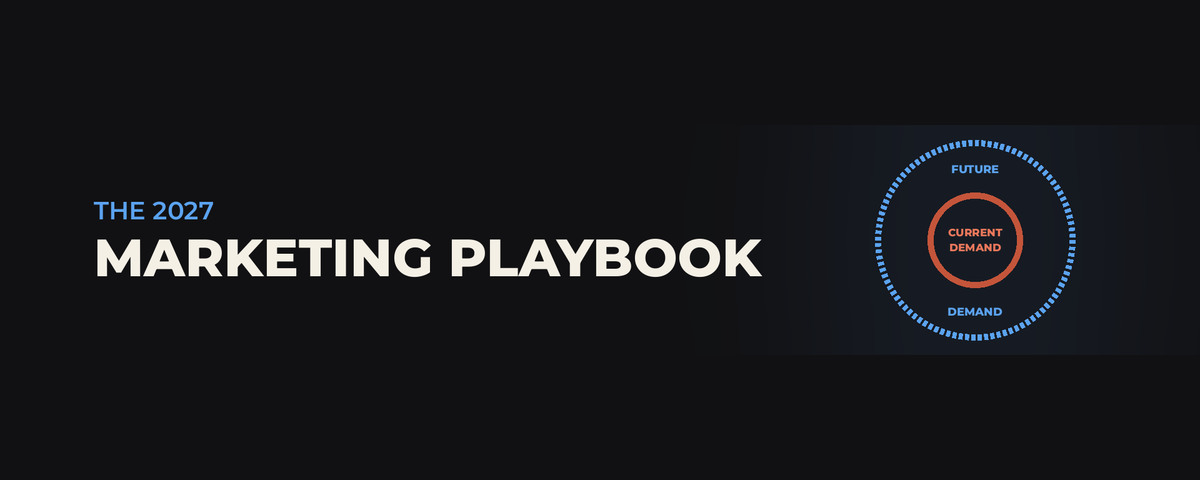
This 10,000 word article by @Jayyanginspires is a GOLDMINE for every single business. I read it and summarized it, here are the key points:
1. There are 2 kinds of demand. Current demand is the people who want to buy right now, and future demand is everyone who will buy later. Most companies only chase the first one because it's easy to measure, and the good ones work on both.
2. A brand is basically teaching. You decide what you want people to associate you with, so when they have the problem you're the first name in their head. If you don't decide it, the market decides it for you.
3. You build those associations with power, trust and likeness. Power means showing you can actually do things. Trust comes from giving people steps that get them a real result. Likeness is showing you believe the same things they do.
4. Niche by the transformation, not by one topic. If you take someone from A to Z, you can talk about everything in between.
5. A brand fixes the math. Leads come in pre-sold, so they cost you less, and customers stay longer and pay more because they feel like they know you.
6. Keep a "Hall of Fame" of your best posts and multiply them. Repost them after 90 days, rework them for every platform, and say the same idea in new ways. People don't get tired of your best stuff, because most of them never saw it.
7. Copywriting is thinking, not writing. Before he writes anything he goes through the 6 Ps: people, positioning, promise, proof, priority and process.
8. Proof you can point at beats adjectives. "Trusted by industry leaders" means nothing, and "400 clients, 11 years" means something.
9. Your best ad research is your own sales calls. Transcribe them and use the exact words your customers used. If you describe their pain better than they can, they assume you have the solution.
10. Test with organic and scale with paid. Try angles for free, then put money behind the ones that already work. On Meta now, the copy basically is the targeting.
11. Optimize for lifetime profit, not cheap leads. His $5 leads were worth about $20 each, and the $17 leads came with a $189 average order.
12. Don't fake urgency. Over-promise once and the bad word of mouth stays on the internet forever.