

building https://xitter.cf/t.co/lqOLoYDi6R
London, England
Joined May 2015
- Tweets1.1K
- Following953
- Followers120
- Likes5.6K








Very excited to share the news and thanks to our customers for partaking! 🚀

NEW: Scarlet raised a $50M Series B led by Headline, with participation from Notion Capital, Atomico, and others.
The company certifies AI medical devices for customers including Heidi, Tandem Health, and Flo Health, and says it has cut certification timelines by 1+ years.
Funding will support expansion in the US & APAC. Congrats to the team!
Is there a word for AI Skeuomorphism?
My version of Claude on iOS updated the voice mode symbol from the wavelength logo to a phone handle.
Small but important steps towards framing interactions with AI as human-on-human.
If anyone knows it's @benspringwater (or @patrickc)?

James Dewar retweeted

And on the seventh day, man rested from the timeline.
Introducing Sabbath: Block X (and other addicting apps) one day a week.
Now on the App Store. Link below.
James Dewar retweeted
Share a sauna with me! 🥹 My dear friend @LGAjots is selling his charming historic studio cottage. We share a yard and sauna, <200 ft from Alamo Sq. Posting this with Geoff's permission to see if we can find someone in network first. Reply for more info & private tour.

James Dewar retweeted

Delighted to announce that @joinef has raised $200m in fresh capital to accelerate the lives of some of the most extraordinary people around the world

James Dewar retweeted

The largest randomized trial of medical A.I.
—Over 100,000 women in Sweden
—radiologist + AI vs 2 radiologists, in follow-up
—AI added led to 29% more cancer detected, 44% reduced workload, and
—Less cancer dx in subsequent 2 years, and, when found, less aggressive
thelancet.com/journals/lance…


The inoperability of the BA app is deeply embarrassing and shows the consequences of a state monopoly… the quality of the AA and United apps in comparison…
I’m logged in and I can’t even check my bookings 🤯 @British_Airways


Fermat’s Last Theorem by @SLSingh is a good read. Hard to imagine people dedicating this much of their career to this narrow of a problem these days!
Like Rich Hickey says:
“when is the last time you thought a problem for an hour? A day? A month?”
Andrew Wiles did 7 years!

want to build an app using @Lovable for the first time, obviously I hit lovable.com & end up on a v. different site...
How much have you offered them @antonosika?Probably far than they make selling underwear...
James Dewar retweeted

The real barrier to a top education is discipline.

Stanford just made a $200,000 AI degree free.
No application.
No tuition.
No “elite access”.
Stanford released its actual AI/ML curriculum on YouTube.
Not a PR-friendly intro.
Not “AI for the public”.
This is the real thing.
The same lectures shaping people working on frontier models.
What just became public:
Deep Learning (CS230)
→ youtube.com/playlist?list=PL…
Transformers & LLMs (CME295)
→ youtube.com/playlist?list=PL…
Language Models from Scratch (CS336)
→ youtube.com/playlist?list=PL…
ML from Human Feedback (CS329H)
→ youtube.com/playlist?list=PL…
Computer Vision (CS231N)
→ youtube.com/playlist?list=PL…
LLM Evaluation & Scaling
→ youtube.com/playlist?list=PL…
The uncomfortable truth:
The degree isn’t the scarce asset anymore.
Execution speed is.
Top schools know this.
That’s why they’re publishing the playbook.
👉 Bookmark this.
Comment the first lecture you’ll actually watch.

Really enjoying my first copy of Works in Progress mag. Fantastic work @s8mb & team. Updating my xmas wish list to include a von Braun wheel…


A wonderful film. What are we building today that will be remembered, let alone still in place, in 150 years?!

I’ve made a short film.
Look at the things around you: doors, bins, staircases, furniture, railings, doorhandles, windows.
Do you like how they look, or not?
Modern design has become boring, but it doesn’t have to be this way.
The word “beautiful” is overused. We don’t need “beautiful” lamps, bus stops, and water fountains – we just need lamps, bus stops, and water fountains that are interesting, that actually mean something.
Or, at the very least, not boring.
Because the aesthetics of architecture and urban design aren’t just a bonus; they totally change how we think, feel, and behave.
Boring environments make us more stressed and less productive; they erode our sense of community; they make us sadder, less trusting, and lonelier.
A boring world is one where we spend even more time online and where our addictions are even harder to battle.
The Problem
There is global, widespread dissatisfaction with how the world looks. In this film, and the series it will lead to, we want to investigate that feeling and give it a voice.
The point isn’t that we should return to the past or get rid of modernism. It’s about learning from the past in order to improve the present, and about giving the public what they very clearly want, which isn’t the eradication of modernism but the co-existence of modernism AND traditionalism.
Just look where tourists go, where they take their photos, and that tells you everything you need to know about what most people find interesting or beautiful.
And look at where people go on holiday. It’s always to cities filled with old architecture and design, with churches and mosques and palaces, with charming little alleyways and stone staircases and wrought-iron railings.
Of the world’s fifty most visited buildings, only four were made in the 20th century, and they’re all museums or memorials.
There’s a reason why posts about this go viral online all the time. Regardless of why the change happened, it is clearly the case that we no longer make things how we used to.
People are rightly confused by the fact that old lamp posts (to take the example we focus on in the film) are usually so pretty, while modern ones are usually so boring.
Some people say this is just an example of survivorship bias… and they’re mostly correct. But that’s the whole point!
Saying old buildings are usually prettier than modern buildings is not to say that architecture used to be better, or that the past was better.
It is simply to say that certain kinds of buildings, because they have been preserved, are good examples of what people like most.
In which case... shouldn't we try to design at least some buildings in a way that we know people like?
A Unifying Cause
Everybody, from all sides of the political spectrum and all backgrounds, stands to benefit from a world that is designed more thoughtfully and imaginatively. The world could be such a colourful, meaningful, and thrilling place!
So this isn’t about left versus right or conservatism versus progressivism; it’s about making our world a more interesting and meaningful place to live in. This should be a unifying cause, because everybody loses out when our homes and cities are badly designed.
I want this film to unite people who think they’re on opposite sides, and to create a consensus that we need to change our approach to how we design our buildings and the objects – benches, bus stops, bins, lamp posts, aircon units – that fill our cities.
The Importance of Details
We are incredibly rich and have a sprawling choice of shows to stream, phones to buy, or shoes to wear… but everything feels more and more generic all the time.
If you want to understand a society, don’t listen to what it says about itself – look at what it creates. You can learn everything about the Victorians – the good and the bad – just by looking at their lamp posts.
And what do the ordinary details of the modern world say about us?
That we are technologically advanced, very efficient… and care more about making money, about making things as quickly and cheaply as possible, than making our world an enjoyable place to actually live in.
It’s important to learn about why and how things have changed, but that’s for another time. The first step is establishing that the public aren’t happy with modern architecture and design, and that something needs to be done.
But what we need isn’t a total revival of so-called ‘traditionalism’; the truth is that traditionalism and modernism can (and should) co-exist.
The trouble right now is that we only have one, and that people are tired of it.
The Power of Noticing
But this film (and the series it will, all being well, lead to) is about more than the specific argument it presents. Above all it’s about a way of seeing the world around us, a way of noticing and thinking.
“How you do anything is how you do everything.” That is probably true, and it also applies to whole societies, not just individuals; a single doorbell implies everything else about the whole socio-economic and political system that gave rise to its creation.
And, beyond being merely “useful”, the ability to notice details makes the world a richer place to live in, and life a richer thing to lead. This is what the film is about, more than anything: the power and joy of noticing.
A Bigger Project
This short film is just the beginning. We want to make a full series about the history of art and architecture, both for their own sake and also to see what we can learn about life in the twenty-first century and how to improve it. To keep updated you can join our email list over at our website, linked in the reply below.
Final Words
You can watch the film here on X, or over on YouTube, also linked in the reply below.
So… this is where the dream begins, the dream of a new series and the dream of a more charming, more interesting, more meaningful modern world.
Spread the word.
James Dewar retweeted

By far the best outcome for SVB UK depositors and the UK startup ecosystem would be an acquisition and recapitalisation. Huge group of leading VCs stand ready to support a “new” SVB UK👇

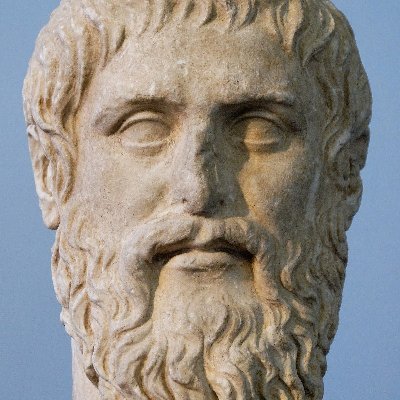


"come on, Tim, you’re briefly entering water of slightly suboptimal temperature, not going over the top at Passchendaele" theguardian.com/lifeandstyle…
