Chirayu 🐦 (@mountdiscovery) header
Chirayu 🐦 (@mountdiscovery) profile picture

🖖 Starfleet officer • Interests in 🌌 space, 🖥️ computers, 🏁 motorsport and 🛠️ do-it-yourself builds • 📰 📺 📚 📻 news and media addict

🌏 Earth
Joined May 2016
Photo by Chirayu 🐦 (@mountdiscovery)Photo by Chirayu 🐦 (@mountdiscovery)Photo by Chirayu 🐦 (@mountdiscovery)Photo by Chirayu 🐦 (@mountdiscovery)Photo by Chirayu 🐦 (@mountdiscovery)Photo by Chirayu 🐦 (@mountdiscovery)Photo by Chirayu 🐦 (@mountdiscovery)Photo by Chirayu 🐦 (@mountdiscovery)Photo by Chirayu 🐦 (@mountdiscovery)Photo by Chirayu 🐦 (@mountdiscovery)
Was great fun learning how to use the API (next 5 launches) from rocketlaunch.live and add it to my calendar plugin Omarchy really helps me get interested in programming and computing fun!
30
Chirayu 🐦 retweeted
.@FerrariHypercar @AFCorse in blue - pro-am Hypercar is go @AsianLeMans
15
146
31
1,903
43,451
Chirayu 🐦 retweeted
A sunrise reveals a swirling low-pressure system over the South Pacific. ☁️ As air converges towards the centre of lower pressure, it rises and cools, forming clouds that trace out the spiral. In the Southern Hemisphere, the Coriolis effect causes large-scale cyclonic systems to rotate clockwise. Atmospheric science, written in the clouds, filmed from space 5 hours ago.
1
10
42
2,262
#PPOD: City Lights Across America's Heartland 🌃 The lights of cities across the United States sparkle against the darkness in this photograph taken from the International Space Station on October 18, 2026. Captured by Canadian Space Agency astronaut Joshua Kutryk approximately 417 kilometers above Earth, the view stretches from the Midwest toward the East Coast. Among the illuminated metropolitan areas are Chicago, Detroit, and New York, their sprawling networks of lights tracing the landscape a few hours before sunrise. From orbit, artificial lighting reveals the remarkable extent of human activity across the planet. Bright concentrations mark major cities, while smaller communities and transportation corridors create intricate patterns between them. Photographs like this offer a striking perspective on the geography of human settlement and the contrast between Earth's natural darkness and the places we illuminate. They also remind us that, even from hundreds of kilometers above, humanity's presence is unmistakable. Credit: @csa_asc @Astro_Kutryk #planetaryscience
2
5
1
47
3,241
Commiserations GM. I hope the #Omarchy community continues supporting Flea and help it go default or atleast bundled in "Cinque" and i genuinely wish Omacom sponsors you in the future.
Well, that was fun. As I said in the video three months ago, Flea was built to one day be the default file manager for Omarchy. Last night, Folio was merged as Omarchy's new default. There's not much I can say other than thank you to everyone who supported the project. This has been one of the most wonderful experiences of my journey in tech so far. I made all of this happen on a very tight budget. Meals were skipped, sleep was lost, and the journey took a real toll on my mental and physical health. I was solo the entire time, maintaining Flea and pushing the limits of what a file manager on Linux could be. We broke every benchmark we could find and hit unheard-of speeds. It was a generational and extremely fun run. The good news is that Folio is C++ and Qt, so most of the front-end optimizations from Flea 0.3.12 can be ported over, which means it can still be the second-fastest file manager on Linux. I'll send as many PRs as I can so the file manager does justice to the wonderful project that Omarchy is. The bad news is that I can't keep up this cash and mental burn for Flea now that it can never be the default. That was the main pitch to sponsors, and it's what drove me to push as hard as I did these last few months. I really tried my best to keep that pace going, but it isn't sustainable anymore. Flea is not stopping. Starting with 0.4.3, it moves to a much slower pace. Bug and security fixes come first, and new features will land when time and budget allow. I had up to 16 more releases planned, and they will still happen, just over a much longer timeline. On performance, as of this writing there is simply nothing else out there that compares to Flea, and that is a win I will carry forever. "Why don't you just open it up to other distros?" To be completely honest, I'm only interested in developing for Omarchy. I have no doubt it's the best the Linux desktop gets, and it's hard to develop for things you don't use. If I can't promise you something I'd use myself, there's no point. If there's enough interest, I may pick the pace back up. For now I'm still grieving the default dream, so I'm taking it one release at a time. Thank you to all 120+ contributors, and to superwhisper and zeroramp for sponsoring the project. The sprint is over, but Flea isn't.
2
3
248
Chirayu 🐦 retweeted
DJI Mavic 4 Pro captures the spectacle with Hasselblad color, while Matrice 5T’s thermal view reveals the heat beyond visible light. ⚠️ Filmed under authorized, controlled conditions. Do not attempt. 🎥:damusuishoupai & shangkebutingqintongxue #DJI #DJIMavic4Pro
1
12
1
152
23,723
Chirayu 🐦 retweeted
Infor sheet for @PortalSpaceSys's Supernova: cdn.prod.website-files.com/6… It actually uses solar thermal propulsion! I suppose the propellant is ammonia.
3
10
1
58
2,395
Chirayu 🐦 retweeted
Our spacecraft just made interplanetary history - twice. Blue & Gold flawlessly executed powered Earth gravity assists, two days apart, to slingshot our planet and shoot for Mars' orbit. This is the first time the highly complex maneuver has been executed successfully by spacecraft. ESCAPADE has proven a new path is possible to make it to Mars outside the typical Earth-to-Mars launch window that occurs every 26 months. Next ESCAPADE mission milestone: Mars Orbit Insertion, September 2027.
50
238
37
2,178
81,347
Chirayu 🐦 retweeted
Venus is done moving backward ➡️✨ On November 14, Venus ends its retrograde motion and starts moving eastward against the stars again — right near Spica, Virgo’s brightest star. Venus passed close to Spica on November 9 and, after turning direct, will approach it again for another conjunction on November 19. Look before sunrise to catch brilliant Venus near Spica in the eastern sky. ✨ Learn more about retrograde motion: starwalk.space/news/what-is-…
8
42
6
165
8,670
Chirayu 🐦 retweeted
Insane thinking back to writing this blog with minimal help from ai. Like some kind of javascript visualization caveman. (link below if you wanna read something cool today)
16
28
2
523
17,740
Chirayu 🐦 retweeted
During the #space race, the USSR was often first. The first satellite, the first person in space and the first spacewalk... The Gemini IV mission in particular closed that space achievement gap and soon after began taking the lead in the space program...
btw I told you all remember? I told you. This will be forgotten in 3 months and everyone will say google fell off... let's not do that again please.
1
2
80
Chirayu 🐦 retweeted
Gemini 4 Carbon is now available. It’s our strongest model, built to dig deeper, handle long-horizon tasks, and multi-step reasoning. If Argon is great for complex tasks, Carbon is the model you bring in for your hardest problems.
674
1,108
877
10,720
2,963,058
Chirayu 🐦 retweeted
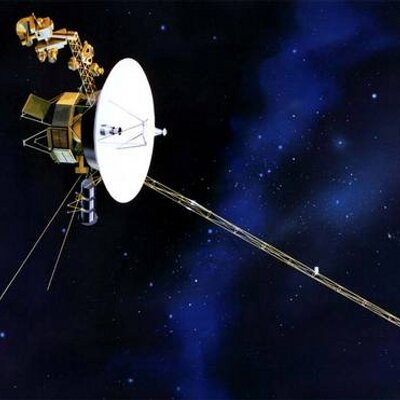
1/2 #Voyager1 is about to reach a milestone no other human-made object has ever touched: one light-day away from Earth. On November 18, 2026 at 5:16 EST it will have traveled roughly 26 billion km. A journey of almost 50 years. A light-day is just how far light goes in 24 hours. Light travels around 300,000 km a second, which adds up to roughly 26 billion km in a day. It’s the clearest way to measure enormous space distances, because nothing goes faster than light. The Moon is 1.3 light-seconds away. The Sun takes 8 minutes and 20 seconds. Neptune sits a bit past 4 light-hours. Proxima Centauri is the nearest star, 4.24 light-years off. Andromeda is around 2.5 million light-years away. A light-day is already enormous. Voyager 1’s doing about 61,000 km/h right now, pointed at Gliese 445 over in Ursa Minor. Forty thousand years from now it’ll swing past that star at roughly 1.7 light-years. Even at that speed, compared to light it moves like a snail. It took #Voyager1 49 years, 2 months and 11 days to cover one light-day. Voyager 2 took a different route so it could visit Uranus and Neptune — it won’t reach the same distance until 2035. November 18 is worth marking: the first human-made object one light-day from Earth.
9
29
7
61
2,615
Herb Ryman’s 1966 concept art for the Transportation Lobby of Walt Disney’s EPCOT, the Experimental Prototype Community of Tomorrow, where monorails and PeopleMovers converge beneath the city’s central hotel. Never built.
3
39
2
284
5,364
Étienne-Louis Boullée - Proposed Monument to Isaac Newton (1784)
6
65
6
538
8,534
Chirayu 🐦 retweeted
An iceberg on a journey of thousands of kilometres. 🧊 Iceberg A-81 broke away from Antarctica's Brunt Ice Shelf in January 2023. After more than three years drifting through the Southern Ocean, it's reached the waters around South Georgia, 2,300 km from its origin.
1
11
45
2,738
Chirayu 🐦 retweeted
Sister ship Voyager 1 is currently ~23h 58m 58s of light travel time from Earth (2026:314:120000:1L)
15
198
12
1,858
27,428
Chirayu 🐦 retweeted
Undoubtedly humanity's greatest feat. To send a manmade object so far out there while still maintaining contact Looking forward to 🛰️ One Light Day. 10:16:07 UTC, 18th November 2026 youtu.be/0Ke0s62W4yY?si=cSqJ…
1
32