Chirayu 🐦 (@mountdiscovery) header
Chirayu 🐦 (@mountdiscovery) profile picture

🖖 Starfleet officer • Interests in 🌌 space, 🖥️ computers, 🏁 motorsport and 🛠️ do-it-yourself builds • 📰 📺 📚 📻 news and media addict

🌏 Earth
Joined May 2016
Chirayu 🐦 retweeted
.@FerrariHypercar @AFCorse in blue - pro-am Hypercar is go @AsianLeMans
15
146
31
1,903
43,451
Chirayu 🐦 retweeted
A sunrise reveals a swirling low-pressure system over the South Pacific. ☁️ As air converges towards the centre of lower pressure, it rises and cools, forming clouds that trace out the spiral. In the Southern Hemisphere, the Coriolis effect causes large-scale cyclonic systems to rotate clockwise. Atmospheric science, written in the clouds, filmed from space 5 hours ago.
1
10
42
2,262
#PPOD: City Lights Across America's Heartland 🌃 The lights of cities across the United States sparkle against the darkness in this photograph taken from the International Space Station on October 18, 2026. Captured by Canadian Space Agency astronaut Joshua Kutryk approximately 417 kilometers above Earth, the view stretches from the Midwest toward the East Coast. Among the illuminated metropolitan areas are Chicago, Detroit, and New York, their sprawling networks of lights tracing the landscape a few hours before sunrise. From orbit, artificial lighting reveals the remarkable extent of human activity across the planet. Bright concentrations mark major cities, while smaller communities and transportation corridors create intricate patterns between them. Photographs like this offer a striking perspective on the geography of human settlement and the contrast between Earth's natural darkness and the places we illuminate. They also remind us that, even from hundreds of kilometers above, humanity's presence is unmistakable. Credit: @csa_asc @Astro_Kutryk #planetaryscience
2
5
1
47
3,241
Chirayu 🐦 retweeted
DJI Mavic 4 Pro captures the spectacle with Hasselblad color, while Matrice 5T’s thermal view reveals the heat beyond visible light. ⚠️ Filmed under authorized, controlled conditions. Do not attempt. 🎥:damusuishoupai & shangkebutingqintongxue #DJI #DJIMavic4Pro
1
12
1
152
23,724
Chirayu 🐦 retweeted
Infor sheet for @PortalSpaceSys's Supernova: cdn.prod.website-files.com/6… It actually uses solar thermal propulsion! I suppose the propellant is ammonia.
3
10
1
58
2,395
Chirayu 🐦 retweeted
Our spacecraft just made interplanetary history - twice. Blue & Gold flawlessly executed powered Earth gravity assists, two days apart, to slingshot our planet and shoot for Mars' orbit. This is the first time the highly complex maneuver has been executed successfully by spacecraft. ESCAPADE has proven a new path is possible to make it to Mars outside the typical Earth-to-Mars launch window that occurs every 26 months. Next ESCAPADE mission milestone: Mars Orbit Insertion, September 2027.
50
238
37
2,178
81,347
Chirayu 🐦 retweeted
Venus is done moving backward ➡️✨ On November 14, Venus ends its retrograde motion and starts moving eastward against the stars again — right near Spica, Virgo’s brightest star. Venus passed close to Spica on November 9 and, after turning direct, will approach it again for another conjunction on November 19. Look before sunrise to catch brilliant Venus near Spica in the eastern sky. ✨ Learn more about retrograde motion: starwalk.space/news/what-is-…
8
42
6
165
8,672
Chirayu 🐦 retweeted
Insane thinking back to writing this blog with minimal help from ai. Like some kind of javascript visualization caveman. (link below if you wanna read something cool today)
16
28
2
523
17,741
Chirayu 🐦 retweeted
During the #space race, the USSR was often first. The first satellite, the first person in space and the first spacewalk... The Gemini IV mission in particular closed that space achievement gap and soon after began taking the lead in the space program...
btw I told you all remember? I told you. This will be forgotten in 3 months and everyone will say google fell off... let's not do that again please.
1
2
80
Chirayu 🐦 retweeted
Gemini 4 Carbon is now available. It’s our strongest model, built to dig deeper, handle long-horizon tasks, and multi-step reasoning. If Argon is great for complex tasks, Carbon is the model you bring in for your hardest problems.
674
1,108
877
10,720
2,963,111
Chirayu 🐦 retweeted
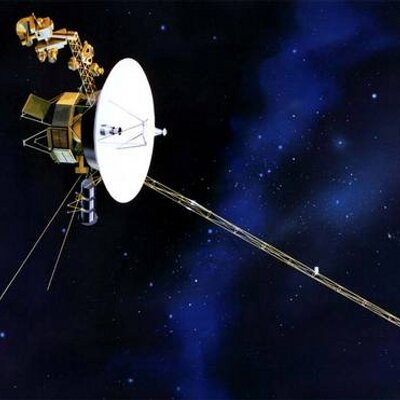
1/2 #Voyager1 is about to reach a milestone no other human-made object has ever touched: one light-day away from Earth. On November 18, 2026 at 5:16 EST it will have traveled roughly 26 billion km. A journey of almost 50 years. A light-day is just how far light goes in 24 hours. Light travels around 300,000 km a second, which adds up to roughly 26 billion km in a day. It’s the clearest way to measure enormous space distances, because nothing goes faster than light. The Moon is 1.3 light-seconds away. The Sun takes 8 minutes and 20 seconds. Neptune sits a bit past 4 light-hours. Proxima Centauri is the nearest star, 4.24 light-years off. Andromeda is around 2.5 million light-years away. A light-day is already enormous. Voyager 1’s doing about 61,000 km/h right now, pointed at Gliese 445 over in Ursa Minor. Forty thousand years from now it’ll swing past that star at roughly 1.7 light-years. Even at that speed, compared to light it moves like a snail. It took #Voyager1 49 years, 2 months and 11 days to cover one light-day. Voyager 2 took a different route so it could visit Uranus and Neptune — it won’t reach the same distance until 2035. November 18 is worth marking: the first human-made object one light-day from Earth.
9
29
7
61
2,615
Herb Ryman’s 1966 concept art for the Transportation Lobby of Walt Disney’s EPCOT, the Experimental Prototype Community of Tomorrow, where monorails and PeopleMovers converge beneath the city’s central hotel. Never built.
3
39
2
284
5,365
Étienne-Louis Boullée - Proposed Monument to Isaac Newton (1784)
6
65
6
538
8,535
Chirayu 🐦 retweeted
An iceberg on a journey of thousands of kilometres. 🧊 Iceberg A-81 broke away from Antarctica's Brunt Ice Shelf in January 2023. After more than three years drifting through the Southern Ocean, it's reached the waters around South Georgia, 2,300 km from its origin.
1
11
45
2,738
Chirayu 🐦 retweeted
Sister ship Voyager 1 is currently ~23h 58m 58s of light travel time from Earth (2026:314:120000:1L)
15
198
12
1,858
27,428
Chirayu 🐦 retweeted
Undoubtedly humanity's greatest feat. To send a manmade object so far out there while still maintaining contact Looking forward to 🛰️ One Light Day. 10:16:07 UTC, 18th November 2026 youtu.be/0Ke0s62W4yY?si=cSqJ…
1
32
𝗡𝗘𝗪 𝗖𝗔𝗧𝗘𝗚𝗢𝗥𝗬 𝗡𝗔𝗠𝗘𝗦 𝗔𝗡𝗗 𝗖𝗢𝗟𝗢𝗨𝗥𝗦 𝗿𝗲𝘃𝗲𝗮𝗹𝗲𝗱 𝗮𝗰𝗿𝗼𝘀𝘀 𝗔𝗖𝗢 𝗮𝗻𝗱 𝗟𝗠𝗘𝗠 𝗰𝗵𝗮𝗺𝗽𝗶𝗼𝗻𝘀𝗵𝗶𝗽𝘀 𝗳𝗼𝗿 𝟮𝟬𝟮𝟳 𝘀𝗲𝗮𝘀𝗼𝗻 🔴🔵🟢🟠🟡 To ensure consistency across the championships, the different categories will adopt a common naming and a harmonised colour-coding system across all endurance championships: WEC, ELMS, Asian Le Mans Series, Michelin Le Mans Cup and Asian Le Mans Cup. More👉24h-lemans.com/en/news/aco-a…
14
181
38
1,304
90,923
#PPOD: Hera Gets a Closer Look at Didymos 🪨 A whole new side of an asteroid comes into view in this remarkable image captured by ESA's Hera spacecraft. Taken from just 60 kilometers away, the image reveals Didymos's rugged surface: a 780-meter-wide asteroid covered in boulders, craters, and intriguing patterns of grooves and ridges. Its smaller companion, the 151-meter-wide Dimorphos, is also in the frame, although most of it is hidden in shadow. This is the side of Didymos opposite the one NASA's DART spacecraft photographed in 2022. Hera is investigating the aftermath of DART's deliberate collision with Dimorphos, which shortened the smaller asteroid's orbit around Didymos by approximately 33 minutes. Scientists suspect that debris thrown across the roughly one-kilometer gap between the asteroids during the impact may have influenced some surface features on Didymos. By mapping both bodies and studying their physical properties, Hera will help researchers understand how spacecraft impacts could deflect potentially hazardous asteroids. Credit: @ESA #planetaryscience
5
20
1
114
4,515
Chirayu 🐦 retweeted
TRON (1982, Steven Lisberger)
6
93
3
631
11,454
Chirayu 🐦 retweeted
In 1572, Danish astronomer Tycho Brahe was among those who spotted a bright “new star” in the sky. Now astronomers know it wasn’t new at all — that was the death of a massive star in a supernova explosion, which left behind a remnant we still see expanding. #MondayMotivation
21
156
6
913
22,652