

Co-founder @inginuiti AI for Wall Street • Ex-oil & gas analyst and amateur boxer
London, England
Joined December 2025
- Tweets2.2K
- Following813
- Followers251
- Likes68.5K






Pinned Tweet
This is why there’s no UK productivity growth. There’s zero incentive for the most ambitious and productive people in society to work 18hr days and take risks when they’d basically earn the same per hour stacking shelves.


Mark Tabrett retweeted

Lending £300,000 to a couple earning less than minimum wage? Safe as houses
Lending them money to buy a flat or a new build? Entirely too risky
There's a property crash coming (or already here) and Nationwide doesn't want to be caught out
@Telegraph
telegraph.co.uk/money/proper…

I’ve flagged this before. The AI capex misallocation looks eerily similar to the Oil & Gas capex cycle in the early 2010s just before the oil price crashed in 2014. The same thing is happening with data centre capex and token prices today.

After the GFC, oil price rebounded back to their old highs but E&Ps returns on capital compressed. At the time, everyone one was doing barrel counting supply and demand work and saying the sector should get their old multiples because of the oil price but the business was deep into its capital cycle making the denominator or ROC grow faster than the numerator.
GPU rental rates are high but the returns on capital are compressing in AI for the same reason - they are neck deep in their capital cycle.

42
Mark Tabrett retweeted

The end of the AI boom will not be averted by the Jensen restoration. It is an event, like all great turning points of economic history, in which great men play only modest roles.
Mark Tabrett retweeted

“After accounting for the advances and other expenses, any sale at the current valuation would leave little to no proceeds for the repayment of the bonds, wiping out even the safest slice: bonds once rated AAA.” #CMBS @DiMartinoBooth

Probably nothing

Oracle's CDS Is Now Wider Than Bear Stearns' Was In January 2008: How The Swap Market Is Marking The AI Boom To Junk zerohedge.com/markets/oracle…

61
I met the Big Show in 2003 after the Smackdown UK tour and he was the most fun wrestler. Was going to drive him to McDonalds until he saw my car and said “WTF is a Clio? I can’t fit in that!”.

🗣️ Big Show: "Vince came to me, I was the US champion. He says, 'We're gonna take the US title off you at Mania, who do you want to work with?'
And I'm like, 'I'll work with Cena.' And he goes, 'How's he going to beat you?' I said, 'He's STRONG, he'll beat me with his finish. He'll beat me with his FU.'
He goes, 'No, he can't pick you up.' I said, 'The hell he can.'
So we went to the ring and we got out a crash pad, and I had John hit me with his finish. And everybody was freaked out because nobody picked me up back then, so I put John over for that.
Years later, WrestleMania's coming up... I said, 'Hey, I don't know if you know John, but I don't have an opponent for Wrestlemania and I'm pretty good at taking finishers. So uh, if you need an opponent...'
And he looked at me and smiled, just gave me the nod. We got back on the bus that night he says, 'Hey, it's gonna be me, you and Edge at WrestleMania. It's gonna be a triple threat. And thank you for what you did for me at WrestleMaina 20 with the US title.'
He remembered me, like, that's class. He put a REALLY good payday in my pocket. The only thing is he did break my balls a little bit.
He says, 'Listen, I'm gonna AA you AND Edge at the same time. He says, 'I need you to be under 450 [pounds], can you get under 450 for me? Because Edge can't lose any more weight (laughs).'
And I'm like, 'For you, YES.' And I came in that day at 446. He said, 'Okay, we're good. I can do both of you then.'
He had worked it out in the gym what the weight was to do both of us and I had to be under 450." 💪👏

4
375
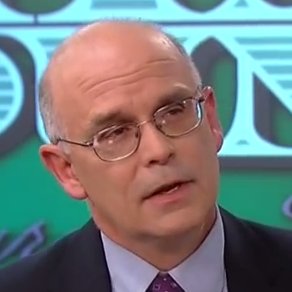

Steve Eisman (Steve Carell’s character from The Big Short) agrees that the property ladder doesn’t exist any more.
"It was, but that is true, I think those days are over. I have thought that for a long time. You know, in New York, for example, people haven't made any money in Manhattan real estate in 10 years."

Steve Eisman says the days of building wealth from home ownership are over
"You could have rented and invested money in the stock market and had a much bigger nest egg."
EISMAN: "Don't do it. Don't buy that house."
BARTLETT: "Why?"
EISMAN: "The cost of buying a house is the mortgage, property, and casualty insurance, taxes, there are the junk fees. You add that all up, it is probably 50% more expensive today to own a house in the United States than it was just 5 years ago. Now, don't forget 5 years ago rates were zero. So, you have a situation number one in the United States where most of the housing market is locked because the people who were sitting in the houses have mortgages of 3% which they refinanced during COVID, and the people who want to buy the house have mortgages of 7%. That transaction is not going to happen."
"So, I actually think it's more likely than not that over the next several years, housing prices in the United States fall. So, what I tell people, especially young people, if you're going to buy a house, be sure you can afford all the costs, number one. And number two, go into it under the assumption that at best when you sell the house, you'll get your money back."
BARTLETT: "The big rebuttal here is people say renting is just throwing money away. You're pay..."
EISMAN: "It's not. You can invest the extra money in the stock market. It's definitely not throwing your money away. That is a complete mistake to think of it that way. It's more expensive to own the house than to rent. So, you could take the extra money and invest."
BARTLETT: "The other rebuttal is a home is the primary way for everyday people to build wealth and equity."
EISMAN: "It was, but that is true, I think those days are over. I have thought that for a long time. You know, in New York, for example, people haven't made any money in Manhattan real estate in 10 years."
BARTLETT: "Another argument is you'll eventually pay off the mortgage and live rent free in retirement."
EISMAN: "Or you could have rented and invested money in the stock market and had a much bigger nest egg."
This is just like the 1870s railroad crash. The trigger to watch for is a big-name company (like Jay Cooke was) to announce a debt issue that fails to close. Once that happens, the entire bond market will collapse.

Most investors are watching tech stocks while missing what's happening in the AI credit markets:
HSBC reportedly sold $300 million in data centre loans at roughly 85 cents on the dollar, a 15% haircut. ING tried unloading another $500 million but couldn't attract sufficient bids at acceptable prices. Now it's negotiating individual sales.
Reuters is also reporting that banks are becoming reluctant to finance additional AI projects, even those backed by major technology companies.
The timing couldn't be worse. Goldman Sachs estimates hyperscaler debt issuance will surge 68%, from $250 billion in 2026 to $420 billion in 2027, precisely when lenders are becoming more cautious.
I've seen this movie before. As I discuss in my book, the shale oil boom and Canadian cannabis were both built on enormous expectations for future growth and the assumption that capital would remain readily available. I watched both industries discover what happens when those expectations collide with a mismatch in expectations vs what was actually delivered.
AI may very well transform the world, just as shale transformed American energy production. But that doesn't mean every dollar invested will earn an adequate return. When an investment boom depends on an endless supply of capital, the biggest risk isn't whether Jensen Huang comes back. It's whether the lenders do.
Mark Tabrett retweeted

Everyone keeps waiting for the energy shock to cause inflation. The opposite is happening.
The textbook says higher gas prices push businesses to raise theirs too. We are seeing the reverse.
Consumers are too stretched to pay more, so companies are cutting prices, not hiking. McDonald's literally said they have to cut, they are losing customers.
Now flip to the business side, the part nobody talks about. Costs are rising and they cannot pass it on.
So they cut the one thing they can control. Labor.
That is where the negative jobs numbers come from. Not the AI giants, the small and midsize businesses getting squeezed.
And both sides are realizing this is not a blip. It is not getting better anytime soon.
Mark Tabrett retweeted

BREAKING: The 10Y Note yield has traded above 5.00% for 27 trading days so far in 2026, the longest streak for any year since 2007.
Last week, the 10Y Note yield surged +29 basis points, moving back above 5.00% and marking its largest weekly increase since April 2025.
The 10Y is now on track for its longest period above 5.00% since 2006, when 65 trading days above this threshold were recorded.
Year-to-date, the 10Y Note yield is up +94 basis points, to 5.10%, after peaking at 5.36% in early October, its highest level since 2002.
This puts the yield on track for its 6th consecutive annual increase.
Higher for longer has become the new normal.

Mark Tabrett retweeted

Banks do not take money on deposit and lend it out. They create it, from nothing, with a few keystrokes, and the entire system depends on you never noticing.
When you deposit $10,000 in cash at JPMorgan Chase, the bank records a liability to you and an asset for itself. Under fractional reserve banking, the Federal Reserve requires banks to hold only a fraction of deposits as reserves. For decades, that requirement sat around 10%, and in March 2020 the Fed dropped it to zero. That means JPMorgan can lend out the full $10,000 you deposited, while still owing you that $10,000 on demand. The borrower who receives that $10,000 deposits it elsewhere. That bank then lends it out again. The same dollars multiply through the system, spawning new purchasing power at each stage without a single additional dollar being printed.
Murray Rothbard called this counterfeiting conducted through respectable institutions, and I think that word fits. If you printed money in your basement and spent it, you would transfer real wealth from later dollar-holders to yourself. Banks do precisely this, they just call the process "credit creation" and charge interest for the privilege of doing it.
The price you pay seems hidden at first. Every new dollar dilutes your "old" dollars. When credit expansion drives a housing boom, as it did between 2003 and 2007, asset prices rise first for the people closest to the new money, the borrowers, the developers, the leveraged speculators. By the time ordinary wages and savings adjust, you have already been taxed by dilution of purchasing power without a single congressman casting a vote.
This system contains the seed of every business cycle. Cheap credit manufactured by banks sends false signals to entrepreneurs, who invest in projects that the real pool of savings cannot support. The boom turns to bust when reality reasserts itself, usually violently, usually on your tab through bailouts.
Fractional reserve banking is state-licensed privilege, enforced by deposit insurance and central bank backstops that socialize the losses while the gains flow upward. This is how the rich become richer, and the poor get poorer, not "capitalism," as economically illiterate politicians like to claim.

Why buy a house in Beverly Hills when you can get a flat in Shoreditch instead 🤷🏻♂️


Mark Tabrett retweeted

Remember when IPOs used to be about giving retail investors a chance to invest in generation defining businesses
Now the businesses get built, venture investors take all the upside and then utilize retail as the exit liquidity
Incredible shift in capital markets

Mark Tabrett retweeted

Hate to compare, but after Diogo Jota passed away the club honoured his contract in full to his family.
Musiala has a career-threatening health issue and they’re discussing ways to rip up his contract.
LFC had the same situation with Markus Babbel, Rob Jones, Heggem & Stensgard and in each situation they honoured their contract and in Babbel’s case even extended the contract until he was able to recover before moving on.
Some clubs have class, others pretend to have it.

🚨💣 BREAKING | Karl-Heinz Rummenigge has just confirmed on Sky what we exclusively revealed yesterday on Transfer Update. Some Bayern bosses, including Uli Hoeneß, Jan-Christian Dreesen and Rummenigge, are no longer ruling out a sale.
Rummenigge on Jamal Musiala:
“What Uli and Jan-Christian have said is okay. He has a health-related issue. It's also well known that he has a contract involving very substantial sums of money. As a club, we have to consider how to deal with that situation. I think that's responsible and perfectly normal."
Are Bayern concerned about Musiala?
“It’s not out of the question. We suspect it will be difficult for him to get back to his previous level.”
“We have to speak to the agency. A decision has to be made.”
Could Musiala be sold?
“I can’t imagine another club would buy him under these circumstances. We have to think about the financial implications.”
“Uli’s wording was correct. Very serious and fair. We have an interest in seeing him return and play well. If that doesn’t happen, then we will have to think about the situation.”
@SkySportDE 🇩🇪


Been saying this for a while - the 1870s railroad crash is the best analogy I’ve heard for what will happen next with AI (valuation crash) and the economy (deflation, not inflation).

🦔I made a short explainer on how this AI selloff compares to the railroad bust of 1873 and the dotcom crash.
The people hurt worst in 1873 were bondholders who figured railroad debt was the safe bet. Today a lot of the AI buildout runs on loans from private credit funds, and those funds manage money for pensions and insurance companies. You can skip every AI stock and still own a slice of that debt through a pension or an annuity.
I’m not calling a bottom here either, since the dotcom one took two and a half years to arrive.
Hedgie🤗


Mark Tabrett retweeted

translation: Anthropic fucked retail investors

On Anthropic’s first day of trading, the way they handled things was truly disgraceful.
The initial offering price was originally set at $70–$78, but it was raised straight to $83. Not only did they raise the price, but they also increased the number of shares offered from the planned 820 million to 980 million—a jump of nearly 20%.
At least with instant noodles, they usually offer more for the same price—but Anthropic went and did both: increasing the quantity and the price.
Even more outrageous is that on the very first day of trading, management cashed out $2 billion.
Are they really that desperate? They could at least put on a show—don’t rush to cash out right after going public. How are retail investors supposed not to be scared by that?
And that’s not all.
Reportedly, 10% of employee stock options were unlocked on the first day of trading—amounting to approximately 300 million shares, equivalent to nearly one-third of the total offering.
What’s truly hair-raising is the unlocking schedule that follows.
A batch will be unlocked in mid-December, followed by successive unlockings in early, mid, and late January 2027. Throughout the first quarter of 2027, the total volume of shares expected to be unlocked is projected to reach 3 billion.
What does that mean?
The total offering size is only 980 million shares, yet the number of shares set to be unlocked in just one quarter is more than three times that amount.
This isn’t a gradual release of shares—it’s a barrage that leaves no room to catch your breath.
That’s why I said yesterday: I’m staying away from Anthropic stock.
Now that I’ve seen these numbers, I’m even more convinced.
There will be other opportunities to make money; there’s no need to risk my own money on a situation like this.
I’d like to live a few more years.