








Pinned Tweet
1/ Excited to announce the launch of @Cambrian_HQ 's inaugural $20 million fund to back the next generation of fintech founders!
Incredibly grateful for my time at @a16z, and, now, exited to share how I ended up as a solo capitalist by way of community building. 🧵 👇
Turns out fusion may help improve a particular form of cancer treatment by allowing production of rare isotopes that can be better at destroying cancer tumors. Cool!
How is it better?
We already do radio ligand therapy (RLT). Send a thing into the body that binds to the tumor. The thing has a radioactive isotope that as it decays emits radiation that destroys things nearby — the tumor and other tissue.
Mostly, we use isotopes that emit beta radiation (highly energized electrons).
Isotopes that emit alpha radiation (highly energized helium ions) are better. The dump 100 to 1000x more energy per distance travel (helium is a lot more massive than an electron) and travel less far (bigger so interact with tissue more).
That’s awesome! You destroy more of the tumor (1000x more energy).
Traveling less far is good too. Less collateral damage.
The big problem with alpha emitters?
They are really really hard to come by. And the half life is very short.
That’s where fusion comes in.
This is using fusion not to generate energy, but to generate the heavy isotopes by slamming things together.
You could make these onsite or in a city. Don’t have to get it from CERN.
That’s awesome.
Still learning a lot. Not saying this is a good business or happening anytime soon…but great example around how solving hard problems can unlock interesting things you might not immediately think about.

Last month, we demonstrated high-rate alchemy: turning mercury into real, stable gold, beating CERN’s record by a factor of 10.
Last week, we enriched isotopes in the world’s most powerful plasma centrifuge, beating the Soviet record that stood for 40 years.
Now, we’re building a fusion reactor in San Francisco to achieve record power density.
best way to "tax" wealth - if an asset is artificially scarce...create abundance.

wealth "tax" we could all get behind:
build so much new housing in SF that the newly minted deci-millionaires buying houses for $5 million over asking see their home equity decimated.

wealth "tax" we could all get behind:
build so much new housing in SF that the newly minted deci-millionaires buying houses for $5 million over asking see their home equity decimated.
Dividends…the most tax inefficient way to distribute profit to shareholders.
They persist bc investors have an irrational attachment to “income”.


Founders, PR advice:
- fire your PR team (save millions, bonus you can stop calls w/ journalists who misquote you)
- sponsor the best analysts in your sector
- profit


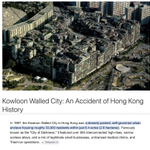
TIL: Kowloon, the Walled City of Hong Kong waz the densest place on earth.
50x denser than manhattan, but only 6 acres.
why was it so dense?
no zoning. no building codes.
in fact...there was no government whatsoever!
"Neither the British colonial government nor Chinese authorities actively governed it for decades, allowing an organic, unregulated vertical community to build up without official zoning, building codes, or structural engineering." -- gemini
it was demolished in 1987.

tired -- tech titans buying newspapers (bezos / the WaPo)
wired -- buying the analysts

Ben has for many years been the best analyst in tech. I’m very much looking forward to this new @stratechery + @stripe partnership.
stratechery.com/2026/present…


"enterprise fintech AI neolab" is a mouthful.
but points at something very important.

Ramp is valued at $60B at ~30x rev.
Nubank is valued at $60B at ~2.5x rev.
They are VERY different businesses. And this is not a knock on Ramp.
Ramp is an AI winner / enterprise fintech AI neolab, with myriad innovations and advantages vs incumbents like AMEX / Brex / etc. They are just executing and taking share and winning.
Nubank is (perceived as) AI neutral by the market, with credit cycle / EM risk overshadowing AI tailwinds.
What if Nubank is Ramp for consumer finance, a neolab in its own right?
"Advances in artificial intelligence and Nubank's low-cost operating model could enable a dramatic expansion beyond Latin America... [I envision] a global financial institution serving as many as 1 billion customers across 100 countries, operating with just 5,000 employees." - @velez_david
colossus.com/episode/david-v…

SF Nimbys: "we don't have space for more homes, if we did...what about traffic!?"
Developers: "ok, how about we put 5,000+ homes on top of an ugly railyard, rebuild the train terminal and add lots of shops".
SF Nimbys: "f*ck"


One of San Francisco's largest redevelopment projects could completely transform nearly 19 acres of land near Downtown.
Plans are moving forward for the redevelopment of the Caltrain Railyards at 4th and King in SoMa.
The project could include:
• Up to 5,834 apartments
• Up to 5.6 million SF of commercial space
• 160,000+ SF of retail
• A completely rebuilt Caltrain station
• More than 4 acres of public open space
• Multiple skyscrapers reaching 350 to 600 feet
• A potential 850-foot tower
This land is currently occupied by railroad tracks, platforms, maintenance facilities and the existing Caltrain station.
The proposal would modernize the transit infrastructure, relocate train storage and maintenance, and create an entirely new mixed-use neighborhood above and around the station.
Thousands of people could be living, working, shopping and spending time in what is currently a massive rail yard.
And all directly connected to one of the Bay Area's most important transit corridors.
The project is now entering environmental review, with construction potentially starting in 2029 and taking 15 to 20 years to complete....
There's obviously a long road ahead, but I love seeing developers think this big about underutilized urban land.
This could completely reshape SF.
📍San Francisco


5,000+ units 🙌
we need more housing mega projects. Anthropic IPO will produce ~3,000 millionaires (1,400 deci-millionaire).
large projects can absorb much of the demand from AI wealth boom.
let's go!
One of San Francisco's largest redevelopment projects could completely transform nearly 19 acres of land near Downtown.
Plans are moving forward for the redevelopment of the Caltrain Railyards at 4th and King in SoMa.
The project could include:
• Up to 5,834 apartments
• Up to 5.6 million SF of commercial space
• 160,000+ SF of retail
• A completely rebuilt Caltrain station
• More than 4 acres of public open space
• Multiple skyscrapers reaching 350 to 600 feet
• A potential 850-foot tower
This land is currently occupied by railroad tracks, platforms, maintenance facilities and the existing Caltrain station.
The proposal would modernize the transit infrastructure, relocate train storage and maintenance, and create an entirely new mixed-use neighborhood above and around the station.
Thousands of people could be living, working, shopping and spending time in what is currently a massive rail yard.
And all directly connected to one of the Bay Area's most important transit corridors.
The project is now entering environmental review, with construction potentially starting in 2029 and taking 15 to 20 years to complete....
There's obviously a long road ahead, but I love seeing developers think this big about underutilized urban land.
This could completely reshape SF.
📍San Francisco
land values are not home values, but the two are often conflated.
your home always depreciates in value over time.

It is insane that home values go up over time.
The home should be most expensive when it is initially built. At that point, the structure is new and unused.
As the home experiences wear and tear, the home becomes used and should be worth less money over time.
A used home should cost less than a new home.
But that is not what happens.
Home prices continue to grow to the sky because the debasement of the dollar distorts the market, which enriches the home owners at the expense of the home buyer.
This is a silent wealth transfer that requires the home buyer to pay more for a less valuable product.
Just insane.
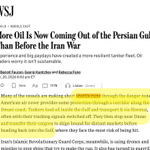
fascinating. economics of specialization at work to move MORE oil thru hormuz than before war.
ex:
- shuttle fleet that takes the dangerous route thru the straight
- other tankers collect oil outside Hormuz
risk specialists take the risk route. other folks...don't!
ship to ship transfers in the gulf of Oman are up 45x as a result!
- 0.16 million barrels per day pre war
- 7.2 million barrels per day now
Kpler reports:
- At least 63 supertankers working the shuttle trade.
- A core of 35 ships, each completing at least three round trips, typically 16 days apart.
- Those 35 ships accounting for 75% of shuttle voyages.
- >70% of crude crossing Hormuz in August changed tankers in the Gulf of Oman
if han solo was here he'd be doing the hormuz run in well under 12 parsecs.
still more expensive to move oil than it used to be, but there is a price at which ppl take more risk and specialize.


we need authorized defenders.
there are many abandoned / poorly maintained sites that contain sensitive data / connectivity. if an authorized defender doesn't do it, an adversary will.

