

Energie en transitie @oram_amsterdam | Buitenlandcommissie @cdavandaag 💚 | Marshall Fellow @gmfus | Ex @WorldBank, @OECD | Be kind | RT ≠ steun
Amsterdam, Netherlands
Joined April 2009
- Tweets5.6K
- Following5K
- Followers844
- Likes13K







Robbert retweeted

Europe alarmed to discover that its policies are producing exactly the results they were designed to produce. 🇪🇺

Robbert retweeted

Mélenchon: “We’ll lower the retirement age to 60.”
Le Pen: “The pension issue is trivial compared to the other deficits.”
Sorry, France.
I like you, and I’m not a doomer, but at this rate, these two will bankrupt the country competing over who can spend more on pensions.


Robbert retweeted

Gas in Europa is nu 11x zo duur als in de VS (€93 vs €8 per MWh). Een jaar geleden was het 'maar' 4x en nog nooit was dit verschil zo groot!
Voor energie-intensieve industrie is dit einde oefening. Investeringen gaan nu eenmaal naar waar de energie goedkoop is.
Maar ook voor gewone burgers levert dit energiestress. Ze worden ziek van een koud of schimmelig huis, of ziek van hun energierekening.
En wij? Wij sloten Groningen en verbieden boren op de Noordzee.
De EU moet af van de #greendeal, anders zal onze welvaart verder verdwijnen.

Robbert retweeted
Amsterdam heeft inmiddels zo veel ambtenaren dat ze heeft verzonnen zelf een fastfood restaurant te gaan beginnen, daar de vergunning voor te weigeren, naar de rechtbank te stappen om zichzelf aan te klagen, en die rechtszaak vervolgens van zichzelf te verliezen 🙈

Gemeente gaat zelf ongezond restaurant opzetten in strijd tegen teveel fastfoodzaken at5.nl/artikelen/240351/geme…

Robbert retweeted

Self-inflicted: Europe closed 30 refineries 2009-24
Now diesel is record-high compared to oil prices
reuters.com/business/energy/… workspace.refinitiv.com ice.com/products/34361119/lo… ice.com/products/219/Brent-C… data-api.ecb.europa.eu/servi… ec.europa.eu/eurostat/databr… ec.europa.eu/eurostat/databr…

Robbert retweeted

Wat inmiddels wel duidelijk is - of voor het kabinet zou moeten zijn - zowel de burgers als de bedrijven voelen zich een uitgeknepen citroen. Die willen geen cent extra belasting meer betalen.
Er zal gewoon keihard bezuinigd moeten worden.
Robbert retweeted
Verkeerde focus. Ze kunnen beter het vestigingsklimaat herstellen. fd.nl/economie/1613145/inves…

Robbert retweeted
We worden geregeerd door mensen die denken dat melk uit de supermarkt komt en gas uit de kraan. nos.nl/artikel/2632427-kabin…

Robbert retweeted
Europe and its priorities : Europe’s Biggest Firm Has No Sales in Europe
bloomberg.com/news/articles/…

Robbert retweeted

One more totally fucking nuts graph for today, care of a request by @LeonSimons8.
Not only is the current standard deviation for the Nino 3.4 sea-surface temperature above 4SD over the 1982-2011 mean for the first time on record, but no previous year even reached 3SD.

Robbert retweeted

Exclusive: British diplomats have privately told the US that the new sanctions Ed Miliband is imposing on Israeli settlements today are largely symbolic and will have no material impact on the UK’s wider relationship with Israel on trade or security
A behind-closed-doors diplomatic effort is underway to soothe the Trump administration’s response, amid fears that the sanctions could provide the first major setback in US relations for Andy Burnham, people familiar with the matter said
Burnham spoke to Trump by phone on Monday afternoon and told him what was coming
The reality that Britain’s relationship with Israel will largely continue as is, despite stronger rhetoric from ministers about a fundamental reset, may disappoint some on the left who the announcement is designed to win over
Bloomberg’s @EllenAMilligan @AlbertoNardelli scooped that Miliband was preparing new sanctions on Israel last month. They reported that proposals under consideration included measures to prevent the exchange of goods and services with Israeli settlements
Miliband has also looked at expanding existing human rights sanctions to cover the obstruction of aid, which has been blamed for exacerbating the humanitarian crisis in Gaza. The foreign secretary has also been looking at explicitly endorsing the International Court of Justice’s non-binding 2024 opinion that Israel’s occupation of territory that Britain now recognises as the state of Palestine is unlawful
Still, at the time British officials acknowledged that any new actions might have limited impact. Traders can re-label goods to evade sanctions and the UK has long maintained that Israeli settlements in the West Bank are illegal
bloomberg.com/news/articles/…

Robbert retweeted

This is a significant first step in standing up against the genocide in Gaza & the annexation of the West Bank. Solidarity to Ed Miliband in the face of the predictable wave of personal attacks being waged him. theguardian.com/politics/202…

Robbert retweeted
Gebrek aan visie leidt tot slecht beleid, met navenante resultaten. parool.nl/amsterdam/amsterda…


Robbert retweeted

Er is te weinig aandacht voor het fenomeen ‘spiegelbedrijf', waar Chinese bedrijven in westerse veelbelovende technologieën investeren die kampen met ontoereikend kapitaal. Hebben de Chinezen eenmaal toegang tot de technologie, richten ze een spiegelbedrijf op in China dat dezelfde technologie op grotere schaal gaat produceren. Nexperia was een goed voorbeeld in Nederland, maar er zijn er vele, vele in Europa, zoals dit Belgische chipbedrijf waarvan de directeur gearresteerd is op verdenking van spionage: vrt.be/vrtnws/nl/2026/09/07/…

Robbert retweeted

Krass: Nach Paris gibt es jetzt auch aus London Auswertungen darüber wie die Verkehrspolitik der letzten zehn Jahre die Luftqualität in der 🇬🇧 Hauptstadt verändert hat. Das Ergebnis ist nicht weniger beeindruckend:
Lange war London für seine schlechte Luft berüchtigt. Große Teile der Stadt überschritten regelmäßig die Grenzwerte. Doch dann wurde 2016 der Labour Politiker Sadiq Khan neuer Bürgermeister. Der Beginn der Londoner Verkehrswende:
- 2020: Einführung einer der strengsten Umweltzonen der Welt in der Innenstadt
- 2023: Ausweitung der Umweltzone auf ganz London
- Ausweitung der City-Maut auf 7 Tage die Woche
- Erhöhung der City-Maut von 13€ auf 21€
- Anschaffung von 1300 E-Bussen
- Vervierfachung der Radwege von 90km auf 400km
- 600.000 neue Bäume gepflanzt und 900 Hektar neue Grünflächen geschaffen.
Das Ergebnis: In 10 Jahren hat sich die Luftqualität um 49% verbessert. Das Überschreiten der Grenzwerte ging um 97% zurück und die Todesfälle durch Luftverschmutzung reduzierten sich allein seit 2019 um 40%. Londons Luft ist jetzt so sauber wie noch nie seit Beginn der Messungen.
So schön zu sehen, was alles geht, wenn der politische Wille da ist💪❤️

Robbert retweeted
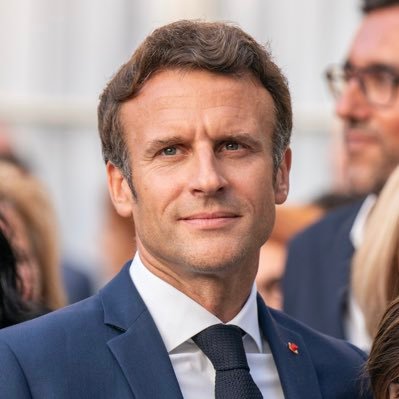
À Eindhoven, au cœur de l’écosystème européen des semi-conducteurs, aux côtés de nos champions comme ASML et Mistral, nous bâtissons l’Europe de demain : une Europe qui innove, maîtrise ses technologies et choisit son destin.


Robbert retweeted

🇪🇺🇨🇳 China is beginning to accept Europe’s trade demands
Minister Wang Yi has called for an “upward dynamic balance” in EU–China trade
🔸 The EU imported €559.4bn from China in 2025
🔸 The trade deficit reached almost €360bn in 2025
🔸 In Q1 2026 alone, it increased to €98bn
Europe must reduce this imbalance by securing better market access for European companies in China, signing new trade agreements and supporting strategic European industries.
reuters.com/world/china/chin…
Robbert retweeted

𝐂𝐡𝐢𝐧𝐚’𝐬 𝐬𝐭𝐚𝐭𝐞-𝐥𝐞𝐝 𝐞𝐜𝐨𝐧𝐨𝐦𝐲 𝐢𝐬 𝐜𝐞𝐫𝐭𝐚𝐢𝐧𝐥𝐲 𝐚 𝐩𝐫𝐨𝐛𝐥𝐞𝐦. 𝐁𝐮𝐭 𝐰𝐡𝐚𝐭 𝐚𝐛𝐨𝐮𝐭 𝐄𝐮𝐫𝐨𝐩𝐞𝐚𝐧 𝐜𝐨𝐦𝐩𝐥𝐢𝐜𝐢𝐭𝐲 𝐢𝐧 𝐢𝐭𝐬 𝐫𝐢𝐬𝐞?
I finally had some time to read @thorstenbenner's essay “The Coming Clash Between China and Europe. Why a Trade War Can’t Be Avoided” in Foreign Affairs [1].
I was particularly interested how he describes how Europe got into this mess in the first place. A central argument is that “(a) decade ago, European policy toward China was defined by complacency.” In the section titled "While Europe slept," Benner traces a gradual awakening — from complacency to hardened resolve — that reads a bit too smoothly. Based on my scholarship this perspective is only covering half of the problem. What is missing from the equation is European complicity.
Many European actors weren't just passive in the process of China engagement — they actively enabled China's state-led economy. The Hungarian Economist Janos Kornai made a similar point in one of his last public interventions, a 2019 Financial Times op-ed, where he asked whether western intellectuals bore responsibility for what he called this "nightmare," and argued that the West had actively contributed to these changes [2].
What is missing from Benner’s piece is how interest groups in Germany and elsewhere in Europe have lobbied against any attempt to re-adjust our China policy. Despite talk of China as a systemic rival, why hasn't de-risking progressed, why does German business continue to deepen its China exposure, and why can't Merz and Macron agree on protective measures?
Benner's analysis also lacks a critique of Germany's corporatist political economy and how it has prevented a shift on China policy. Why doesn't he name the laggards: the Big Four VW, BMW, Mercedes-Benz, and BASF? The China lobby, the powerful Asia-Pacific Committee of German Business? Or Germany's Economics Minister, who appears to be blocking a more assertive German (and thereby European) China policy?
In recent years it has become far more mainstream to critique China's state-led economy. But criticising western enablers is much more uncomfortable, as it requires us to speak truth to power at home. The challenge is actually two-fold: we have to pose what I call the "doppelte Machtfrage" – who holds power and uses it to what extent – both at home and abroad. That means criticising the powerful in Berlin, Brussels, and Beijing.
If we want a more realistic and effective European China policy, we have to accept such frictions in the public debate. Kornai engaged in self-criticism, pointing out how his own advice to the CCP leadership contributed to the ‘monstrous’ turn of China’s economic development. Perhaps we should all become a bit more like Kornai.
China's imbalanced economy did not develop in isolation, and the West bears a great deal of responsibility. That won't make solutions easier. But it addresses the root causes of our current predicament.

ALT Screenshot of Foreign Affairs article "The Coming Clash Between China and Europe" by Thorsten Benner, published on 16 July 2026.