

Technology should expand human agency, not replace it. I write about AI, consciousness, sovereignty, and the operating systems of the future.
Amsterdam, The Netherlands
Joined October 2008
- Tweets3.4K
- Following1.4K
- Followers562
- Likes1.5K









Roel Smelt retweeted

I spent the whole evening reading Leopold Aschenbrenner's Situational Awareness Q3 report (while drinking a nice bottle of wine). Wow wow wow, incredible content. Lots to think about. Assuming the world will not stop to exist next year, this has HUGE implications for everyone's investment portfolio. Literally nobody is prepared for this. drive.google.com/file/d/1EGi…

FSD/TAD rijders kijken nu meer naar de weg dan een automobilist ooit gedaan heeft... Terwijl ik al sinds de zomer zonder enig ingrijpen van A naar B wordt gereden (feitelijk FSD dus en geen TAD, maar goed).
De laatste tijd met TAD, rij ik steeds meer stukjes zelf, omdat het wat onnatuurlijk te langzaam rijd. Dus ik rij nu wat onveiliger, niet omdat ik met de flow meerij, maar omdat ik het o zo veilige FSD/TAD systeem uitzet.

Het is eerlijk gezegd nauwelijks bruikbaar omdat je voortdurend naar de weg moet kijken door alle Nederlandse beperkingen. Dan kun je net zo goed zelf rijden..
14
Dario Amodei says he never meant us to surrender free will to AI. I believe him, but something chafed, like a pebble in my shoe.
Freedom rarely goes at the ballot box. It goes task by task, default by default.
What did you hand a machine this week because it does it better?

1
8
The essay, a reply to Dario Amodei on what you still shape when the machine does the work: roelsmelt.com/the-chafing-is…

2
I belief strongly that will happen. In 2018 I gave a keynote speech about this. So the signs are in the walls and compounding, but man it seems to happen very slowly.

My thesis for Tesla is that over the next decade, nearly all vehicle miles traveled will become autonomous.
Forget humanoid robots, forget energy, let's just look at the size of this opportunity in the U.S.
Assuming about 4 trillion autonomous miles in 2036, a retail price of $1 per mile, and Tesla taking around 25% of the market, there's a potential to generate $1 trillion+ in revenue from the U.S. transport market alone. Depending on the cost of offering that service, that could translate into $300B - $700B in operating income.
At 70k miles per car per year, 1T miles requires about 14 million vehicles which would take Tesla around 5 - 7 years to produce at today's production rates. That seems manageable.
In a bull case, at 20 times earnings, the U.S. transport business ends up worth $11 trillion in 10 years. Bear case $4.7 trillion, base case $7.9 trillion.
Discount that back to today and you get a present value of anywhere from $460 a share in a bear case to $1,075 in a bull case. $770 base case. That's what would be fair to pay today if this scenario plays out by 2036.
Plug in your own assumptions and let me know where you end up. I think these assumptions are actually fairly conservative. The 4 trillion miles is just looking at the U.S., but I think self-driving will be global. In reality we could be above 4 trillion miles globally. Hell, even 4 trillion in the U.S. is kind of conservative if you have the level of induced demand that I expect to see given you no longer have to be in the car to drive a mile.
The 25% share of the autonomous transport market could go higher or lower depending on the competitive landscape, but it's not inconceivable that Tesla could take 50%+ of the market. That's Elon's stated goal, but we'll start with much more conservative assumptions.
We're not looking at sales of cars, the energy business, or anything else. Just the size of the autonomous opportunity in the U.S.
My conclusion is that if you believe most transport will be autonomous 10 years from now, Tesla is surprisingly cheap.


13
Mooi analyse. @RaoulGMI wijst met zijn Everything Code in dezelfde richting.

De Amerikaanse economie vertoont eind 2026 een bijzondere combinatie: versnellende economische groei, sterk afnemende actuele inflatiedruk, een relatief stabiele arbeidsmarkt en een imploderende koopvraag op de woningmarkt.
De economische groei versnelde van 2,2% in het tweede kwartaal naar 4,3% in het derde kwartaal, omgerekend naar jaarbasis. De bedrijfsinvesteringen groeiden met 16,1%. De enorme investeringen in kunstmatige intelligentie, datacenters en automatisering kunnen de komende jaren voor structurele productiviteitsverbeteringen zorgen.
Tegelijkertijd wijzen actuele inflatie-indicatoren op een aanzienlijke afkoeling. Terwijl de officiële PCE-inflatie in oktober nog 3,8% bedroeg, registreert Truflation, een onafhankelijke aanbieder van dagelijkse inflatiegegevens, inmiddels circa 2,8%.
De Cleveland Fed schat de consumenteninflatie voor november op 0,00% op maandbasis en de PCE-inflatie op 0,14%. Indien dat laatste tempo aanhoudt, correspondeert dat met slechts 1,7% inflatie op jaarbasis.
Ook de arbeidsmarkt houdt voorlopig stand. In oktober kwamen er 165.000 banen bij en daalde de werkloosheid naar 4,1%. Tegelijkertijd neemt de gemiddelde banengroei over meerdere maanden af. Bedrijven ontslaan relatief weinig personeel, maar zijn terughoudender met nieuwe aanwervingen. Dat kan de loondruk verder verminderen.
De grootste veranderingen vinden echter plaats op de woningmarkt.
Volgens Zillow, een van de grootste Amerikaanse vastgoedplatforms met een eigen onderzoeksafdeling, daalde het aantal nieuwe voorlopige koopovereenkomsten in oktober met bijna 17% tegenover een jaar eerder. De woningverkopen daalden met bijna 9%.
Volgens Reventure, een onafhankelijk vastgoedanalyseplatform onder leiding van Nick Gerli dat regionale woningmarkten, betaalbaarheid en prijsrisico’s analyseert, ligt de koopvraag inmiddels circa 40% onder het niveau van vóór corona.
De Amerikaanse woningmarkt is buitengewoon duur geworden ten opzichte van de beschikbare inkomens. Hoge hypotheekrentes versterken dat probleem. Steeds meer verkopers moeten hun prijsverwachtingen bijstellen.
In Austin liggen de huizenprijzen inmiddels bijna 29% onder hun piek van 2022. Ook Dallas, Houston, Phoenix, Las Vegas en verschillende steden in Florida registreren prijsdalingen. Landelijk is nog geen nominale huizenprijscrash zichtbaar, maar gecorrigeerd voor inflatie heeft al een waardecorrectie plaatsgevonden.
Bijzonder relevant is dat ruim 40% van de aangeboden huurwoningen volgens Zillow inmiddels een vorm van huurkorting of andere tegemoetkoming biedt.
Huisvestingskosten vertegenwoordigen ongeveer een derde van de Amerikaanse consumentenprijsindex. Een verdere afkoeling van de huurmarkt kan daardoor een aanzienlijke neerwaartse invloed hebben op de inflatie in 2027.
Wanneer de AI-revolutie daadwerkelijk leidt tot hogere arbeidsproductiviteit, de vastgoedmarkt verder corrigeert en de inflatie richting 2% beweegt, ontstaat ruimte voor renteverlagingen zonder dat daarvoor noodzakelijkerwijs een recessie nodig is.
S&P Global verwacht voor 2027 een economische groei van 2,6% en een inflatie van 2,3%. Voor 2028 wordt zelfs een inflatie van 1,6% voorzien.
Uiteraard bestaan er risico’s. Een verdere vastgoedcorrectie kan de consumptie aantasten, invoerheffingen kunnen prijzen verhogen en de enorme AI-investeringen moeten hun economische rendement nog bewijzen.
Maar het is goed denkbaar dat de Verenigde Staten aan het begin staan van een periode waarin technologische vooruitgang de productiekosten verlaagt, de koopkracht verbetert en economische groei samengaat met een aanzienlijk lagere inflatie.
De voorlopige novembercijfers wijzen in die richting, maar moeten nog officieel worden bevestigd.
13
The best part is no part.

Elon threw out Python and rewrote Grok 4.8's RL and inference stack in raw C/C++.
Most people don't realize how crazy of a bet this is for $SPCX.
Think of building frontier AI like building an F1 car.
Claude (PyTorch), GPT (PyTorch + Triton), and Gemini (JAX) use elite Python toolkits.
→ Scientists can test a wild new idea by lunch.
→ The catch: a thin "middleman" layer adds slight lag between the code and the chips.
xAI threw away the toolkits and forged the engine from raw metal (C/C++).
→ Zero middleman. Every drop of GPU speed and memory squeezed out.
→ The catch: brutally hard to build, slower to tweak, and it already caused delays.
Why take the pain?
Modern AI gets smart by running millions of practice loops across massive GPU clusters.
SpaceX is scaling toward ~13 GW of AI compute by 2027. At that scale, tiny middleman lag leaves millions of dollars of chips sitting idle.
Cut out the middleman, and you get free gigawatts: more intelligence from the exact same power and hardware.
Meanwhile, rivals paying SpaceX billions in rent fund the buildout today while xAI rebuilds the plumbing for Grok 5.
To be fair, xAI has published zero public speed benchmarks yet.
Right now it is a bet, not proof.
The whole AI race just split in two:
• OpenAI, Google, and Anthropic are betting on speed of ideas.
• SpaceX is betting on raw hardware efficiency.
Others optimize for today's leaderboard.
SpaceX optimizes for intelligence per watt.
Who wins long-term: the fastest researchers, or the fastest metal?
I broke down the math, the honest caveats, and why rivals paying SpaceX rent actually funds this whole bet.
4 minutes. Full video breakdown below, super noob friendly.
14
This combo is the killer app. Grok bot as OS which can spin up cursor in the cloud with every latest model available.
Every week I test a few to decide which one will be the lead programmer.
@potato2307 was right. Gemini Neon is very good at the moment.

This is the best AI product combo IMO. Just throw a few hundred bucks of consumption credits in Cursor so you can use whatever model you want, and let them cook together.
My Grok Bots use cursor to build and push updates to my personal iPhone app. Anytime I want my Grok Bots to use a specific model for some task, I just tell them to use Cursor and they can talk to it right from the Grok Bot app. They send me little "view on cursor" cards so I can jump right over to the Cursor app to watch the work get done. I can approve Cursor PR's through my Grok Bot directly in the app. The integration is amazing.
I used to hop all over the place with my subscriptions to try different models when a new one came in hot, but since I run most of my stuff through Grok Bot, it's just way easier to leverage cursor because it's so well integrated with Grok Bot and has every major model.
It's my AI factory.

10
This week my agents shipped more than I did. The best thing I made was a decision on a walk, phone left at home.
Speed you can rent now. Knowing what's worth building you still have to sit with.
3
A weekend morning, no deadline, and I can't wait to get out of bed and build.
Raoul Pal says lean into AI or fall behind. I lean in too. But how deep you go isn't the problem. Why you go is.
What gets you out of bed: fear of falling behind, or curiosity?

3
Everyone asks what AI can do now. Fewer ask what they still want to do themselves.
I let agents run my admin, mail and code. The writing, the walks and the thinking I keep. Not because they can't. Because that's where I meet myself.
10
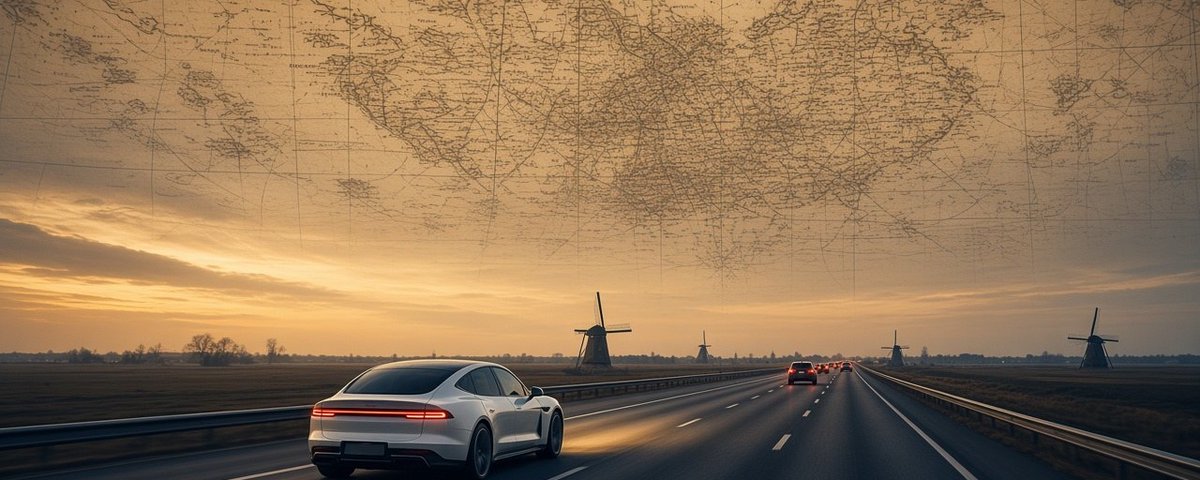
A Dutch traffic jam. The sign says 50, everyone drives 70 to 90, and the Tesla must stick to the sign.
AI tuned by experts, governments and institutions to a made-up truth is far more dangerous than AI anchored to the real one.
Who should tune it: the committee or the road?

1
11
The essay, on Hayek, Harari and Europe's self-driving test: roelsmelt.com/made-up-truth/

1
Building got cheap. Deciding didn't.
I work with a small team of AI agents, and the hour that matters most is the one where none of them is running: I sit with the question until I know what not to build.
Speed is free now. Stillness is the edge.
1
Harari warns that opaque AI will escape human understanding. Hayek showed that experts never held that understanding in the first place. The real risk is AI tuned to a made-up truth instead of the one reality keeps revealing.
9
Roel Smelt retweeted

It's 2031. Here's how it happened.
Wait, let me start from the top. Two days ago, a woman posted the most mind-blowing thing that had happened to her with AI.
Her roof was leaking from the rain. Her AI assistant called an emergency roofing company and talked on the phone with the company's AI agent. An hour later, a guy was on her roof. Fixed. $300.
Two AIs talking to each other so a human would climb onto a roof.
Yesterday, Elon Musk replied with one line: "Optimus will fix it in the future."
Everyone read it as a joke. I read it as the most important economic sentence of the year.
Because in that story, two things are still left: a human on the roof, and $300 changing hands. In the next version, there will be neither.
The robot won't replace the roofer. It will replace the invoice.
So let's jump to 2031 and look back at how it happened.
Late 2027: Optimus arrives in homes. That's what Musk promised at Davos in January, and production started this fall in Fremont. Early buyers pay the price of a car. Everyone else leases.
Then something happens that almost nobody saw coming: living standards explode. Not because wages go up. Because suddenly, every household has a butler.
Month one, it cooks. Month three, it redoes the whole interior. Month six, the garden, the plumbing, the roof. Everything we used to pay someone to do, which is most of the price of any service, drops to almost zero.
2028: entrepreneurs run the numbers. "If one robot can redo my kitchen, fifty robots can run a factory."
Micro-factories pop up in every town. Furniture, clothes, spare parts, food from vertical farms. Made a few miles away, delivered the same day. No container from Shenzhen, no six weeks at sea, no five middlemen.
Then robots start building robots. That's when the curve breaks loose.
2029: deflation. Prices fall every month.
For a household, it's paradise. For a central bank, it's the apocalypse.
Their entire model runs on 2% inflation and debt. In a world where real prices drop 15% a year, public debt becomes impossible to carry. They print to push prices back up. It doesn't work: productivity moves faster than the printing press.
And the state discovers the real problem. Its revenue depends on labor and consumption. When labor disappears from production and prices collapse, the tax base evaporates.
Knee-jerk reflex: tax the robots. Bill Gates was already pitching it in 2017. Brussels rolls out a regulation, licenses, quotas.
Too late. You can't tax a world that no longer needs you.
Nobody stages a revolution. People secede through abundance.
2030: the return of the city-state.
A town of 50,000 with energy, water, land and a few thousand robots covers most of its own needs. Near self-sufficiency. And residents start asking the question nobody dared to ask: what exactly does the central state do for us?
It redistributes money that's worth less every month. It produces regulations. It funds supranational institutions nobody voted for.
So cities take back control. Security, schools, healthcare, run locally, competing with each other. A badly run city loses its residents in a single season.
We've seen this movie before. Athens. Venice. Florence. The Hanseatic League. Europe's most creative eras were born from cities competing with each other. Joel Mokyr, 2025 Nobel laureate, showed it: because Europe was fragmented, a thinker exiled from one kingdom found refuge in the next, and no one could ever crush innovation everywhere at once.
2031: money.
In 1976, Hayek published "Denationalisation of Money": money doesn't have to be a state monopoly. He was right. He just didn't go far enough.
Money is a tool for coordinating scarcity. When almost nothing is scarce anymore, the tool loses its purpose.
What stays scarce: land, energy, raw materials, talent, attention. Cities trade with each other on those. Energy for ore, compute for know-how. Everything else is free, or close to it.
The euro still exists. So does the dollar. Like the fax machine. The digital euro launched right when the euro stopped mattering.
And the supranational technocracies discovered their power had never rested on legitimacy. It rested on control of the tap: subsidies, regulations, debt. When the tap controls nothing, nobody listens.
November 2031. It's raining. Your roof is leaking.
You don't call anyone. No AI negotiates with another AI. Nobody bills you $300.
Your robot climbs onto the roof.
Fiction? Maybe. But every building block already exists, or is coming off a production line right now.
Power has always belonged to whoever controlled scarcity.
Abundance has no master.


Yes, this is also my experience. It is dangerous and I have to speed up to avoid to slow driving.
This happens when regulators do not understand that it is normal in situations to drive faster than allowed. The rules and laws are there for safety and as I driver I have to use my own insight to adapt.
This is what FSD did perfectly. It was not speeding for the sake of driving faster than allowed. It used the extra speed to keep it safe.
