

World Affairs Editor, Times of London. Baghdad, Jerusalem, Beirut, Delhi, Washington, Jakarta, Phnom Penh. "And though she be but little, she is fierce."
United Kingdom
Joined December 2008
- Tweets537
- Following2.5K
- Followers28.5K
- Likes890





Catherine Philp retweeted

Gadi Eizenkot, this evening, shortly after the reports, approved by Israeli censorship, that Chief of Staff Zamir has been standing firm andblocking Netanyahu from intentionally provoking a war before the elections.
"Netanyahu, my eyes are on you.
The man on whose watch the greatest disaster in the nation’s history occurred refuses to understand that Israel’s security is not a political bargaining chip, the lives of Israeli citizens and IDF soldiers are not abandoned property, and the State of Israel is not his private property.
I have full confidence in Chief of Staff Eyal Zamir and the IDF commanders who act out of professional responsibility and absolute commitment to the state's security. We will not allow the IDF to be turned into a tool in Netanyahu’s survival campaign.
I warn Netanyahu: Do not dare to place your political interests above the security of the state.
Holding the elections on schedule and completing the democratic process is a central component of Israel's national resilience. We will not allow you to jeopardize Israel’s future in order to preserve your rule.
In two days, the citizens of Israel will put an end to the reign of recklessness and restore responsibility, statesmanship, and Israel’s security.
I give my word.

נתניהו, העיניים שלי עליך.
האיש שבמשמרת שלו התרחש האסון הגדול בתולדות המדינה מסרב להבין כי ביטחון ישראל אינו כלי משחק פוליטי, חיי אזרחי ישראל וחיילי צה״ל אינם הפקר, ומדינת ישראל אינה רכושו הפרטי.
אני נותן אמון מלא ברמטכ״ל אייל זמיר ובמפקדי צה״ל הפועלים מתוך אחריות מקצועית ומחויבות מוחלטת לביטחון המדינה. לא נאפשר להפוך את צה״ל לכלי שרת בקמפיין ההישרדות של נתניהו.
אני מזהיר את נתניהו: אל תעז להעמיד את האינטרסים הפוליטיים שלך מעל ביטחון המדינה.
קיום הבחירות במועדן והשלמת ההליך הדמוקרטי זה רכיב מרכזי בחוסן הלאומי של ישראל, לא ניתן לך לסכן את עתיד ישראל כדי לשמר את שלטונך.
בעוד יומיים אזרחי ישראל ישימו סוף לשלטון ההפקרות ויחזירו את האחריות, הממלכתיות וביטחון ישראל.
אני מתחייב.
Catherine Philp retweeted

💥#BREAKING: @YaronAvraham reports that PM Netanyahu & IDF Chief of Staff Gen. Eyal Zamir are in an unprecedented confrontation regarding Iran. Zamir fears that on election eve Netanyahu is driving towards a scenario of immediate, dramatic escalation. *Authorized by IDF censor.*
Catherine Philp retweeted

BREAKING: Ansarallah (Houthis) have CONFIRMED hits on King Khalid Airport in Riyadh, Saudi Arabia.
This is truly extraordinary to see Ansarallah be able to land successful and accurate strikes on the Saudi CAPITAL, and at the King Khalid Airport.
The last 24 hours has seen enormous escalation in the Ansarallah/Saudi War.
Just yesterday, Saudi crossed what has now become a clear Ansarallah red line by launching one-way attack drones at the Yemeni capital of Sanaa. In response, Ansarallah issued an unambiguous threat:
We’re coming for Riyadh.
But not only did they SUCCESSFULLY strike Riyadh today, but they also hit Jeddah, Yanbu, Jizan, Abha, and more.
Ansarallah has backed up their word. Now the question is:
Does MBS continue to escalate this war?




Catherine Philp retweeted

I appreciate that Dolly Parton played no part in "dress respectability" and, by her own account, modeled her aesthetic after a town "tramp," who she thought was beautiful. She separated aesthetics from character and understood "classiness" to be about how you treat people.
Catherine Philp retweeted

Remembering the late, great Dolly, who brought joy, comfort and inspiration to so many - including the millions of children given free books through her Imagination Library. We will always ❤️ you.
Catherine Philp retweeted

The WSJ is an astoundingly good paper. Its editorial pages, run separately, are very conservative and have cachet.
One way to strip them of that pretty quickly is to suggest any piece could have been generated by the same algorithms that create unicorn pictures on WhatApp's AI.


Catherine Philp retweeted

"For all you guys who said that Nolan's not a conservative, here he is admitting he doesn't enjoy watching women get tortured to death. What kind of a conservative doesn't enjoy that?"


Catherine Philp retweeted

The Guardian has now been told by three sources that in March 2024 Nigel Farage told senior Reform insiders that if he were to resume leadership of the party, and run to be an MP, he would need to be compensated for the financial harm of giving up his City career to spend 20 years campaigning and standing for election again.
Insiders and donors were insistent that Farage needed to return and to take Reform into not only a 2024 general election but a 2029 one, too. He argued that would cost him £5m, the sources said.
No mention was made of security costs in the discussions about needing to replace lost earnings, sources said.

Excl: Farage said he would need ‘a million a year’ to stand as MP in 2024
theguardian.com/politics/202…

Catherine Philp retweeted
Tice, via lawyers, threatened to injunct the Guardian to stop it publishing these details.
Without responding to any of the questions put to him, Tice then appears to have shared the allegations contained in the Guardian’s requests for comment with the Telegraph, which wrote them up without credit or contact ahead of publication.
Exclusive: More Reform UK transactions worth millions reported to National Crime Agency
theguardian.com/politics/202…



Catherine Philp retweeted
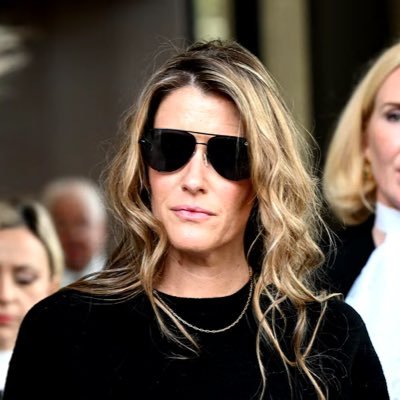
“Miss Grover left the court without making any comment. She later posted on social media saying she was “absolutely devastated” & that women were being discriminated against.
… I also said, “we will all wake up tomorrow & men will still not be women.” An important point.

Catherine Philp retweeted

#Iran elevates its partnership with #China
🔹Mohammad Bagher Ghalibaf, the speaker of Iran’s parliament, has reportedly been appointed as the country’s special representative for China affairs.
🔹According to Iranian reports, the appointment was made at the suggestion of the president and approved by Supreme Leader Mojtaba Khamenei.
🔹The exact procedure is less important than the appointment itself, because Ghalibaf is widely regarded as more influential than the president and is considered part of the Islamic Republic’s core decision-making circle.
🔹The appointment clearly reflects the Islamic Republic’s strategic orientation in the post-war era and its determination to deepen ties with non-Western powers, particularly China.
🔹For years, there has been criticism within Iran’s strategic community that Tehran has failed to fully capitalize on the potential of its relationship with Beijing.
🔹One argument frequently advanced by analysts is that China has been prepared to elevate cooperation, but that it requires a clearly empowered interlocutor capable of managing the relationship at the highest level. In this view, the Foreign Ministry has not been successful in extracting the full strategic potential of ties with China.
🔹Iran has previously appointed special representatives for China affairs. Ali Larijani, for example, played a central role in negotiating and finalizing the 25-year strategic partnership agreement between Tehran and Beijing.
🔹However, given Ghalibaf’s standing within the Islamic Republic’s post-war political structure, this latest appointment carries much greater significance. In effect, a figure from the very top tier of the system is now directly overseeing relations with China.
🔹The timing is also notable, as the appointment comes shortly after Trump’s visit to China, which appears not to have produced any concrete results in terms of convincing Beijing to pressure Iran into altering its broader strategic course. On the Iranian side, China’s criticism of the U.S.-backed draft resolution at the U.N. Security Council was viewed as a particularly positive development.
🔹Overall, there is a growing sense in Tehran that conditions are now favorable for a further expansion of ties with China. At the same time, this development points to the continued marginalization of Iran’s formal diplomatic apparatus – especially the Foreign Ministry – in the management of key strategic relationships.
Catherine Philp retweeted
A non-aggression pact between #Iran and Saudi Arabia?
🔹The Financial Times report on Saudi Arabia’s proposal for a regional “non-aggression pact” between Iran and neighboring states is not merely a temporary diplomatic initiative. Rather, it signals Riyadh’s attempt to redefine the Middle East’s security architecture in the aftermath of the U.S./Israeli war on Iran.
🔹The significance of this idea lies less in the pact itself – after all, this is not the first time such an idea is being discussed – than in the strategic logic behind it. Saudi Arabia appears to have concluded that the perpetual cycle of deterrence, limited strikes, and proxy warfare can no longer be managed solely through reliance on the American security umbrella.
🔹The Saudis’ reference to the 1970s “Helsinki process” is also far from accidental. That model was designed precisely to manage competition between hostile blocs, not to fully resolve ideological and geopolitical disputes. In other words, the objective is not to eliminate tensions, but to contain them.
🔹In effect, Riyadh now seems to be moving toward a form of implicit acceptance of a new regional balance of power, in which Iran, despite the heavy costs of the recent war, remains an indispensable actor in the region’s security equations.
🔹This shift also reflects a broader change in the Saudi conception of “stability.” For years, many Arab states defined regional security in terms of containing or weakening Iran’s regional influence. Now, however, the primary priority appears to be preventing Iran-Israel conflict from escalating into a permanent regional war.
🔹From this perspective, the proposal for a non-aggression pact should be understood as part of the broader trend toward the “regionalization” of Persian Gulf security. This process began with the China-mediated Iran-Saudi rapprochement in 2023 and may now enter a more complex phase, i.e., the establishment of rules of conduct for crisis management.
🔹At the same time, comparisons between the Middle East and Cold War-era Europe have serious limitations. Unlike Europe, the region lacks durable institutional structures, clear deterrence lines, and even a minimal consensus over the foundations of a regional security order. Moreover, the role of non-state actors and multilayered conflicts makes the equation far more complex.
🔹More importantly, any such initiative would remain inherently fragile without some degree of mutual understanding between Iran and Israel regarding the acceptable limits of escalation. Any new direct confrontation could easily destroy the entire process of regional de-escalation.
🔹At the same time, the proposal itself demonstrates that the Arab states of the Persian Gulf are increasingly concerned about the spillover of Iran-Israel rivalry into their energy infrastructure, trade corridors, and economic development projects. This concern has now become a major driver of regional policy.
🔹For this reason, even if the idea of a “non-aggression pact” never materializes into a formal agreement, the very fact that it has been proposed carries an important message, that a significant part of the Arab world is no longer seeking to exclude Iran from the region’s security equations, but rather to make patterns of interaction with Tehran more predictable.
Catherine Philp retweeted

There it is at last, the admission that it was Ukraine’s wish to join the EU that led Putin to invade - nothing to do with NATO. Always blindingly obvious but denied for years by anti-European Putin apologists in Europe including Farage and Johnson in Britain
