
Submariner, veteran of 1971 war, IPKF (1989), Flag Officer Submarines, Fleet Commander, DGICG, CINCAN & FOC-in-C (ENC). Member USI, IIC, IDSA & NMF.
Gurgaon, India
Joined September 2009
- Tweets16K
- Following427
- Followers6.1K
- Likes38.8K



Vice Admiral Arun Kumar Singh retweeted

Salute Capt Smit Machchhar for his courage, presence of mind & determination in the face of danger
Despite serious injuries, he fought valiantly to protect 174 lives & avert a major tragedy
Awarded First Class Order of Zayed II by UAE President Sheikh Mohamed bin Zayed Al Nahyan

Vice Admiral Arun Kumar Singh retweeted

Chinese PLA Command & Control in Tibet and Xinjiang
newreckk.substack.com/p/comm…
Vice Admiral Arun Kumar Singh retweeted
Wings over Ganges – Spectacular Aerial Display –
@IAF_MCC Blending Operational Prowess, Spirituality, and Ancient History
@Chopsyturvey
@AirPowerAsia
airpowerasia.com/2026/10/26/…

Vice Admiral Arun Kumar Singh retweeted
Why the World is Wooing India the “Refining Superpower”
@Chopsyturvey
@AirPowerAsia
airpowerasia.com/2026/10/24/…

Vice Admiral Arun Kumar Singh retweeted
Indian Pilot Captain Smit Machchhar Shines on BURJ KHALIFA
United Arab Emirates honored him in a Unique Way.
Vice Admiral Arun Kumar Singh retweeted

A great read, this recollection by IAF Foxbat jocks. Of a mysterious and unique aircraft that flew into history a while back.
The IAF vacated that space, the stratosphere. Satellites now do the job from orbit.
But "near space", will see a large number of platforms coming South from over the Himalayas. Lighter Than Air, balloon based systems, solar powered ultra long endurance HAPS UAVs, hypersonic/ high supersonic scramjet platforms, and hybrid engine based trans-domain spaceplanes that will seamlessly switch either side of the Karman line.
Perhaps the next big question that can be asked of anyone and everyone in aerospace research or even operations in India is, what is India doing about it?
Both, the capability to operate in near space, and the capability to deny it to the adversary.

Shiv and I loved working on this story pegged to the latest episode of #CtrlAltDefence - the stories of the IAF's MiG-25 spy planes are now out and they are incredible. @ShivAroor
The Jet That Wasn't There: What Really Happened Over Islamabad In 1997
ndtv.com/india-news/mig-25-k…

Vice Admiral Arun Kumar Singh retweeted
What a US-China thaw would mean for India. When the leaders of the world’s two largest economies meet, the whole world watches the theatrics, the body language, and the substance. In New Delhi’s eyes, the recent Xi–Trump summit was about much more than trade and tariffs.
@Chopsyturvey
@RT_com
rt.com/india/646677-india-we…

Vice Admiral Arun Kumar Singh retweeted
Prime Minister Benjamin Netanyahu in a conversation with Captain Smit Machchhar:
Details of what happened!

Vice Admiral Arun Kumar Singh retweeted
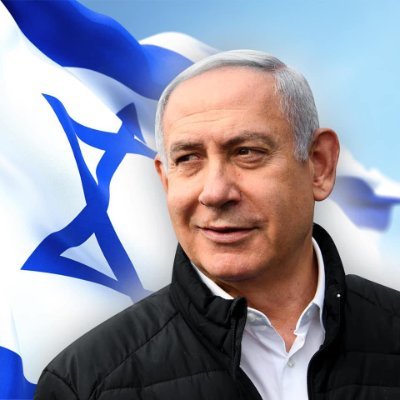
My salute to the Indian pilot Captain Smit Machchhar for his extraordinary bravery.
Despite being stabbed and seriously injured, he fought back, resisted, opened the cockpit door, and enabled passengers and crew to overpower the attacker — preventing a catastrophic mid-air disaster.
He saved the lives of 174 people, including Israeli citizens and other nationals.
I wish Captain Machchhar a speedy and full recovery.
He is a true hero.
Vice Admiral Arun Kumar Singh retweeted
Exercise Tarang Shakti 2026 – Largest Multinational Exercise in Asia.
IAF To Drill Against Mock J-20 & JF-10C — With U.S. F-35, French Rafale, and UAE F 16 Jets.
@Chopsyturvey
@THEEURASIATIMES
eurasiantimes.com/iaf-to-dri…

Vice Admiral Arun Kumar Singh retweeted
US F-35 fighters to debut in Indian multinational air exercise defensenews.com/global/asia-…

Vice Admiral Arun Kumar Singh retweeted

India welcomes the commencement of the QUAD-at-Sea Ship Observer Mission, announced at the 11th Quad Foreign Ministers’ Meeting in New Delhi on 26 May 2026.
@IndiaCoastGuard Ship Shaunak has sailed from Chennai with sea riders from all four Quad countries.
The mission strengthens maritime cooperation and interoperability, reflecting the Quad’s shared commitment to a free and open Indo-Pacific.


Vice Admiral Arun Kumar Singh retweeted

Sailing Together , Charting Maritime Cooperation!
@IndiaCoastGuard Ship Shaunak sailed from #Chennai on 25 September 2026 for the QUAD‑at‑Sea Ship Observer Mission with six sea riders from member nations.
Marking an important step in advancing maritime cooperation and interoperability, this strategic initiative reflects a shared commitment of #India, #Australia, #Japan and the #UnitedStates to uphold a free, open, inclusive and rule-based maritime order in the Indo-Pacific region.
This mission strongly underscores India’s #MAHASAGAR (Mutual and Holistic Advancement for Security and Growth Across Regions) vision, reinforcing ICG’s steadfast dedication to collective engagement, professional linkages and a highly secure maritime environment.
#ICG #MaritimeCooperation #QUADatSea #MaritimeMissions


Vice Admiral Arun Kumar Singh retweeted

As the article correctly notes, the real issue is the "kill chain", ie how a process of obtaining and processing targeting data leading to an authorisation to engage, can be implemented with UUVs.
Physical limitations inherent to undersea warfare remain an unresolved challenge.

UPDATE: The 🇺🇸USN has confirmed the XV Excalibur fired a Mk 48 torpedo during an AUKUS Pillar II trial which took place on 13th September (Operation BROADSWORD).
Official imagery also confirmed our speculation that the torpedo was carried in a cradle beneath Excalibur and that the trial took place at BUTEC.
navylookout.com/royal-navys-…
H/T @USNavyCNO

Vice Admiral Arun Kumar Singh retweeted

Torpedo Fired From Uncrewed Submarine For The First Time By U.S., U.K.
Uncrewed underwater vehicles that can launch attacks on other vessels open up new tactical possibilities and could help fill gaps in traditional submarine coverage.
twz.com/sea/torpedo-fired-fr…

Vice Admiral Arun Kumar Singh retweeted
Chinese Next-Generation Submarine Developments Spotted In New Satellite Imagery
A Chinese submarine now taking shape at Bohai Shipyard has a number of significant features and offers new insights into China's undersea ambitions.
twz.com/sea/chinese-next-gen…

Vice Admiral Arun Kumar Singh retweeted

Rest in Peace Sir.
Your passing is tragic beyond words.
Flight Lieutenant Alfred Cooke (r) was in our studio on Wednesday, visiting from Australia. The one hour interview which airs on #CtrlAltDefence this evening is the finest description of one of the most legendary dogfights of the jet era - Alfred took on 4 Pakistani Sabres, downing two during the 1965 war over Kalaikunda. He was lucid, strong, passionate as always in what he said. We sincerely hope this account - an extraordinarily detailed one - goes a long way towards reopening the file on whether he should be honoured with a Param Vir Chakra. I can't think of a more fit case.


RIP Alfred: the Bull who Cooked the PAF's Goose
I have long believed that if the Indian Air Force had awarded a Param Vir Chakra for its actions in the 1965 war, it should have gone to Flight Lieutenant Alfred Tyrone Cooke. He was awarded the Vir Chakra for his action over Kalaikunda on 7 Sep 1965. On 18 Sep 2026, sixty-one years later, Alfred took off for Valhalla in Delhi, barely a day before No. 14 Squadron, the Bulls, was due to celebrate its Platinum Jubilee. The timing is difficult to ignore for a man who remained closely attached to a Squadron he had left more than half a century ago.
The broad outlines of Cooke's action over Kalaikunda are well known. He was the tall, lanky Hunter pilot of 14 Squadron who, on 7 Sep 1965, found himself in the middle of the second PAF raid on the airfield. Cooke and his wingman, Flying Officer Subodh Chandra Mamgain, were on combat air patrol when they were directed towards the raiders. Four Sabres of the PAF's own No. 14 Squadron were involved in that second attack, three at low level over the airfield and one above them. Cooke went down after the three.
Squadron Leader @joe_sameer reconstructed the full action from Cooke's own account, gun-camera evidence and Pakistani sources. Cooke shot down the Sabre flown by Flying Officer Afzal Khan, badly damaged Flight Lieutenant Tariq Habeeb's aircraft, engaged Flight Lieutenant Haleem's Sabre and then, having exhausted his ammunition, went after the remaining aircraft when it was engaged with Mamgain. The official record credited him with one confirmed kill. What is beyond argument is that his gun camera recorded him engaging several different Sabres, and that he continued the fight after his guns were empty. His Vir Chakra citation records him getting into position behind another enemy aircraft after his ammunition ran out and continuing to keep it on the run.
Cooke's Hunter returned with vegetation lodged under the aircraft. Years later, when a painting of the combat was shown to him, Alfred's correction was simple: the aeroplane was too high. His wingtip, he said, had been about six to ten feet above the ground.
Cooke himself could be abrupt. Those who knew him remembered high standards and little patience for people who did not meet them. He had great confidence in his own flying and strong views on how an aeroplane should be flown. He also remembered precisely who had taught him much of it.
That man was Squadron Leader O. N. “Piloo” Kacker. Cooke credited Kacker's intensive low-level combat training before the war with giving him the confidence to manoeuvre a Hunter at the heights to which the Kalaikunda fight eventually descended.
His interest in flying began much earlier. He grew up in Agra during the Second World War, with Hurricanes, Spitfires and Mustangs operating in the skies around him, and by his own recollection wanted from a young age to become a fighter pilot. He was educated at La Martiniere College, Lucknow, a school that produced a remarkable number of IAF fighter pilots and war veterans. In 2015, he returned there along with Denzil Keelor when the Air Chief honoured the school's veterans of the 1965 war.
Cooke was commissioned on 19 Dec 1961 with the 80th Pilots Course, and his entire commissioned career lasted only seven years. By 1967 he had decided to migrate and had put in his papers. He had originally been selected among the pilots to convert to the Su-7; once his decision to leave was known, Flight Lieutenant O. J. D'Sena took his place. Cooke finally left the Air Force in December 1968 and settled in Australia.
A seven-year career should ordinarily leave only a modest footprint in a Service's history. Alfred managed the opposite. He left as a Flight Lieutenant and remained identifiable throughout the rest of his life simply as Alfred Cooke of 14 Squadron. No later rank displaced it.
Australia became home, and he built a life there with his family, but his Indian and Air Force connections remained strong. In April 2023, Alfred led the Indian Army, Navy and Air Force veterans at the ANZAC Day march in Brisbane. It rained, but the march went on. More than half a century after leaving the IAF, he was still putting on his medals and walking at the head of a veterans' contingent.
Away from flying, Alfred loved dancing. Even in his later years, he went every week to a sports club for its weekly dance. When Deb Gohain contacted him to reconstruct the Kalaikunda combat for a painting, Alfred quickly dispensed with “Sir”; he was simply Alfred. The two spent hours getting the relative positions of the Hunter and Sabres right and remained friends afterwards.
I continue to find the award difficult to explain. The case for a Param Vir Chakra does not require retrospective embellishment. The official record confirms one kill and records that Cooke continued to pursue the enemy after his ammunition was exhausted. The gun-camera evidence and subsequent reconstruction tell us considerably more. In my view, what Alfred Cooke did that morning merited the Param Vir Chakra.
In 2015, on the fiftieth anniversary of the war, Alfred returned to India and handed his Vir Chakra to No. 14 Squadron. “My Vir Chakra belongs to the squadron,” he said. He later tried to have the monthly Jangi Inam that came with it transferred to the Bulls as well. The medal made it back; bureaucracy defeated the money.
Tomorrow, No. 14 Squadron turns seventy-five. The Param Vir Chakra never came. The Vir Chakra Alfred did receive has been back with the Bulls for eleven years.
#IAFHistory @IAF_MCC


Vice Admiral Arun Kumar Singh retweeted

On this day in 1955, the world changed and almost nobody knew it. A Soviet submarine surfaced in the cold waters of the White Sea, raised a single missile from a tube built into its hull, and fired it into the sky. It was the first time in history a ballistic missile had ever been launched from a submarine, and it opened the door to the most terrifying weapon system ever built.
The submarine was a converted diesel-electric boat, one of the Soviet Zulu class, fitted with a launch tube running down through the conning tower. The missile was an R-11FM, a naval version of the same Scud family that would become infamous decades later. On September 16 the crew brought the boat to the surface, elevated the missile, and sent it roaring away downrange in a successful test.
By itself, one missile from a surfaced submarine does not sound like much. But think about what it meant. Until that moment, the great nuclear weapons of the new atomic age had to be delivered by bombers or fired from fixed launch sites, all of which could be found, watched, and destroyed. A submarine was different. A submarine could vanish beneath the ocean and hide there for weeks, anywhere in the world, impossible to track and impossible to destroy in a first strike. Put a nuclear missile inside one, and you created a weapon that could never be wiped out before it struck back.
That single test in 1955 was the seed of the ballistic missile submarine, the silent boats that both superpowers would soon send prowling the deep oceans carrying enough firepower to end civilizations. Within a few years the Soviets and the Americans were racing to build fleets of them, each hidden submarine a guarantee of retaliation that made a surprise knockout blow impossible. It became the most survivable leg of the nuclear triad and one of the coldest pillars of the Cold War standoff that held for the next half century.
It all traced back to this day in 1955, to one submarine, one missile, and one launch in the White Sea that quietly rewrote the rules of war and survival for the entire nuclear age.

Vice Admiral Arun Kumar Singh retweeted

Next threat to a military drone may not be a missile,jammer or hacker—it could be hidden inside a component.
It may be labelled “indigenous” while its makers remain unaware of a foreign component’s capabilities.India needs trusted systems,not just indigenous assembly @IndiaToday

