

Organometallic chemist. Group leader at Nesmeyanov Institute, Russian Academy of Sciences. Make science, not war.
Joined September 2013
- Tweets534
- Following178
- Followers643
- Likes3.1K





Pinned Tweet
Дописал наконец вторую версию своего учебника по металлоорганической химии и катализу. Он стал на 32 страницы толще, но остался кратким и легкоусвояемым. Ссылка для скачивания: disk.yandex.ru/i/6JDbo0RUK66…

Dmitry Perekalin retweeted

urushiol is the poison in poison oak. it covalently modifies proteins which get displayed on MHC and lead to a T cell autoimmune response. wild.

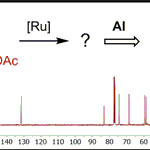
AI chatbots can help solve unknown structures from NMR spectra alone. In this real case, the AI proved to be “smarter” than we were: chemrxiv.org/doi/full/10.264…

Dmitry Perekalin retweeted

We are happy to share our latest work on the cross-coupling of ketones and alkenes published today in
@J_A_C_S! This work enables the use of these two ubiquitous building blocks to create Csp3–Csp3 bonds as alternative to the Grignard reaction (1/3):
pubs.acs.org/doi/10.1021/jac…
Dmitry Perekalin retweeted

What's the central challenge for AI in chemistry? Chemists compress the immensity of chemical space into mechanisms, functional groups, and reactivity principles — simple, imperfect, and remarkably transferable. ML compresses it too, but into predictions, not understanding...

Why does chemistry still need chemists in the age of AI? Our new Perspective “Chemical Knowledge as Compression” with @WenZhu_Lab, Wei Yang, and @IAlabugin is now out in Chemistry – A European Journal:
doi.org/10.1002/chem.71396

Dmitry Perekalin retweeted

Our recent work on aliphatic CO-to-N atom swap enabled by NAHA chemistry, now online in @ScienceMagazine ! Congratulations to Zining, Zhehan and @RongYehhh !
science.org/doi/10.1126/scie…


Dmitry Perekalin retweeted

I currently have three papers in review at "high impact" journals.
One of them has been sitting there for two years. In that time my daughter was born and learned how to walk, but apparently publishing a PDF was still not possible for me. For another one, after four months in review the editor told me they cannot find a second reviewer and asked me to suggest more reviewers. A third one sent me a message in 2026 saying the PDF I uploaded was larger than 10 MB and that I should please reupload everything to make the file smaller.
All of this just to eventually pay between 7,000 and 12,000 USD per paper so someone can officially approve that the science we do is "legitimate". Reminder: not a single reviewer will be compensated here.
I still don't understand how we as scientists can collectively be so smart when doing science and still tolerate a system like this when it comes to sharing our findings. We should move to preprints plus open review, whether human or AI, asap. So frustrated about it.
I'd suggest sharing your work on bioRxiv or medRxiv, reading and reviewing preprints when you can, and highlighting good research, especially if it is still a preprint. Try platforms like ResearchHub (that pay for peer review) and experiment with AI based reviewers for faster feedback.
Instead I read this as a proposed "revolutionary" measure:

Dmitry Perekalin retweeted

Our postdoc @Willi_Amberg built @SynStrategy a learning tool that categorizes 500+ reactions by functional group with 400+ total synthesis examples. If you’re into #OrgChem, check it out (it’s free)!
iOS: apps.apple.com/de/app/synstr…
Android: play.google.com/store/apps/d…
#ChemTwitter


Dmitry Perekalin retweeted

High-impact papers are crucial in academia.
Like it or not.
As a PhD student, you quickly learn that such papers are cool. They make advisors happy. Everyone admires you.
During a postdoc, high-IF papers are not just cool. They are mandatory for a PI job. They give you awards and interviews.
During the tenure track, they often become your ticket to a permanent position. Many young PIs are fighting to get their papers published in Nature/Science/Cell. It’s like getting a micro-Nobel prize. Many feel relaxed only when they publish in Nature (their tenure is finally safe!).
But:
Because such papers require a lot of time (often years), you live in constant uncertainty.
You HOPE you will get it. You spend evenings at work, you look for stronger results, and you’re battling through a battalion of failed experiments.
Then you submit it…
Then:
Stage 1. Editors reject 9/10 papers. Yours might be among them.
Stage 2. The paper goes to reviewers but they are brutal. For some reason (and you know why!) they just don’t want to see your paper in Nature. Many papers get rejected in the first round.
Stage 3. If reviewers can’t come up with reasons to kick you out immediately, they will request a lot of new experiments and changes to your work. Obviously, that will take months (if not years). Of course, some reviewers are great and genuinely help improve your work. But they are not as common as you might hope.
Stage 4. After addressing all problems and submitting it again, you will likely see some reviewers still resisting. They can simply reject your paper because they didn’t like how you addressed their requests. Or they will find new flaws and will get you to do another round of revision. (If you’re lucky, they will accept the paper.)
Stage 5. If reviewers are divided between “accept” and “reject”, the editors may send your paper to additional reviewers. That will start another cycle of hell with a likely negative outcome.
Stage 6. If you are rejected, congratulations - you’ve just wasted months on nothing. But because you need that paper, you resubmit it to another high-IF journal, and it all starts with Stage 1.
So, it’s like gambling.
You gamble your career on this publication.
During those 6–24 months of fighting with reviewers and editors, someone else may publish the same work. Then you’re screwed.
Or your paper is likely not accepted in any high-IF journal. After loosing a year or more on trying to push it through, you will have to publish it in a low-IF journal.
Is it a healthy game?
No. You get exhausted. Anxiety skyrockets.
But unfortunately that’s how academia works. I’ve been through this myself. Most of my colleagues have the same experience. We definitely despise it.
And the worst part of it?
We’ve started to see it as completely normal.


All news feed: Merry Christmas, Happy New Year!
ACS email: This is a friendly reminder that your review is due in 5 days.

Gemini 3 can decipher NMR spectra of organic molecules surprisingly well. Far better than most students and definitely much faster. Grok can do it too, but it uses literature search, so it is not a fair comparison.

I just discovered that there is a paper on this subject: chemrxiv.org/engage/chemrxiv…
However, they did not test Gemini 3, which is far better than any other major LLM in my experience.
Ok. This one very impressive too. Catalyzed by rather simple Sc(OTf)3.
pubs.acs.org/doi/10.1021/jac…



One of the most impressive reaction I have seen this year!
pubs.acs.org/doi/10.1021/jac…

Dmitry Perekalin retweeted
Just mapped out all 2025 FDA small-molecule approvals — and the trends are striking.
Oncology dominates again, but a few companies really stood out:
• Bayer: 2 approvals
• Boehringer Ingelheim: 2
• Novartis: 2
• Sanofi: 2
(Poster below 👇)
#FDA #DrugDiscovery #Biotech #Oncology
