

❤️🌍✝️🩸⬆️👑 The atonement is universal and complete. Salvation occurs when one is placed in Christ and his resurrection life through faith. #LetGodBeGood
Universal Atonement is True
Joined September 2022
- Tweets5K
- Following159
- Followers958
- Likes7K
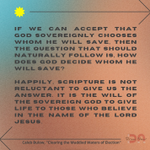


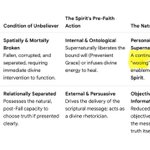




Doctrinal Possum retweeted

I just listened to these two Calvinists defending @gui_bignon_theo against @DineshDSouza. Here is a summary of their answer and my rebuttal:
youtube.com/live/4IsHtJd5XGc…
1) Their answer to “Does God make you do it” (regarding sin):
No. God does not coerce or force you to sin against your will. You do the sinful act because you want to, according to your own desires. God determines the desires, brain states, circumstances, and the act itself, but because you willingly act on those desires, the act is yours and you remain fully responsible. God has righteous intent behind what He determines, so He is not the moral author of the sin. The distinction is between ultimate determination (with good purposes) and proximate willing of the evil (by the creature).
I believe that is a fair representation of their answer. Tell me if you disagree. 🤷♂️
2) Why this answer is insufficient within the compatibilistic framework:
Compatibilism reduces “freedom” to acting according to one’s strongest desires without external coercion. Once God exhaustively determines the desires themselves (the internal states that produce the choice), the “I wanted to” is fully determined by God’s decree. There are no alternative possibillities; the outcome could not have been otherwise and the source of the evil desire is the divine decree.
The distinction between “God makes you do it” and “God determines your desires so that you freely do it” collapses into a verbal distinction. It’s semantics. God still originates the sinful inclination and ensures the act by controlling the very will that “chooses” it. This leaves the creature as the proximate instrument of a predetermined outcome rather than the true origin of the sin, which fails to preserve genuine secondary causation or the force of texts such as 1 John 2:16 and James 1:13–14 that locate the source of temptation and sin in the world or the creature’s own desires, not in a divine causal decree. The framework therefore does not escape the implication that God is the ultimate source of the sinful act it seeks to avoid.

Doctrinal Possum retweeted

A lot of division between Calvinists/Arminians/Provisionists can be laid at the feet of teachers in past decades who told their congregation that those who disagree with us worship their own <fill in the blank> or some other disingenuous take.
Doctrinal Possum retweeted

Salvation is of the Lord (Jonah 2:9), but Jonah cried out to God for salvation (2:2, 2:7) and idolaters forsake the mercy that could be theirs (2:8). The Ninevites understood that repentance does not obligate God to forgive: Who knows? God may turn and relent and turn from his fierce anger (3:9). Believers would perish unless God chooses to save them. Salvation is of the Lord.

It blows my mind that people have such contempt for those of us who believe salvation is of the Lord.
We believe He chose us before the foundation of the world, has mercy on whom He wills, Christ laid down His life for His sheep, the Spirit gives life to the spiritually dead, faith is a gift of God, all that the Father gives to Christ will come to Him, and He who began a good work in us will bring it to completion.
They can’t stand that God does all that He pleases, declares the end from the beginning, and works all things according to the counsel of His will. They need something to boast in themselves, even if it’s as simple as them saying “I chose to believe!”
They try to protect God from what He’s revealed about Himself while making up a god they think should do things a certain way.
Let me remind you.. His ways are not our ways. All the inhabitants of the earth are counted as nothing before Him, and none can stay His hand or say to Him, “What have you done?”.
Salvation is of the Lord. He gets all the glory. God doesn’t share the spotlight with anyone
Doctrinal Possum retweeted

The death of Christ was according to the “determinate counsel and foreknowledge of God” (Acts 2:23; Acts 4:27–28). Nobody is disputing that. What Scripture does not say is that God's purpose required Him to irresistibly cause Judas, Pilate, Herod, or any particular sinner to become wicked in order for that purpose to succeed.
You have quietly moved from God determined the event to God causally determined every individual's unbelief necessary to the event. Those are not the same proposition.
Look at Judas carefully. Jesus prayed through the night before choosing the Twelve, and Judas was actually one of the twelve men He chose and “named apostles” (Luke 6:12–16).
Peter does not later describe Judas's apostleship as some theatrical appointment that was never truly his: “For he was numbered with us, and had obtained part of this ministry” (Acts 1:17).
And even more devastatingly: “…this ministry and apostleship, from which Judas by transgression fell” (Acts 1:25).
You cannot fall by transgression from an apostleship you never actually possessed.
Judas had a real calling, a real office, a real ministry and a real place among the Twelve. His betrayal does not prove that God secretly ordained him to unbelief. Scripture says Judas turned aside from what had actually been given to him.
And Saul makes the point almost impossible to evade.
Samuel did not tell Saul, “You were merely a temporary prop until God's real choice, David, arrived.”
He told him: “Thou hast not kept the commandment of the LORD thy God… for now would the LORD have established thy kingdom upon Israel for ever. But now thy kingdom shall not continue” (1 Sam. 13:13–14).
Read the grammar. Would have established. But now shall not continue. Because thou hast not kept what the LORD commanded thee.
God Himself later says concerning Saul, “I regret that I have made Saul king,” and gives the reason: “for he has turned back from following me and has not performed my commandments” (1 Sam. 15:11).
If your theology forces “the LORD would have established thy kingdom… but now” to mean that God never genuinely would have established it at all, perhaps Scripture is not the thing that needs adjusting.
God's sovereign purpose does not depend upon human rebellion, and human rebellion cannot defeat God's sovereign purpose. Those truths are perfectly compatible.
God determined that Christ would give Himself for the sins of the world. That does not mean Judas had to be irresistibly determined to become Judas the betrayer for God to accomplish Calvary.
God is not so fragile that His redemptive purpose requires Him to manufacture somebody's unbelief.
The same God who knew Judas would betray Christ could genuinely appoint Judas an apostle, genuinely hold him responsible for abandoning that apostleship, foreknow his betrayal, incorporate that freely committed wickedness into His redemptive purpose, and still accomplish exactly what He intended. That isn't “Plan B.”
That is a God whose wisdom is so great that no creature's obedience is coerced and no creature's rebellion can overthrow His purpose.
And Acts 2:23 itself refuses to collapse those categories: Christ was delivered according to God's determinate counsel and foreknowledge, yet those who crucified Him did so with “wicked hands.”
God determined the redemption but men committed the wickedness, and God accomplished His purpose through their wickedness without becoming the author of their wickedness.
So yes, God had a plan. What has not been demonstrated is the additional philosophical claim that for God's plan to be certain, Judas had to be causally determined to unbelieve, Pilate had to be causally determined to condemn, and every alternative act of repentance had to be rendered impossible by God. Don't smuggle determinism into the word “determined.”

Do you see it, kids? Read that again. Carefully. Then note:
If Judas or Pilate repented, He could certainly use others in His plans.
See it? Open theism. The Βουλομαχοι cannot avoid it! The church prays, in accordance with OT precedent (Daniel 4, Isa, Psalms), that what took place did so according to the predestining decree of God. But Provisionists? Nope...Judas? Pilate...could have been otherwise. God would just shift plans! Move to Plan B, then Plan C, etc. So the Jews, Romans, Pilate and Herod...could have been plan #3,457 for all we know.
If LF and his boys had walked into the church in Jerusalem to explain to the Apostles how God does not have a decree and what took place in their lives was just one plan amongst many, well, the looks would have been classic, to say the least.


Doctrinal Possum retweeted

I’m going to be super anti-Calvinist and polemical and say:
I believe that Jesus died for literally everyone and that God gives a bona fide offer of salvation to everyone who hears the gospel.
Doctrinal Possum retweeted
Jesus tells a confused teacher, “whoever believes.” Then He keeps talking about the same world He just said God loved: the world under judgment, the world that loved darkness, the world the Son was sent to save, not a relatively small preselected subset of both Jews and Gentiles.
“πᾶς ὁ πιστεύων” is not a secret code for “the elect who were made to believe.” It’s simply “anyone who believes.” It’s universal and inclusive, not particular and exclusive. Changing “whoever” doesn’t change the condition of faith which all are invited to do.
And v.21 doesn’t say God caused some men to come to the light and withheld that from the rest. John already told you why they don’t come: they hate the light because their deeds are evil. That’s choice to trade truth in for lies, not a decreed decision of God. Those who come into the light receive His grace. Vs 21 not a footnote that cancels “whoever believes.”
If the point of the context was “you can’t believe unless God effectually makes you,” Jesus picked a strange way to say it. He put the blame on unbelief. “You do not accept our witness.” “How will you believe?” That’s blaming them, not imply it’s God who decided if you will or won’t believe. It certainly doesn’t hint to the idea that “you were never given the capacity.”
So, citing 3:1–21 doesn’t rescue a reading that has to redefine “world,” “whoever,” and “might be saved” down until they fit your system. The text still says what it says when you leave it in the paragraph.
BTW, even John Calvin agrees in his commentary on John 3:16 that Jesus is using universal terms.


Doctrinal Possum retweeted
This may shock the crowd that calls me an "anti-Calvinist" but I think that Chris is right, here.

Doctrinal Possum retweeted

Does one need to be smarter, more sensible, or more spiritually inclined in order to believe? If no, why even ask?
Doctrinal Possum retweeted

You'll need to read the phrases in their syntax and context, rather than in a flat way.
Text and context always have to inform our understanding.
1 John 2:2 has "our" and "the whole world". This is expansive: John begins with his community, then expands the impact of propitiation to the whole world.
1 John 5:19 has "we" and "the whole world". This is *contrastive*. John begins with his community, then *contrasts* the 'whole world'. The very point of contrastive language is to distinguish two things from another, so the text and context have to inform the way we read it here.
What that means is that... yes, "whole world" is universalising in both cases, but in the first, John is speaking inclusively; in the second, exclusively.
Your error, however, ignores both text and context, and infers "ah! He means Jews and Gentiles!" which actually isn't present in the text here at all. You've imported your framework into the text, where it never existed to begin with.
Doctrinal Possum retweeted
MY FRUSTRATION WITH SOCIAL MEDIA:
I’ve spent years carefully developing a perspective—reading the sources, wrestling with the history, refining the language so it actually says what I mean and doesn’t say what I don’t. The work is public, but it isn’t merely casual.
Then someone who’s absorbed two or three secondhand talking points shows up in my mentions already convinced they know the entire shape of my thought and the hidden motives driving it.
They rarely ask clarifying questions or engage the actual argument I just made. They just announce what “people like me” believe and why my position is really just a spiritual or psychological failure dressed up as theology.
This isn’t ordinary disagreement. Disagreement is normal and often useful. The frustration is being pre-interpreted. My words get treated as data points that must fit a pre-existing narrative about me rather than as statements that might actually mean what they say.
Motives are assigned before evidence is examined. Complexity gets flattened. Nuance is treated as evasion. And the misrepresentation usually travels farther and faster than any correction I can offer.
What makes it especially wearing is the asymmetry. I’ve done the slow work of trying to be precise about God, Scripture, and human responsibility. The person jumping in has usually done almost none of that work regarding my position, yet speaks with total confidence. So I end up spending energy correcting caricatures of myself instead of advancing the actual conversation.
It’s the peculiar exhaustion of being treated as a known quantity by people who have never actually taken the time to know you.
Doctrinal Possum retweeted

Let me give you the parts you've got right first, because they're not small. Calvinism doesn't deny that people believe. I've watched that strawman get thrown at you and it's not fair. And you're right that salvation is God's work. I didn't atone for anything. I didn't raise Christ. I didn't birth myself the second time. That's all His and I'm not asking for a share of it.
But you asked why I believed when the man next to me heard the same gospel and didn't. That question only bites if believing is something I contributed. Paul says it isn't, and he says it right where you'd expect him to say the opposite.
"Where is boasting then? It is excluded. By what law? of works? Nay: but by the law of faith" (Rom 3:27).
Somebody asks him how boasting gets shut out. He doesn't say "because God picked who'd believe." He says faith is what shuts it out. So faith can't be the thing I'd boast in. That's his answer, not mine.
He says it again: "to him that worketh not, but believeth on him that justifieth the ungodly, his faith is counted for righteousness" (Rom 4:5). Faith stands opposite works by definition. And "therefore it is of faith, that it might be by grace" (Rom 4:16). Faith isn't grace's competitor. It's how grace comes.
On Ephesians 2:8, check the grammar. "That" is neuter. "Faith" is feminine. It doesn't point back to faith by itself, it points to the whole thing, salvation by grace through faith. Reformed men have granted that for centuries. The verse just doesn't say what you need it to say there.
And on dead. Look at what your own chapter does with the word. Two verses earlier the dead men "walked according to the course of this world" (Eph 2:2). Dead men don't walk unless dead means separated rather than incapable. The son who "was dead, and is alive again" (Luke 15:24) came to himself and got up and went home.
You asked why one believes and another doesn't. Jesus answers it and never once puts it on God's willingness. "Ye will not come to me, that ye might have life" (John 5:40). "I would... and ye would not" (Matt 23:37). "Ye do always resist the Holy Ghost" (Acts 7:51).
The difference is resistance. And quitting your resistance to a gift isn't chipping in on it. Nobody brags about an open hand.
"In whom ye also trusted, after that ye heard the word of truth... in whom also after that ye believed, ye were sealed" (Eph 1:13). Heard, believed, sealed. That's Paul's order, not mine.
And think about which God is the greater one. Anybody can get compliance out of a thing he programmed. That takes no power at all. Making a creature who can genuinely tell you no, then winning him anyway by a cross, without overriding him, that is the harder work by every measure. You’ve got God getting glory for a decision He made on His own behalf and then credited to a man. I’ve got God stooping into a garden after a man who ran, asking “Where art thou” (Gen 3:9) when He already knew, and then bleeding to get him back.
One of those is a king moving his own hand across a board. The other is a bridegroom. “The Spirit and the bride say, Come. And let him that is athirst come. And whosoever will, let him take the water of life freely” (Rev 22:17).
That’s not a smaller God. That’s a God who wanted sons instead of mechanisms.

Doctrinal Possum retweeted
You could believe God was controlling their actions, affirm unconditional election, and STILL believe Acts 13:48 should read “arranged themselves (got in line) for everlasting life” instead of “were ordained unto” because it’s:
✅ Possible
✅ Plausible
✅ Probable
Doctrinal Possum retweeted
Provisionist Representative and Scholar Drew Mack gives an argument for LFW from our every day experiences as Christians:
“First of all, I’m very flattered by the scholarship remark here.
This is in response to former pastor Chris Harris. He sent a rather long response and tagged me in it, and I replied, “Too long; didn’t read,” as you can see above—somewhat facetiously. Comments on 𝕏 can be a bit like that sometimes, and sometimes I don’t feel like reading.
Having said that, Chris reminded me that I am one of the biggest representatives of Provisionism on 𝕏, so I decided I had better actually read it and see what I made of it.
Now, I wish I could bring it up for you. It was a rather long post—I think around 300 words or so—but it was basically saying, “Don’t beg the question for LFW”
And I fully accept that. I think @BraxHunter weighed in as someone who feels the strength of that counterargument—that we shouldn’t simply assume libertarian free will is true.
I replied that I do my best to provide arguments for libertarian free will rather than just assume it. Chris didn’t respond to that reply, but that doesn’t really matter.
Here, I’d like to offer a brief argument for libertarian free will so that everybody knows I’m not begging the question.
Now, if you know me, you know I’m no philosopher. But here’s a syllogism that I hope makes some sense:
Virtually every Christian experiences moral regret as, “I could have done otherwise.”
This experience is pervasive, immediate, and deeply connected to repentance.
Unless there is strong evidence to reject it, we should trust our basic cognitive and moral intuitions.
Therefore, we have prima facie—that is, at face value—reason to believe that we really could have done otherwise.
If we really could have done otherwise, then theological determinism is false.
And if theological determinism is false while moral responsibility remains true—which all of us assume as Christians, whether Calvinist, Provisionist, Arminian, or otherwise—then libertarian freedom BEST EXPLAINS our experience.
This is a common argument that I’ve made on the podcast for LFW. It’s an argument from experience, admittedly. It’s not primarily an argument from Scripture, though I think it can certainly be supported by passages like 1 Corinthians 10:13 and others.
But here’s an argument for libertarian free will. ⬆️
Let me know what you think in the comments.”

Doctrinal Possum retweeted
Yellow: Saying “Jews and Gentiles” does NOT inherently mean *some* Jews and *some* Gentiles. That’s an assumption he slips in. As someone who believes Jesus died for all, I can affirm that at times scripture has in mind Jews and Gentiles. I just don’t add a limitation to it. All without distinction is NOT mutual exclusive with all without exception.
Orange: Jon forgets the context of the NT. Israel had been scattered. Jews were living in other nations. John 11:52 calls them children of God. This cant be, as the Calvinist would say, elect people God will eventually save. They are already called children. Israel was God’s son (Exodus 4:22), so this is a reference to the diaspora. Jesus was dying for the nation as well as those scattered abroad. He would bring them together into one. This was fulfilled on Pentecost.

Doctrinal Possum retweeted

God’s plan of redemption reflects the ultimate “No Man Left Behind” mission. He provided a Kinsman Redeemer for all humanity and did not leave anyone without a Savior. The opportunity to respond to His grace has been extended to all.


