

A @worldscientific publication, JCBC is an SCI-E & Scopus-indexed journal covering #compchem & #biophysics. ISSN (print): 2737-4165 | ISSN (online): 2737-4173
Singapore
Joined May 2022
- Tweets413
- Following216
- Followers613
- Likes3.5K
Journal of Computational Biophysics & Chemistry retweeted

⚠️ The abstract submission deadline has been extended to December 6th!

📢 Join us for the 2024 3D-BioInfo-PT Annual Meeting at @cienciasulisboa on December 20th
📅 Key Dates:
Abstract Submission: Dec 1st
Registration: Dec 8th
🔗 Register here: docs.google.com/forms/d/e/1F…
🌐 Event details: 3d-bioinfo-pt.github.io/annu…
We look forward to seeing you there!

Journal of Computational Biophysics & Chemistry retweeted

Work that once took years now takes just a few minutes thanks to this year’s chemistry laureates.
2024 #NobelPrize laureates Demis Hassabis and John Jumper have used their AI model AlphaFold2 to calculate the structure of all human proteins. They also predicted the structure of virtually all the 200 million proteins that researchers have so far discovered when mapping Earth’s organisms.
Google DeepMind has also made the code for AlphaFold2 publicly available, and anyone can access it. The AI model has become a gold mine for researchers. By October 2024, AlphaFold2 had been used by more than two million people from 190 countries.
The picture shows a few of the many examples of how AlphaFold2 helps researchers.

Journal of Computational Biophysics & Chemistry retweeted

Very happy to announce my collaboration as Social Media Editor for the @WSJCBC! 🤳🏻
worldscientific.com/page/jcb…
Excited to apply and enhance my science communication skills while helping to expand the journal's outreach! 🚀
#SocialMedia #ScienceCommunication

Journal of Computational Biophysics & Chemistry retweeted

Spearheaded by @YaraYingling and supported by @olexandr , @M_Seifrid and more, Materials Informatics and Data Science (MIDS) is a new open access journal for researchers using data-driven methods, machine learning & artificial intelligence to analyze & discover materials.
Journal of Computational Biophysics & Chemistry retweeted
Amazon rankings for Schrödinger in Oxford have climbed! Check it out @ shorturl.at/otCIR
"... fascinating reading, not least because of its clear style and copious citation of primary sources and original scientific articles. The author provides a compelling narrative of … Schrödinger's departure in 1933 from a highly eminent position at the University of Berlin to a precarious, untenured position at Magdalen College … with political and scientific considerations deftly woven together." - Science
"Don't expect lots of details on quantum physics – this is very much a biography, rather than a science book with biographical sprinklings. However, what you will find is a level of detail that simply can't be found elsewhere." - Popular Science

Journal of Computational Biophysics & Chemistry retweeted

R-Squared (Lesson 6 of 24): R-squared is one of the most commonly used metrics to measure performance. But it took me 2 years to figure out mistakes that were killing my regression models. In 2 minutes, I'll share how I fixed 2 years of mistakes (and made 50% more accurate models than my peers). Let's go:
1. R-squared (R2): Is a statistical measure used in regression models that provides a measure of how well the observed outcomes are replicated by the model, based on the proportion of total variation of outcomes explained by the model.
2. Range (0 to 1): R2 ranges from 0 to 1. A higher R2 value indicates a better fit between the prediction and the actual data. For example, an R2 value of 0.70 suggests that 70% of the variance in the dependent variable is predictable from the independent variable(s).
3. Mistakes I made that took me 2 years to fix: I made 2 mistakes early on when I was modeling and in particular making forecasts (where the model developed would predict the next n-steps in a sequence). Mistake 1: Using in-sample metrics. Mistake 2: Using Variance explained only. Here's how I fixed them.
4. Mistake 1 (Using In-Sample Metrics): In stats, we're taught to develop a model with a high R-squared or high adjusted R-squared. So what did I do? I tried to increase R-squared of the model, which is produced from the training data. This led to overfitting. My forecast models did not generalize well, and were erratic. The solution: I switched to Cross Validation. This helped, but something was still missing.
5. Mistake 2 (Maximizing Variance Explained isn't Always the Right Solution): R-squared is a measure of variance explained. Meaning that the more the prediction varies with the actual data, the higher the R-squared. This is not necessarily desirable in Forecasting. Rather, in forecasting I want a model that is stable around the mean of the unseen data. To get this, I need a different metric.
6. A better metric (RMSE): Combining R-squared with Root Mean Squared Error (RMSE) was the solution. I would measure both R2 and RMSE for my forecast models, and this gave me a better picture of the model performance. If the model did well on RMSE, I knew the model had high stability. If the model did well on R-squared, I knew the model did well predicting the peaks and valleys (variance explained).
And that's how I began making forecast models that were 50% more accurate than my peers.
===
Ready to learn Data Science for Business?
I put together a free on-demand workshop that covers the 10 skills that helped me make the transition to Data Scientist: learn.business-science.io/fr…
And if you'd like to speed it up, I have a live workshop where I'll share how to use ChatGPT for Data Science: learn.business-science.io/re…
If you like this post, please reshare ♻️ it so others can get value.

Journal of Computational Biophysics & Chemistry retweeted

Almost every technical person knows about least-squares(LS) but most don’t know about *total* least-squares(TLS).
These measure fitting error differently: LS minimizes sum of sq. vertical distances whereas TLS minimizes the sum of orthogonal distances from data to fit line
1/2

Journal of Computational Biophysics & Chemistry retweeted

A new, very good review on #LongCovid
nature.com/articles/s41392-0…

Journal of Computational Biophysics & Chemistry retweeted

20 Best Computational Chemistry Blogs and Websites
blog.feedspot.com/computatio… #compchem
Journal of Computational Biophysics & Chemistry retweeted

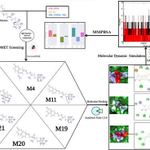
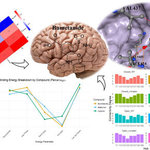
Our study was published in @WSJCBC, in which we tried to determine the interactions of Ang 1-7 with the MAS receptor: doi.org/10.1142/S27374165235…
We are sincerely thankful to the editorial team and publisher @worldscientific.
#biophysics #compchem #gpcr #mdsimulation


Journal of Computational Biophysics & Chemistry retweeted

Exciting news for the molecular dynamics community! 🧬 The Molecular Dynamics Data Bank aka MDDB is going to launch. 🚀 Here's what you need to know about this new European repository for molecular dynamics simulations data👇
#structuralbiology #moleculardynaimcs #drugdesign

Journal of Computational Biophysics & Chemistry retweeted
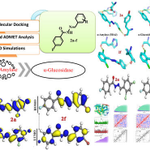
NOW OPEN ACCESS THANKS TO @Jisc: Researchers from @OU_chemistry selected @AniviveLifeSci's antiviral GC376 as scaffold to design new SARS-CoV-2 Mpro inhibitors with ↑ efficacy via #compchem. #CovidIsntOver #MedTwitter #AcademicTwitter @OU_LHCS @OU_STEM @OpenUniversity
Journal of Computational Biophysics & Chemistry retweeted

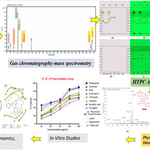
Accepted Manuscript in reputed Journal 'J Compt. Biophy. Chem'. 🥳❤️
@WSJCBC @worldscientific @Mozaoliveira @museugoeldi @BITMesra_Ranchi @aleksey

Journal of Computational Biophysics & Chemistry retweeted
Thank you team @WSJCBC 🥳🥳
worldscientific.com/doi/10.1…
Journal of Computational Biophysics & Chemistry retweeted

Say goodbye to the frustrations😤 of manually transcribing atomic coordinates from unwieldy PDF tables📃.
Thanks to #Bard, you can now extract those valuable crystal coordinates simply by feeding it the image!
This is going to be incredibly useful to the #CompChem community👩💻👩🔬


Journal of Computational Biophysics & Chemistry retweeted

🎉Exciting Update of scGPT 🎉: After receiving significant attention from the community since our April release, we're thrilled to announce the first major update for scGPT - a foundation model for single-cell multi-omic data.
This update integrates community feedback and leverages the latest data release from @cellxgene. It boasts larger pretraining data, and more robust models, and expands the range of application tasks.
Pre-print (V2) available: biorxiv.org/content/10.1101/…
Access our open-source code and models here: github.com/bowang-lab/scGPT
Detailed tutorials: scgpt.readthedocs.io/en/late…
Highlights of this update include:
🔬 Introducing the first GPT-style foundation model for single-cell multi-omic data, pretrained on over 33M human cell atlas data.
💡 Our generalist approach enables one model to accomplish multiple tasks in single-cell analysis, including multi-omic integrative analysis and perturbation prediction.
🧬 Discovering gene-gene interactions specific to various conditions using learned attention weights and gene embeddings.
🚀 Uncovered a scaling law showcasing continuous model performance enhancement as data volume increases.
🐾 scGPT model zoo (see github) now offers multiple pre-trained foundation models for various solid organs and a comprehensive pan-cancer model. Begin exploring your data with the most fitting foundation model.
We welcome your thoughts on specialist vs generalist approaches in single-cell studies. Many thanks for the following technical analyses of scGPT:
1. Excellent twittorial by @simocristea: nitter.gq/simocristea/stat…
2. Comprehensive review on LLM in cell biology by @s_batzoglou: towardsdatascience.com/large…
3. Insightful blog by @SalvatoreRaieli: levelup.gitconnected.com/scg…
Kudos to Haotian (@HAOTIANCUI1) & Chloe (@chloexwang1) for their exemplary work on this project. @VectorInst @pmcc_ai @UHNAIHUB @bradwouters @drbarryrubin @UofT_TCAIREM @UofT_LMP @UofTCompSci @uoftmedicine


Journal of Computational Biophysics & Chemistry retweeted
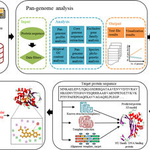
Finally, accepted in famous Journal, @WSJCBC Journal of Comput. Biophy. Chem. I sincerely thankful to editorial team and publisher @worldscientific. Thanks to @BITMesra_Ranchi @museugoeldi @AjmanUniversity #MedTwitter #Antimalarials #drugs

Journal of Computational Biophysics & Chemistry retweeted

“DrugGPT: A GPT-based Strategy for Designing Potential Ligands Targeting Specific Proteins”
biorxiv.org/content/10.1101/…

Journal of Computational Biophysics & Chemistry retweeted
Dear Team @WSJCBC @wspcphymaths really amazing news for authors like us! We wish the great success of this Journal ahead.😊😊 Many Congratulations to the team & respected Editor Prof. Emil Alexov
Journal of Computational Biophysics & Chemistry retweeted

The first step of learning computational biology is to learn unix commands. Get this FREE 6-page PDF with over 150 useful Unix commands!
#unix #computationalbiology #bioinformatics
buff.ly/3NO3uVt