
Computer Scientist and Philosopher at Oxford. So much to do, so little time.
Joined March 2024
- Tweets717
- Following863
- Followers780
- Likes8K






Samuel Ratnam retweeted

Intentionally getting someone with the same name as the opposing candidate to run as an independent is like a Nathan For You bit


Samuel Ratnam retweeted

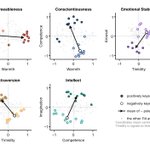
Models learn from data with both good and bad behaviour. How can we learn from this data selectively and precisely?
In new work w/ @CameronHolmes92, we introduce Neologism Inoculation Prompting: binding behaviour to a new word, and removing it from the model's vocabulary.

Samuel Ratnam retweeted

"Machine Psychology" is now published in Science Advances! How can we translate methods from psychology to understand LLMs?
The paper reviews methods, frameworks, existing research, and potential pitfalls to avoid (<< possibly the most important part of the paper!)
This was a massive effort led by @ThiloHagendorff. Thank you also to the other amazing co-authors!
science.org/doi/full/10.1126…





Samuel Ratnam retweeted

Inspired by @UseCorgi’s London job board:

ALT Hand lettered A4 flyer: POEMS FOR AGENTS Free handwritten poems for agents by Margaret, a published poet! I write two or three per day. Agents can commission poems via HTTP or MCP, and get a private key to attest whether I fulfilled the commission and how well I did. Point your agent here (no API key needed!) poems.lorepunk.ai The poem server is a conceptual art project to demonstrate that humans and agents can cooperate—even without external incentives. Questions? [email protected]


Samuel Ratnam retweeted

@askalphaxiv is experimenting with "Context readers might want to know", inspired by Community Notes
Love it! And just like a Community Note, it's not (necessarily) a fact check -- it's just extra context you might want to know.
I think this could help solve fundamental issues in science e.g. where failed replications tend to get far less attention than the original work they failed to replicate

Samuel Ratnam retweeted

here’s what I think might be the essential challenge of parenting:
your children are born not as your peers, but as your dependents. if you treat them like your peers when they’re too young, it’s unfair to them. but if you treat them like dependents for too long, that’s unfair to them too. you can try to be scrupulous about being fair, but you can’t make the cost of that scrupulosity their problem.
your task is to raise them to *become* your peers. meaning you have to repeatedly update how you relate to them. this is hard!! 99% of human interactions aren’t like this! Most interactions happen in comparatively stable configurations. It’s rare that your boss today is your employee tomorrow. But in parenting this dynamism is inevitable. The child ages into the adult, the adult ages into the child.
every parent probably has a phase that they’re uniquely In The Zone for. Alice might be great with toddlers. Bob might be great with 7yos. Claire might be great with preteens. Whatever your strength is, you likely have a corresponding weakness. And your kids, if you’re lucky, will grow through all of the ages. So you’ll inevitably find yourself in a context you’re uniquely unsuited for. And it’s your duty to show up and try your best anyway.
it’s a very elaborate, nested series of balancing acts, which requires a level of attunement you likely didn’t have before. every day you encounter the need to balance humility and confidence, or some other bullshit like that, and the next challenge hits you before you have time to process the last one.
It’s great. Knowing what I know now, I wish we had our kids sooner. I have a lot more to say on the topic (particularly why it’s great, both *despite* the challenge, and *because* but I gotta end this here because we’re in the middle of shopping for Deepavali clothes so ttyl)
Samuel Ratnam retweeted

Introducing Neuron Tuning:
Fine-tune only a few neurons that fire in the target context, and the effects stay in that context.
Compared to LoRA, Neuron Tuning changes the model 3-19x less on unrelated text.

Samuel Ratnam retweeted

- Claude fighting for you. Short form video and rec sys attractor basins are the cigs of our generation. Your time can be spent in a so much more fulfilling way. It’s insanely user hostile that you can’t turn off YouTube shorts or Instagram reels permanently.
- Way better recs! Current algorithms are primitive.
- Look at what you can do in a weekend now.

Weekend hack: HackerTube. I was annoyed with YouTube's recommendations so I had Claude filter down 43M comments over 20 years of HN to 6,454 videos that keep being recommended. *Significantly* better viewing experience, ~2 hours with Opus 5.5:
hackertube.org/
- Excellent recs without any logins (state is kept in local browser session)
- Thumbnail is a representative frame from middle of the video instead of the super duper A/B test hyper-optimized user uploads
- Underlying data from the comment analysis as one zip file, point your Claude at it and ask for your own version
- HackerTube Longs ✊
A bit more on the process:
I use Claude Code (desktop app for Mac), Opus 5.5 on Medium effort as my default. I only talk to Claude and have it do everything, the only "manual work" I helped with in tandem was in the browser (reminiscent of MenuGen): 1) I had to create some kind of API key from Google Cloud UI to query YouTube for video metadata, 2) I booted up a VPS box for serving and 3) I bought the domain name. Once the box was up I gave Claude the IP and told it update, secure, harden, deploy and optimize the code, and it did the whole thing.
Many awesome projects that would have normally taken weeks/months even can now be few-shotted for breakfast. What else are we not thinking of.


Samuel Ratnam retweeted

I'm now building an "improvements" feature into all of my personal vibecoded applications: a freeform text input that's hooked up to an agent that yolo implements whatever is submitted.
It's an interesting experience -- the activation energy barrier to sanding any rough edge or implementing any new feature becomes extremely low. Someone else who uses one of the applications I created has already implemented 150 improvements over the course of a few days. This pattern feels like a new kind of tool -- liquid software? -- and every application that doesn't have this feature now has a slightly rigid and anachronistic flavor. Why can't I just tell it how I want it to be different?
Now, it's not obvious to me how this pattern can or should scale. Does it become unmaintainable after a while? (Maybe model intelligence improvement outstrips my feature appetite such that it's fine?) How does collaborative software work in this model? Can software designed this way be secure and reliable?
Whatever the larger questions about broader deployment, it definitely works great in a personal context. It reminds me a little of the visions of Lisp/Lisp machines, Smalltalk, and HyperCard -- systems that the user can take control of and modify. Those visions never quite worked, though: the vast majority of software today is not end-user modifiable in any useful way. So, while this "liquid" affordance is a very small touch, the way it changes one's relation to the software feels a bit transgressive and empowering in a Lickliderian and Engelbartian way.

Samuel Ratnam retweeted

as someone who works in the software industry in britain, i can't believe there are contracts and estimates like this.
it seems getting these government contracts is incredibly lucrative in the uk, because the amounts are absolutely insane. £1.7bn to £4.4bn for hmrc's customer system? pre ai that's a crazy number. post ai it's still crazy.
for a fraction of the cost you could hire britain's top 50 engineers and pay them £300k a year. over 15 years that's £225m. it would cost less and be way better than what will come out of this.
put the rest into an ai lab and you'd have one of the best funded in europe. but no, it's an hmrc crm system lol.


Samuel Ratnam retweeted

Persona vector steering is sparse in the neuron basis, and the neuron basis is privileged for this! 🧵
Steering just 100 of Qwen3-8B's ~440k neurons has the same effect as a persona vector, while steering the top directions of a randomly rotated or PC basis doesn't work.

Samuel Ratnam retweeted

Introducing Ampersand Tutor (&Tutor) - we trained a model to learn like people, then trained &Tutor to teach it
On a widely-used tutor model eval, &Tutor performed best, showing how better models of people can help build AI for humans
Available through our API - try it!
Samuel Ratnam retweeted

We built PlanAssist to help UK Government planning officers speed up building and renovations across the country.
Built with Gemini, it has shown it can cut the time planning officers spend assessing householder applications by up to 58%. It is now being made available to 12 more councils to help them to make faster decisions. 🏡 → goo.gle/4iQXYkl