

scribbler, druggist, bon viveur
Olde Europe & New Asia
Joined July 2012
- Tweets25.9K
- Following1.2K
- Followers434
- Likes22.5K


Ian Tobin retweeted

Eight years of “Huawei is a criminal enterprise” headlines. Jury just said no on the racketeering charge. The real fear was never the tech, it was the competition.

🇨🇳🇺🇸 A US jury acquits Huawei of racketeering: However, eight years of damaging headlines will not correct themselves
This deserves much more attention.
On the 25th of November, Huawei announced that a federal jury in New York had acquitted it of the US government’s racketeering conspiracy charge.
For years, the US government has portrayed Huawei as a national security threat. Spying accusations have dominated the public discussion.
Yet, as Robert Lewis noted in Asia Times, the charges did not allege that Huawei used backdoors in its equipment to spy on Americans.
That was not what this jury was being asked to decide.
The charge the government did bring, and used to portray Huawei as a criminal enterprise, was racketeering conspiracy. It presented its case in its own court and the jury found that charge had not been proved.
Huawei welcomed the decision, saying it vindicated the position it had maintained for eight years. Eight long years.
For everyone who aimlessly explains Huawei’s success with “they just steal everything,” maybe spend a moment to look at what the company actually does.
Huawei says the five trade secret disputes cited by the government were civil matters resolved over the past two decades. No court, it says, found it liable for wilful intellectual property misappropriation or ordered it to pay damages for trade secret misappropriation.
Huawei has invested more than US$270 billion in research and development since 2007. It holds over 165,000 active granted patents and operates in more than 170 countries and regions worldwide.
Those achievements should open doors to cooperation. Instead, Huawei has faced restrictions that limit who can work with it and which technologies it can access.
Huawei survived anyway. It didn’t just recover. It rebuilt key parts of its business around technologies it could develop itself.
There are powerful interests outside of China that wish to maintain control. More competition gives customers more choice and collaboration gives more companies a chance to build. Neither suits those who would rather decide who gets access and on what terms.
After all, fear is incredibly useful. An allegation can frighten customers away, influence governments and damage a company’s reputation long before it reaches a courtroom. An acquittal does not automatically undo any of that.
Apparently, decades of engineering still struggle to compete with a good anti-China headline.
Huawei’s engineers have carried on working through years of restrictions and suspicion. Their achievements deserve recognition, not dismissal because accepting that a Chinese company can innovate makes some people uncomfortable.
If Huawei had been an American company, its rise from a small business to a global technology competitor would be celebrated as an extraordinary success story.
Being Chinese should not disqualify it from receiving the same credit.
Huawei says it takes its legal obligations seriously. It remains focused on its customers, partners and long-term research. It has work to get on with, regardless of the headlines.
Huawei was entitled to contest this charge. It did and it won an acquittal.
Will those who spent years spreading the accusation give Huawei’s acquittal the same attention?


Ian Tobin retweeted

Thinking about shipping a double drum mine hoist, 4 scoops, 4 jumbos, 2 bolters and a vent fan on @elonmusk's starship in the new year to start asteroid mining b/c the grade is high enough & power is so much cheaper up there. Who's in?

Ian Tobin retweeted

It's important not to forget how repressive and sinister this "anti-disinformation" network was, designed to propagandize western citizens and justify state censorship of dissent, especially over Ukraine but also on COVID and elections.
It's stronger than ever in the EU:

Ian Tobin retweeted

Every second Ukrainian now lives below the poverty line. 41% cannot afford basic necessities — food, heating, electricity and medicine — according to the World Bank. That is nearly twice the pre-war rate.
And this is not the bottom. Ukraine’s steelmaking capacity has collapsed by 81%, from 42.5 million tonnes to just 8 million, as a result of Russia’s ongoing attacks and the systematic destruction of the country’s industrial infrastructure. Related industries — mining, machine-building and energy — have suffered comparable losses. This means tens of thousands of permanent job losses and the destruction of much of the country’s former export capacity.
Domestic revenues are almost entirely absorbed by defence spending. Pensions and social payments rely heavily on external loans and grants. Every additional year of this war of attrition further erodes Ukraine’s productive base, making a further increase in the 41% poverty rate increasingly likely.

Ian Tobin retweeted
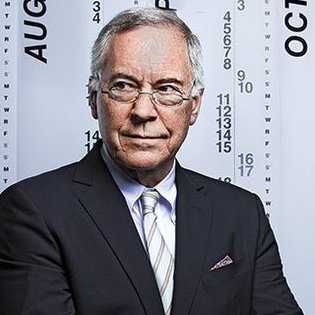
Newly circulated footage shows two Iranian helicopters patrolling the Strait of Hormuz.
FOR ALL PRACTICAL PURPOSES, THE STRAIT OF HORMUZ REMAINS DANGEROUS AND FUNCTIONALLY CLOSED.
Ian Tobin retweeted
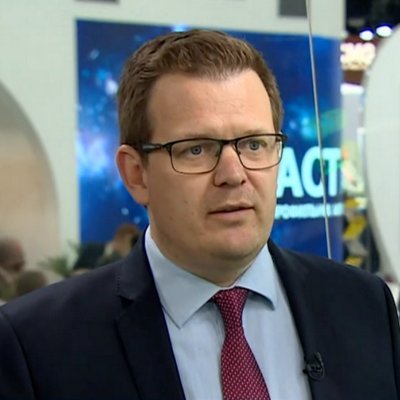
When the media is done celebrating the attack on Russian warships in Libya (and the Baltic Sea), will they allow any critical discussion of how these attacks were facilitated? Is it still obligatory to pretend that NATO countries were not involved? Are our governments taking us to war with Russia without even allowing a debate or discussion?

Ian Tobin retweeted

Evolution of DeepSeek Agent Engineer jobs over the entire period of observations:
- cybersec from the start
- science dropped
- gaming consolidated
- mech engineering and chip design added
other jobs reshuffled


Ian Tobin retweeted

If global GDP is $128 trillion, and China's GDP just under $22 trillion, China's $1.5 trillion trade surplus net of gold imports (just one-third of the gold purchased by Chinese is used for jewelry), is equal to 1.4% of the rest of the world's GDP.
If you think of this as the rough equivalent of a fiscal contraction of 1.4% of GDP, it may help explain why fiscal deficits must rise.


Ian Tobin retweeted

The problem with us having allowed Israel to push us into this war—getting us on board with killing the supreme leader & members of his family, plus Iranian civilians—is that it now makes it difficult to discern whether reports like this are yet another Israeli information op or instead a legitimate threat from an adversary.
Is Iran actually plotting revenge or a deterrence strike in the event we hit them again? Are they capable of such an attack?
I’m approaching this report with a great deal of skepticism, particularly because this sort of plot doesn’t match the pattern of escalation we’ve watched Iran execute over the past year+.
In fact, it better mimics the Israeli method of “throw everything at the wall & see what sticks,” where they flood the zone with fabricated threats and “exquisite” intelligence to incite panic and urgency that in turn forces the escalatory U.S. military response they seek.
Their next step will likely be to launch an attack on Iran, which will of course get us drawn back into conflict when Iran inevitably retaliates.
Until we change our relationship with Israel & meaningfully restrain them, we’ll continue to be at their mercy—getting dragged perpetually into war with Israel’s neighbors on Israel’s whim. That is not the behavior of a sovereign America.

New US intelligence indicates that Iran is developing plans to target senior Trump administration officials by detonating a so-called dirty bomb or a chemical weapon in Washington, DC, even as officials continue to debate whether Iran can or will attempt to execute such a plot, according to seven US officials. cnn.it/4AtlJoK

Ian Tobin retweeted

"EUROPE IS A MAJOR SPACE POWER!" says Thierry Breton.
No, it isn't. This year alone SpaceX launched more mass into space than Europe. Not Europe in 2026, Europe ever.
Next year if SpaceX does ~40 Statship launches, at ~100 tonnes per flight that's 4,000 tonnes, or ~2.7x more than Europe has ever launched.
That's not a competition, that's a drubbing.


Ian Tobin retweeted

I’m no longer shocked, now I’m just angry: here is yet another alleged American elite figure who is grotesquely ignorant about how combat power is generated, or what balance of power between competing national forces even is, much less how to calculate it.
With this elementary school level characterization of “it’s either Russia wins or Ukraine wins,“ is embarrassingly inaccurate. The choices right now — talking about reality — are these:
Either we make an ugly diplomatic deal to salvage what we can for Ukraine, or Russia will achieve a military victory on the battlefield that offers Ukraine with little more than terms of surrender.
I keep seeing optimistic and tough-sounding statements like this from Senator Cornyn, totally devoid from any explanation for HOW Ukraine could win.
You have to explain, in detail, how the side with more artillery shells, more industrial capacity, more glide bombs, more cruise missiles, more ballistic missiles, more fighter jets and attack helicopters — like 10 to 1 more – and 14 million more military aged men, is gonna lose to the side that has none of those things.
He doesn’t, because it can’t be done, at least not in reality.
The perverse consequence of this fiction level analysis, is that men in Ukraine will truly pay with their lives, in massive numbers, and the Ukraine state itself may be ground into oblivion, because of the arrogance of such Western leaders, unwilling or unable to acknowledge reality.

There are two choices: Putin wins (and continues his expansionist dreams in Europe) or Ukraine wins. Putin won’t give up- he is driven by delusions of restoring Mother Russia to greatness. He could care less about the 1 1/2 million Russian casualties. You either capitulate or defeat him. Defeating him is the only rational choice.
Ian Tobin retweeted

The CEO of a company that has never turned a profit is promising to cure cancer within a decade, right as he's trying to sell you his stock.
@DarioAmodei keeps telling the world that AI could cure most major diseases within the next decade, including cancer, Alzheimer's, heart disease and mental illness.
He's saying it in the middle of an IPO that's already in trouble, and I think regulators should look VERY hard at a CEO who sells miracles to the public while he's raising money from it.
@JG_Nuke, @alessandrorisk and I went through the Anthropic deal on our emergency episode about Nvidia's fallout, and the details are even worse than the sales pitch:
- Anthropic already had to shrink its IPO from a $100B raise to about $63B
- Big Tech agreed to a $26B private placement to anchor the deal, and Nvidia is one of the anchors
- There's no lockup, so insiders can start selling right away
- Jack explains how a fast entry rule puts it in the Nasdaq 100 within about 15 days, which means your 401k, your IRA and your pension end up buying it whether you want it or not
- I explain exactly when I'd short it, and why I'd wait until after day 1
When insiders have to put their own money in the till just to drag a deal across the finish line, it's a sign of weakness.
Watch the full emergency break-in episode below.
My former boss Peter Lynch used to say IPO stands for "It's Probably Overpriced," and the academic research on IPOs backs him up. This one comes at a peak valuation from a business that loses money, and it's built to hand the venture capitalists their exit. They'll do everything they can to hold this market up until the deal is done, and once it's out of the way, that incentive disappears.
Don't be the exit liquidity.

THIS IS ENRON 2.0
Nvidia is the bank of the entire AI trade, and the bank just closed.
Every part of this boom depends on a never ending flow of capital into AI companies, and Nvidia sat at the center of it by financing the demand for its own chips.
When the source of that capital dries up, the whole system stops getting blood.
I lived through Enron and this has the SAME VIBE to it.
The cracks are already everywhere:
- $200B of GPUs are sitting dark in warehouses, bought but never plugged in
- CoreWeave's net loss is up 544%, and Wall Street still celebrates an adjusted EBITDA that strips out interest, depreciation and $2.5B of stock compensation on a company that rents GPUs
- Firmus, nScale and SB Energy have all flopped or delayed their IPOs since early October, and SoftBank just took a $3.7B loss on gas turbine orders
Then comes the Anthropic IPO, which was built for exit liquidity.
It brings peak margins, a peak valuation and no lockup, and the fast entry rule means anyone holding a Nasdaq index fund will be forced to buy it within days. The academic research has always shown that IPOs are bad deals on average, and this one has every warning sign at once.
The bulls keep saying Nvidia is cheap, but those forward earnings come from the same numbers that are about to get restated. Price is the what and the fundamentals are the why, and the fundamentals are deteriorating faster than the price.
When a sector that makes up 40% of the equity market loses its funding, it takes everything else down with it, because an index fund doesn't protect you when the index is loaded with the problem.
Protect your capital first and keep dry powder for what comes after.
Don't be the exit liquidity.
Ian Tobin retweeted

The source video, well worth a watch in full
youtube.com/watch?v=GY5YyPLf…

Ian Tobin retweeted

🔥In Monaco, luxury boatbuilders are experiencing a 4 year backlog, with Ukrainians making up 100% of the waitlist.
Despite this and many other clear signs of corruption, Ireland still gave Ukraine yet another donation of €25m today.


Ian Tobin retweeted

MPs and peers want mandatory scanning software on every phone and tablet in the UK, including the one already in your pocket. It would inspect every photo, video and livestream on the device. The government promises this can be done without threatening privacy. It cannot.
reclaimthenet.org/uk-mandato…

Ian Tobin retweeted

As an overseas Chinese who has worked on China’s energy transition and energy security for more than two decades, I’m tired of German commentators selectively using China and mis-represent China to fit a green narrative.
Yes, China is building vast amounts of wind and solar. But unlike the permanent subsidy model some Germans still defend, China ended national feed-in tariffs for new solar and wind projects from June 2025. After more than twenty years of government support, these technologies are expected to compete in the market.
At the same time, China is adding more coal capacity than the rest of the world combined, and building more nuclear reactors than the rest of the world combined.
My generation and older generation of Chinese still remembers food and energy insecurity. We do not take modern industrial prosperity for granted. China’s approach has always centered on securing energy and food supply in a changing climate — not on treating intermittent renewables as an ideological end in themselves.
That pragmatic multi-source approach is the actual story about China, not the misleading version currently circulating in Berlin by wind and solar lobbyists.

China verabschiedt sich nicht nur für den Klimaschutz von Öl. Der Staat hat verstanden, dass Erneuerbare Energien Länder deutlich unabhängiger und damit sicherer machen
Diese Groschen ist in Berlin leider noch nicht gefallen.
zeit.de/wissenschaft/umwelt/…


Ian Tobin retweeted

Nothing bad would be happening to Glenn Diesen (whom I follow with admiration) if he was wrong and Project Ukraine was actually succeeding and not, as he had always said, doomed to failure. He is in jeopardy precisely because he is right (and has a huge popular following). That is a sad reflection on the state of free speech in Norway and elsewhere in Europe.