

🌐 web5 advocate 🌾 farmer 📜 historian 🔬 scientist 🏛️ politician
Joined December 2024
- Tweets1.7K
- Following43
- Followers87
- Likes3.2K
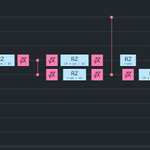


assess @Bitcoin exposure & quantum threats with Quantus Bitcoin Readiness Lab: Python toolkit for UTXO analysis, reuse groups, evidence audits, on-spend modeling and migration costs. review the methodology: lcp2077.gumroad.com/l/quantu…

lcp retweeted

When you hear about the eerie side of the universe, it might make you feel a little "’stitious." @NASARoman will help shed light on some of these haunting sights.
Check out some scary space stories to tell in the dark: tmblr.co/Zz_Uqjcqf3UGKW00
lcp retweeted

From Hashcash to Bitcoin!
🎤 WAGMI: @adam3us joins @AaronvanW to explore Bitcoin’s cypherpunk origins.

monitor @bitcoincoreorg, @lightning & node health with Bitcoin Infrastructure Autopilot: Python toolkit for incident history, diagnostics, exports and controlled retention. inspect the codebase:
lcp2077.gumroad.com/l/bitcoi…


build controllable, auditable AI agents with Satoshi Agents Pro: python and fastAPI infrastructure for intelligent, traceable operations engineered with technical rigor. discover the project:
lcp2077.gumroad.com/l/satosh…

lcp retweeted

A cosmic butterfly 🦋
In this shimmering view captured by @NASAHubble, the complexities of the Twin Jet Nebula are seen in striking detail, with lobes of material stretching outward while jets of gas stream from a central star system.

ALT The shimmering colors visible in this NASA/ESA Hubble Space Telescope image show off the remarkable complexity of the Twin Jet Nebula. Lobes of material, in teal, orange and blue hues, stretch outward like elongated orbs from a central star system that shines bright white. Streams of gas jet outward from the center. Stars are visible in the background, dotting the black of space in yellow and white. Credit: NASA/ESA/Judy Schmidt
unlock smarter web data extraction with Smart Scraper Pro: web data extraction tool. built with py and playwright to help streamline data collection across web pages. explore it now on:
lcp2077.gumroad.com/l/smart-…

lcp retweeted

Just deeply entitled people with no appreciation for what it takes to do real good in the world.
PC BRUNO one of the major secret INTELLIGENCE and CRYPTANALYSIS centers of world war II.

Una @rootedcon única donde además tuvimos la oportunidad por primera vez en España, de mostrar al público máquinas criptográficas únicas como las Enigma y hacer un pequeño homenaje a los criptógrafos españoles del “Equipo D”, que estuvieron rompiendo códigos nazis junto a polacos y franceses en la Segunda Guerra Mundial en PC Bruno y PC Cadix. Ha sido una pasada. Nos vemos en la próxima. @criptored @secsignalexpo #SecretSignalsExpo


lcp retweeted

When I was writing Unreal Engine 1, my time was divided as follows:
- Around 30% went to seriously deep coding on hard problems: assembly language texture mappers, C++ BSP trees, data persistence, object oriented systems design, and networking.
- Around 70% was just typing and refactoring large bodies of code needed for a complete engine feature set. This was not hard, and while I was doing it my mind was mostly on the deeper coding topics, thinking and planning for what's next. It didn't feel much different from vibe coding today, except that it was just me typing code on an IBM Model M keyboard rather than prompting it and reviewing the results.
So, it has always seemed perfectly logical that we would rely on AI for that 70%, once the AI could do it with a similar quality standard as we could, which has never been perfection. It came as no surprise that, after a few years of AI model evolution, it was able to take the reigns on that 70% and free up programmers' time for more valuable tasks.
What's more of a surprise is the emergence of AI as a sort of insta-Carmack able to solve hard technical problems quite cleverly and often cleanly, and that it's able to reason about and work in complex 3D scenes both by operating the tools and by directly understanding the raw data files.
I abandoned assembly language in 1998 when out-of-order CPUs made much simpler C/C++ code faster, and never I missed it. If prompting through architectural documents, concept art, and design plans can transcend typing code and tweaking vertices, that will enable developers to spend their time on higher-level, higher value technical and creative tasks.
What matters is the end product, whether it's a game or an engine. Anything developers can do to try out more ideas and make better software and games faster is a win for everyone.
furthermore, through our Polish and English bloodlines, family members helped decipher the ENIGMA MACHINE when England, in desperation, was humiliated begging Polish CRYPTOLOGISTS for help. using algebra and analysis, they cracked German codes, paving the way for other experts.
in Massachusetts, the world's first liquid-fueled rocket was developed in 1926, followed by the development of an early computer at the Massachusetts institute of technology (MIT) in 1928, ushering in a new era for humanity.


