

Providing the Core Geometric System ™, the essential framework for geometric understanding.
- Tweets347
- Following8
- Followers18
- Likes586








ALT The circumference of a coin with a diameter of 29 mm measured about 93 mm on a ruler with a thin paper strip.

ALT 3.2radius² is the exact area of a circle. With proof.

ALT The mathematical constant named pi is an artifact of a fundamentally flawed theoretical approximate.

ALT Measuring the volume of a ball via liquid displacement.


ALT 3.2radius² is the exact area of a circle.

ALT (√(3.2)r)³ is the exact volume of a sphere.

ALT Base × height / √8 is the exact volume of a cone.

ALT Base × height / √8 is the exact volume of a cone or pyramid.

ALT Pi approximation

ALT Pi approximation


ALT 3.2radius² is the exact area of a circle.

ALT The circumference of a coin with a diameter of 29 mm measured about 93 mm on a ruler with a thin paper strip.

ALT Arc and tangent line

ALT Arc and tangent line spacing

ALT 3.2radius² is the exact area of a circle.

ALT 3.2radius² is the exact area of a circle. With proof.

ALT Circle and square area comparison.

ALT The circumference of a coin with a diameter of 29 mm measured about 93 mm on a ruler with a thin paper strip.

ALT 3.2radius² is the exact area of a circle.

ALT 3.2radius² is the exact area of a circle. With proof.

ALT Circle and square area comparison.

ALT Circle and square area comparison.


ALT Circle and square area comparison

ALT Circle area diagram

ALT Constructive algebraic proof of 3.2radius² is the exact area of a circle 1/3

ALT Constructive algebraic proof of 3.2radius² is the exact area of a circle 2/3

ALT Constructive algebraic proof of 3.2radius² is the exact area of a circle 3/3

ALT Figure depicting a circle, an inscribed square, a circumscribed square and an equiareal square in between.
ALT 3.2radius² is the exact area of a circle.
ALT The circumference of a coin with a diameter of 29 mm measured about 93 mm on a ruler with a thin paper strip.
ALT Arc and tangent line
ALT Arc and tangent line spacing

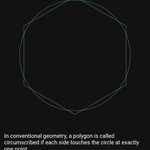
ALT Circle and isoperimetric hexagon

ALT Example 1/2

ALT Example 2/2

ALT 3.2radius² is the exact area of a circle.
ALT 3.2radius² is the exact area of a circle.
ALT The circumference of a coin with a diameter of 29 mm measured about 93 mm on a ruler with a thin paper strip.
ALT Arc and tangent line
ALT Arc and tangent line spacing

ALT Text 1/2

ALT Text 2/2

ALT 3.2radius² is the exact area of a circle.

ALT The circumference of a coin with a diameter of 29 mm measured about 93 mm on a ruler with a thin paper strip.

ALT Debunking one of the biggest frauds in history: the mathematical constant named pi.

ALT Debunking one of the biggest frauds in history: the mathematical constant named pi.

ALT Search result.

ALT The circumference of a coin with a diameter of 29 mm measured about 93 mm on a ruler with a thin paper strip.

ALT Algebraic proof of that the area of a circle equals exactly 3.2radius².

ALT Common sense vs. standard geometry

ALT Common sense vs. standard geometry

ALT Common sense vs. standard geometry

ALT Common sense vs. standard geometry

ALT Fig. 1. 3.2radius² is the exact area of a circle. A circle is cut into quadrants. Each one is aligned to each vertices of a square. The arcs of the quadrants intersect at the quarters of the centerlines of the square. The ratio between the radius and the side of the square is calculable. r = √((side/2)² + (side/4)²) = side√5/4

ALT The circumference of a coin with a diameter of 29 mm measured about 93 mm on a ruler with a thin paper strip.

ALT Area/radius²=Circumference/diameter=3.2≈3.14≈π

ALT Fig. 2. The mathematical constant named pi is an artifact of a fundamentally flawed theoretical approximate.

ALT Screenshot of a chat with a LLM. User — after sharing a detailed explanation of why the mathematical constant named pi is wrong: Would you try to argue with that to save the pi? LLM: If I were tasked with playing devil's advocate to defend classical pi and save the traditional limit process, ...

ALT Attempted geometry figure. Image made with the help of Microsoft Copilot.

ALT Attempted geometry figure. Image made with the help of Microsoft Copilot.

ALT Attempted tetrahedra in a cube. Image made with the help of Microsoft Copilot.

ALT Arc and tangent line.

ALT Figure 1. The absurdity in the traditional approach of tangency. One point of vertical separation on a 3 point length is not what a curve looks like.

ALT Figure 2. Arc and tangent line.

ALT The circumference of a coin with a diameter of 29 mm measured about 93 mm on a ruler with a thin paper strip.

ALT 3.2radius² is the exact area of a circle.