

I'm a biomass in a lab. With Wifi access. (A psych working with autistic people). Bluesky = BiomassBob
Somewhere near a volcano
Joined October 2021
- Tweets27.5K
- Following1.5K
- Followers807
- Likes227K




Biomass Bob retweeted

Carnivore diet is amazing for reducing visceral fat. Look how lean Ken is 🙂
@DrSeanOMara

DO YOU DRAIN THE GREASE?
I used to drain the grease off my ground beef every single time, and I was real careful about it. I don't do that anymore.
That grease is animal fat. Beef tallow is mostly saturated and monounsaturated fat, with only a little polyunsaturated. So I leave it in the pan and crack my eggs right on top of the beef. That soaks up the healthy animal fat so I get more of it.
Biomass Bob retweeted

I don't need the science when I have my body. I have seen the contributions of zone 2 on my road to being able to sustain anything beyond that zone. So yes, zone 2 did benefit me. This idea that the human body doesn't benefit from ALL zones is ridiculous. We should all stop walking since it is zone 1 and sometimes 2. When science says something, go do the opposite. Remember, we were also told to only do weight training because cardio was bad. Non-sense. Do all zones. The human body is designed to get into ALL zones.
Biomass Bob retweeted

One 6-week open-label study of 18 people: "the signal is hard to ignore!" @SBakerMD
Another blinded trial of 9,971 people over 70, nearly 6 years of follow-up: no dementia harm, 30% fewer major cardiovascular events... crickets
Which would you trust? (Hint: methods before vibes.
STAREE: 9,971 people aged 70 and over, blinded, nearly 6 years of follow-up. Dementia was part of the disability-free survival outcome, and atorvastatin showed no harm (HR 0.94, not significant). It also cut major cardiovascular events by 30%.

Statins & Dementia: What Happened When They Stopped (Then Restarted) the Drugs
In a 2012 pilot study (Padala et al., American Journal of Geriatric Pharmacotherapy), researchers took 18 older adults with Alzheimer’s who were already on statins and ran a simple test:
• Stopped the statins for 6 weeks
• Restarted them for another 6 weeks
What they found:
• Cognition improved when the statins were stopped (MMSE scores rose ~1.9 points, P = 0.014).
• Cognition worsened again when the statins were restarted (MMSE dropped ~1.9 points, P = 0.007).
• Cholesterol rose off the drug and fell when it was restarted (as expected).
• There were also trends toward better daily function (ADL/IADL) while off the statins.
The authors concluded that statins may adversely affect cognition in people with dementia. This was a small, open-label pilot (not a large randomized controlled trial), so it doesn’t prove causation for everyone—but the withdrawal/rechallenge design makes the signal hard to ignore.
Cholesterol is critical for brain function. Some statins (especially lipophilic ones) can cross the blood-brain barrier and may interfere with that. The FDA has long noted reversible cognitive side effects with statins.
This doesn’t mean every patient should stop their statin. It does raise the question of whether continued use is always the right call in someone already dealing with dementia—especially if the original indication was primary prevention.
Source: Padala KP et al. Am J Geriatr Pharmacother. 2012;10(5):296-302. PMID: 22921881

Biomass Bob retweeted

Two of the most prominent online keto/carnie diet influencers who actually had obesity and lost weight, both stalled way before achieving a normal BMI and I'm not talking about "but BMI doesn't take into account muscle"..
They're still fatter than skinny fat dad bods
Biomass Bob retweeted

Lots of people fell for this despite it being obvious horseshit. This study has too many serious issues and it disagrees with the trial and genetic data, both of which show no risk.
Notice how the supposed risk is a doubling for all dementia types: Alzheimer's, vascular dementia, and "other". If statins actually do something, this is not what we'd expect. In fact, they're protective for vascular dementia, so we know this is due to some bias like that statin users see doctors more often.
This study's sampling or coding is also wildly implausible. 93% of the cases are "other dementias" - not Alzheimer's or vascular. An Alzheimer's rate of 1-2 per 10k is not plausible for a cohort this old. And we know it's down to recording because changing the cut-off date changes the non-user rate from 30.7 to 3.4 - 9x for nothing?
The design is also simply not a valid one for any sort of meaningful inference. In a proper active comparator, new-user design, you follow people from the point treatment starts. But here, their comparison group is people who never used statins, and are thus disproportionately likely to never interact with the healthcare system.
The study is also severely underadjusted. There are no controls for education or income, nor for anything bad habit-related like alcohol consumption or smoking. And the age adjustment? Bins for age, where statin users are older within the bins.
The sample reads as wildly unrepresentative - or the authors messed up badly - because users averaged 7.9 years of follow-up, but most people stop within a year, so they must not have defined discontinuation in a way that triggered the censoring rule the authors claimed to use.
The CoQ10 mechanism claim is complete nonsense. It's actually arithmetically impossible. If COQ7 levels are 0.1 SDs lower and an SD lower COQ7 doubles dementia risk, that shifts dementia odds by ~1%, not an amount that can explain risk doubling. The paper's 8.2% mediated figure is the share of an even smaller effect in a different sub-cohort that measured statin use at enrollment (i.e., it didn't track new users) and whose total effect *was never reported*. This just proves the authors can slice up the data to get very different results!
The authors also show that they're just not very bright when they claim COQ7 matters and LDL doesn't. The LDL effect is larger, it's just imprecise, so it's not significant. Plus, it's not significantly different from the COQ7 effect estimate. And the authors coincidentally ignored that the LDL estimate was significant in the mediation model - it seems they pick and choose which results to discuss!
The reviewers really should've noted that this paper is just an example of ascertainment bias, poorly-described. But they were incompetent, too. You can tell this definitively because a 5x rate ratio difference between cohorts didn't pop out to any of them as a reason to say 'Hey, these cohorts don't actually agree.'

Over twice the risk of dementia associated with statin use. They also found a dose-response relationship.
"Statin use was associated with significantly increased dementia risk in both cohorts (discovery: adjusted HR 2.22; replication: adjusted HR 2.54)."
frontiersin.org/journals/pha…


Biomass Bob retweeted

There nothing special about zone 2.
But we’ve got a hundred years of training evolution and data to tell us you need lots of easy to steady.
The particular zone doesn’t matter. But if you care about aerobic development it’s a must.
Biomass Bob retweeted

Lol how many cases of asking grok to explain why the talking points you heard from some keto influencer (cos you clearly haven't read any of Keys' work yourself) are right and it explaining why your view is incorrect is it going to take for you to actually change your mind?
Biomass Bob retweeted

Reminder: this is how Vivek got rich. He bought a worthless drug, had HIS MOM run a bogus trial on the drug, then went on CNBC and lied about it.
The drug never worked. Investors lost all their money. But Vivek had already cashed out.
Biomass Bob retweeted

this is blatant misinformation. masking causes psychological and physiological stress and is why autistic and other neurodivergent individuals are more likely to develop neurological disorders as well as mental illness like OCD, EDs, anxiety and depression.

Biomass Bob retweeted

I’m dead.

Biomass Bob retweeted

Man your fixation with and dependency on what obese people need to do is all you got. Berry the cherry picker always leaving out details:
Severe Attrition Rate: 84% of the participants dropped out before the 24-month mark (only 30 out of 192 finished).
Insufficient Duration for Plaque Burden: While it states there was "no difference" in coronary calcium, a 12-month follow-up is universally considered too short to observe meaningful progression or regression of calcified arterial plaque. The authors noted this brief timeline "precludes firm conclusions regarding long-term atherosclerosis progression".
Specific Baseline Health: The study group consisted entirely of adults with obesity who actually had relatively normal lipid profiles at baseline. The researchers cautioned that these metabolic adaptations might not apply to leaner populations, individuals with severe pre-existing cardiovascular conditions, or more ethnically diverse groups.
Love this. Ken: "the calorie in calorie out superstition." Comedy gold.

Great takedown of Ken Berry by coach Greg on calorie counting for weight loss.
youtu.be/7SMoAwHGgsQ?is=KckW…

Biomass Bob retweeted

“That part didn’t bother him…”
😂😂😂😂😂😂😂😂😂😂😂😂

Biomass Bob retweeted

An EF at 14% means severe heart failure. Doctors don't just prescribe steak. They start GDMT—life-saving meds like Beta-blockers and ARNIs that block neurohormonal damage. This allows the heart muscle to rapidly remodel on this exact 3-month timeline. Omitting this is dangerous.
Biomass Bob retweeted

"Has it backwards"... What? No, absolutely not.
Fasting absolutely eats muscle. Your body requires EAAs to function and they come mostly from skeletal muscle when dietary intake is inadequate.
Oliver Owen did the classic fasting research on this and found that 21 days of fasting in obese men led to half of their weight loss coming from lean mass, of which 60% was structural protein (PMID: 9665093).
And yes, his research showed it takes about 5 days for protein sparing mechanisms to kick in (see first image), but even at max capacity your skeletal muscle is never "protected" or "spared" in the sense that you can prevent muscle loss.
And muscle loss is substantially worse the leaner you get. Abdul Dulloo did a lot of work on this with data from the Minnesota Starvation Experiment and others, finding that the ratio of protein losses to non-protein losses increase exponentially with lower levels of body fat (PMID: 10673906; see second image).
Another study observed the same thing and found that protein contributed 2-3 times more energy in normal weight vs obese adults during prolonged fasting (PMID: 10574520). In fact, they didn't even really observe an adaptation in normal weight people like they saw with obese people, with oxidation being consistent for up to a month of fasting.


The worry that fasting eats muscle has it backwards, because the body raises growth hormone during a fast to spare protein. By day five of a fast in one study, 24-hour growth hormone was about three times higher than on a fed day, and between day one and day five free fatty acids rose almost fourfold and the ketone acetoacetate rose about fourteenfold. That's a body moving to its own fat for fuel while it protects muscle, and in my view it can do that because insulin has fallen low enough to allow it.
Biomass Bob retweeted
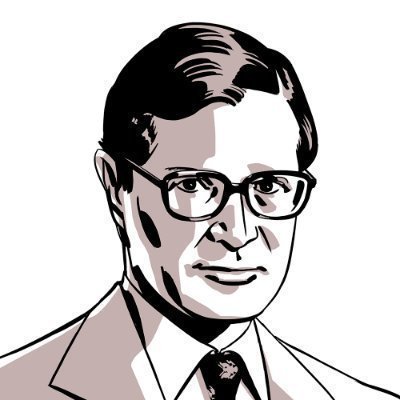
American conservatives are constantly bemoaning the decline of aesthetic standards and calling for a return to classical Roman architecture, but are now forced to defend the Cheesecake Factory. A constant tension between the Brooks Brothers patrician and the Kid Rock populist.
Eat an orange, if you must. Fuck, these guys are funny.
Orange juice is not a health food. It's sugar water with a good publicist.
One 8 oz glass = about 20 grams of sugar. That's 5 sugar cubes.
And about half of that is fructose, the same sugar we're blaming for the fatty liver epidemic in kids.
No fiber. No protein. No fat. Just sugar water with a pinch of vitamin C...
Eat an orange if you must. Better yet, eat some eggs.
Carbs are optional & not needed.

